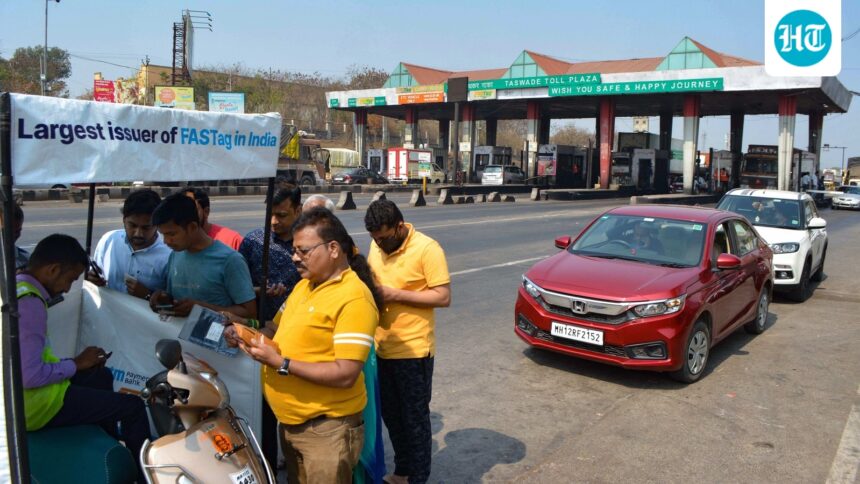
In a step towards smooth journey and doing away with long queues, the government has notified a new rule where cash will be stopped from toll plazas, effective April 10. With the new rule, the government is looking to improve traffic flow, along with easing congestion, reducing disputes and having passengers show their ID cards to skip payment.

In a gazette notification issued on April 2, the Ministry of Road Transport and Highways said that a vehicle entering the toll gate can either pay through FASTag or pay 1.25 times the toll through UPI. The provision of cash payment at toll gates has been completely excluded.
What changes on your highway trip?
The ministry now stipulates that the vehicle must have a FASTag, failing which passengers have the option to pay through UPI, but the fee becomes 1.25 times the normal rate.
Also Read: Toll hike by 3%-5%, NHAI makes FASTag mandatory across highways
Although premium toll payment through UPI was in place even before the April 2 order, the cash component has been completely done away with.
Earlier, the traveler had the option of paying double the applicable toll fee when paying in cash.
What if FASTag and UPI don’t work?
The answer to the ‘what if not’ question lies in the March 18 release by the National Highways Authority of India, which talks about the ‘unpaid user fee’ clause.
If the vehicle crosses the toll booth without paying the toll, an electronic notice (electronic notice) will be issued to the vehicle owner, after which the payment can be made online.
The notices will be given through SMS, email, mobile-based applications or other electronic means and will also be made available on a designated online portal, the statement said.
Also Read: Annual FASTag to get more expensive from April, NHAI reviews fees | See the new graphics
Although the e-Notice mentions twice the applicable fee amount, payment made within 72 hours of issuance of the e-Notice will not attract any additional fees.
In simpler words, if a passenger fails to pay through FASTag or UPI at the toll booth, but makes the payment within 72 hours after generating an e-notice, no additional charges will be charged from him.
However, if paying after 72 hours, the traveler will have to pay double the toll fee. If payment is not made even after 15 days, the amount will be recorded in the Ministry of Roads’ VAHAN system, with “appropriate entries” called for.