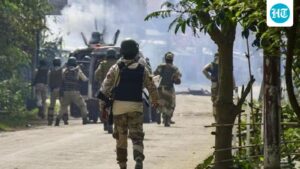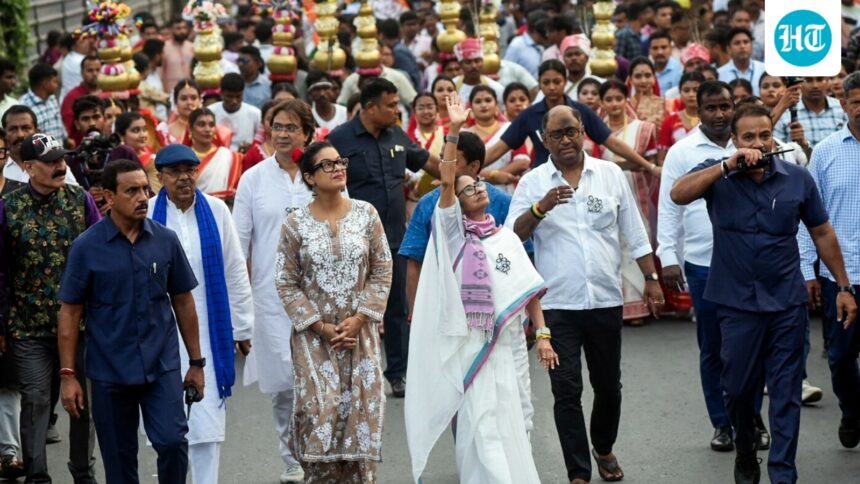
The Election Commission of India (ECI) has implemented an expanded monitoring framework exclusively for the West Bengal Assembly elections. This includes the introduction of body-worn cameras for junior observers and central force personnel, GPS tracking of Central Armed Police Force (CAPF) vehicles, and seizure of all CCTV cameras installed by the government in assembly circles, according to EU officials. These measures are specific to West Bengal, and will not be implemented in Tamil Nadu, which will go to the polls in the first phase on April 23.

Reform has been directly shaped by documented monitoring failures in previous elections. According to senior Election Commission of India officials, when the commission reviewed footage from cameras deployed during the 2021 West Bengal Assembly elections and the 2024 Lok Sabha elections, it found that nearly 30% of the cameras had no recording at all. The agency that supplied the webcams for both elections has since had its contract canceled and three new vendors selected. “The Commission has made it clear that there should not be any lapse in the conduct of the voting process. If there is violence or disturbances at a booth, voting will be stopped and re-conducted. Re-polling will be conducted as many times as necessary,” a senior EEC official said.
The committee decided to equip junior observers, Central Forces members and state police personnel with body cameras so that minute-by-minute details are recorded on the ground. If any complaint or dispute arises, the footage will be checked. The same official said: “This move expands accountability beyond fixed camera locations to include employees moving in and around kiosks.”
Read also: IT raids TMC leaders ahead of West Bengal elections; Mamata Banerjee questions the timing
The committee also controlled all the surveillance cameras installed by government departments in the relevant association departments. This includes cameras located in government buildings, offices, hospitals, colleges and those installed on roads by traffic police. Instructions have been issued to take immediate action if suspicious activity is detected in any of these feeds, ECI officials confirmed.
To cover the booths, AI-powered CCTV cameras will be installed in all polling booths in the state. Sensitive kiosks will have three cameras each, while non-sensitive kiosks will have two – one inside and one outside. In addition, professional videographers will be deployed in the ultra-sensitive booths. All the cameras will be placed to provide a 360-degree view of polling activity and link in real-time to the district control rooms at the District Election Officer (DEO) offices and to the central control room at the Chief Electoral Officer (CEO) office in Kolkata.
A booth is labeled sensitive if it has a history of violence, booth takings, or voter intimidation in a previous election, or if more than 75% of the votes in a previous election went to a single candidate — a statistical marker for coercion. Geographic distance, class or community tension, and the presence of identified troublemakers in the area are also taken into account. The booth becomes very sensitive when many of these factors converge. In West Bengal, the committee has identified a majority of the stalls in North 24 Parganas, South 24 Parganas and Murshidabad as falling under this category.
Read also: Few boosts, many setbacks: Will Humayun Kabir’s AUJP split minority votes in Bengal polls
GPS trackers will be installed on vehicles assigned to CAPF’s Quick Response Teams (QRT). This will allow central monitors appointed by ICEC to monitor whether deployed personnel are at their assigned locations in real time. The above-mentioned ECI official also added: “This measure directly responds to complaints from the previous elections, where CAPF staff were diverted from booths where they were most needed. The cameras installed in the vehicles will have a backup battery to continue recording even when the engine is switched off.”
According to the commission, West Bengal’s surveillance reform is underpinned by a documented record of electoral violence at a level not seen in any other election-related state this cycle. Following the results of the 2021 House of Representatives elections, the National Human Rights Commission received 1,979 complaints involving nearly 15,000 victims in 23 provinces – documenting 29 complaints of homicide, 391 cases of serious injury, 12 sexual assaults, and 940 cases of arson or vandalism. Local police failed to register nearly 60% of FIRs lodged by victims. The 2023 Panchayat elections and 2024 Lok Sabha elections have maintained this pattern. It is pertinent to note that no similar investigation has been initiated against Kerala, Assam, Puducherry or Tamil Nadu.
Bharatiya Janata Party (BJP) spokesperson Debjit Sarkar welcomed the measures, saying: “The Election Commission of India must take every possible step to control the violence and ensure that those responsible are held accountable without any bias. West Bengal has witnessed more than 50 years of politically motivated violence in the name of democracy – this cycle must be broken.”
HT reached out to the Trinamool Congress (TMC) for a response but the party was not immediately available for comment.
More than 2,400 companies of the central forces, with a total of about 190,000 personnel, are deployed to participate in the elections, which will be held in two stages. The Commission also deployed 474 observers in West Bengal. This includes 294 public observers, one for each Assembly district – the highest deployment of any state this election cycle and more than 50% of all public observers deployed nationally in all poll-bound states. West Bengal also has 84 police observers, the highest in absolute numbers among all election-related states.
Lakhsman Rekha outside the polling stations
The ECI has also decided to set up dedicated verification desks outside polling stations in West Bengal to verify the identity of voters before they enter the booths – a measure that adds a new layer to the standard polling day procedures. Under the current system across India, all voter verification takes place inside the polling station, where a polling officer verifies the voter’s name in the electoral roll and verifies identity documents before applying ink and allowing voting.
The new system moves the first level of verification to an outdoor counter at a 100-metre perimeter – marked in white chalk and called the ‘Lakshman Rekha’ by the IEC – before allowing the voter to approach the booth entrance. A cabin-level officer (BLO) and a government official will conduct initial document checks at the border, followed by a second round of in-cabin verification, bringing the total number of checkpoints from one to two.
A key feature of the system is to address voters whose faces are covered – with a burqa, ghonghat, scarf or other piece of cloth. Under the current procedure, these voters enter the polling station directly, and their identity is verified inside the booth. Under the new system, facial verification will be performed at the outdoor table and will be conducted exclusively by women officials, including Anganwadi sevikas, poll workers and CAPF workers.
On March 15, Hizb ut-Tahrir reported that the Independent Electoral Commission was considering setting up such counters, especially to verify voters with covered faces. “The verification will be uniform – it will be conducted only by women officials, poll workers and Anganwadi sevikas,” a senior Election Commission of India (ECI) official said, requesting anonymity.
The system goes further than the precedent of the Bihar Assembly elections, where Anganwadi sevikas were deployed at more than 90,000 polling stations to help verify the identity of veiled women; However, this process took place entirely inside the polling station, without any external verification. The introduction of an external counter represents a departure from the 1994 IEC guidelines, issued under then Chief Election Commissioner TN Seshan, which required all identity verification inside the polling station to be conducted at a private place and by female staff only. West Bengal’s new system moves the first checkpoint outside the booth while retaining the requirement that only female officials conduct verification