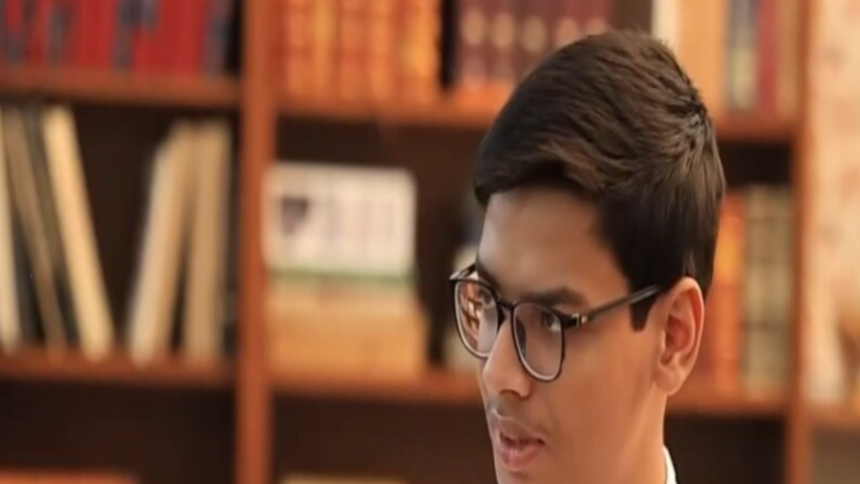
The Centre’s decision to temporarily restrict Telegram ahead of the NEET-UG 2026 re-examination is a “bad idea”, according to a Class XII student who exposed irregularities in CBSE’s On-Screen Marking (OSM) system.

Sarthak Sidhant, who highlighted it after analyzing the digital evaluation system and tender documents of CBSE, said the decision will affect many legitimate users of the platform.
“Banning Telegram nationwide, just because of NTA’s incompetence, is generally a bad idea because many teachers and other professionals use Telegram to share resources,” Siddhant told Hindustan Times.
“Telegram is also widely used for many other reasons like secure communication, media consumption, many companies and tech projects are using Telegram API to create automated customer service bots, etc,” he added.
Read also | Access to Telegram has been restricted in India until June 22 to prevent NEET re-exam fraud
His remarks come after the National Testing Agency (NTA) welcomed the Centre’s decision to temporarily ban Telegram in India ahead of the NEET-UG 2026 re-examination scheduled to be held on June 21.
The re-examination is being conducted after the original NEET exam conducted in May was canceled after the question paper was leaked by insiders. The Central Bureau of Investigation (CBI) has launched a probe into the exam scam.
Why was Telegram blocked?
Days before the retest, rumors of another paper leak appeared on social media. The Fact-Checking Unit of the Press Information Bureau (PIB) and the NTA dismissed the allegations as fake and asked the candidates to rely on official sources only.
Telegram’s message editing feature was allegedly being used to create fake evidence of paper leaks, NTA said on Tuesday. Channel admins can edit old posts after the exam and replace attachments with question papers while keeping the original timestamp, according to the agency. These posts can then be shared as supposed evidence that the paper was leaked before the exam.
As a result, the Ministry of Electronics and Information Technology (MeitY) has banned Telegram in India until June 22. It has also asked the platform to disable the message editing feature in India until June 30.
The NTA said the steps are aimed at stopping the spread of fake paper leakage claims and preventing cheating rackets from targeting students and their families.
Read also | ‘Adding more pressure’: Former BJP leader Annamalai questions tight security measures taken by Center for NEET retest
Who is Sarthak Siddhant?
Sarthak Siddhant is a student from Ranchi who grew up Concerns about CBSE’s OSM system.
After getting scanned copies of the board exam answer sheets, he said he noticed discrepancies in his marks and started examining the assessment process and tender documents at CBSE. He later presented his findings before the Parliamentary Standing Committee on Education.
NEET 2026 paper leakage issue
The NEET exam was canceled after authorities confirmed the leak of the question paper, leading to a CBI probe into the network involved in distributing the papers.
Among the main accused BV Kulkarni, Chemistry Teacher, Manisha Mandhari, Biology Teacher and Manisha Havaldar, Physics Teacher. The CBI claims that they played central roles in leaking questions from their subjects.
The agency also arrested Manoj Shiruri, a doctor from Latur in Maharashtra, and Tejas Harshadkumar Shah, a physics teacher at a coaching institute in Pune. According to investigators, Shirori allegedly helped three students get leaked chemistry questions, while Shah received leaked physics questions before the exam, HT reported earlier.
13 people have been arrested so far. The CBI has conducted searches at 49 locations and says its investigation is ongoing.
A Delhi court has now allowed Yash Yadav, one of the accused in the case, to appear for re-examination while in judicial custody. The court said the right to education was a fundamental right and the NTA issued him an admit card without objection.