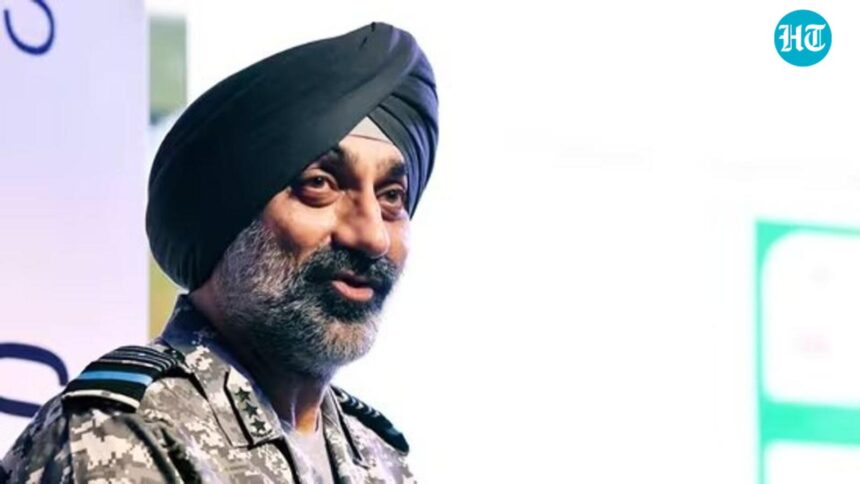
“To delay technology is to reject technology, and if the world has moved on by the time we produce something, it will not make any sense,” Air Chief Marshal Amar Preet Singh said on Wednesday at Karnataka’s Seabird Naval Base in Karwar after commissioning the Indian Navy (INS) Malvan, a shallow-water anti-submarine vessel.

He also praised the Navy for achieving 80% original components in the warship, and called on the Air Force to do the same.
“It’s very important to build indigenous technology. It’s important to do R&D at home. It’s very important to grow and stay relevant at your own pace. If you’re growing so fast that by the time you design, develop and produce something, the world has moved on to a new technology, it won’t make any sense,” he said.
“The Indian Navy has adopted this very early. It took us (the Air Force) some time, because different sectors take different times to grow. In terms of naval shipbuilding, India has always had an advantage and we have carried forward a legacy in shipbuilding and very good progress has been made in com. atmanirbharta(Self Reliance) Regarding shipbuilding and I was told that 80% in terms of value is not an average task.
“I hope the other two services – especially the Indian Air Force – will learn their lesson on how the Indian Navy has been able to get this whole concept right. You have Indian Navy officers integrated into shipbuilding from the very beginning. These people grow up in the same chain and become the most senior in that shipyard,” he said, adding that the IAF had to adapt to ensure that our dream of self-reliance would soon become a reality.
INS Malvan, built by Cochin Shipyard, is designed to operate in waters where larger ships like destroyers, frigates etc cannot operate and face the challenges of shallow water warfare. The ship is equipped to detect, track and respond to underwater threats while also supporting maritime surveillance and coastal security operations.