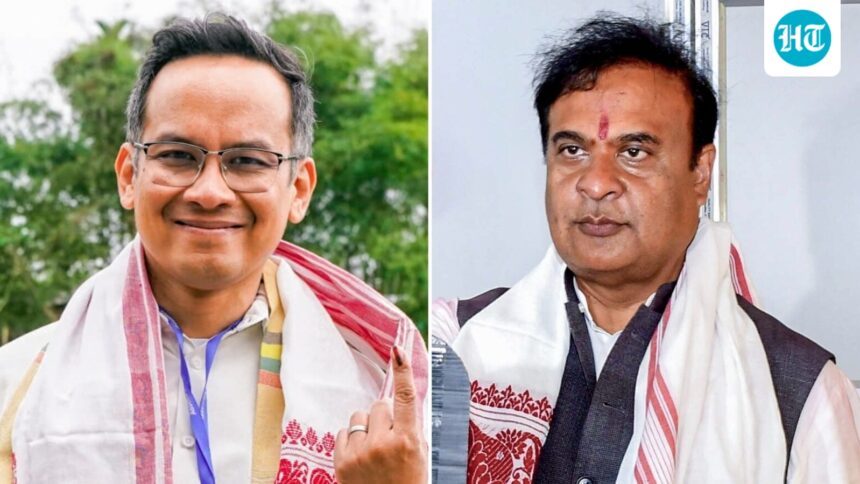
Ballot papers in Assam’s Jorhat mentions Hitendra Nath Goswami and Gaurav Gogoi, but the real contest appears to be a proxy showdown between Prime Minister Himanta Biswa Sarma and the opposition leader of the Congress party.

while With the high-turnout April 9 polls now closed, the May 4 result will determine which leader’s vision for Assam has truly captured the public’s trust.
Jorhat Assembly Elections 2026: Candidates
For the ruling Bharatiya Janata Party, the choice was Hitendra Nath Goswami, a former Assam Assembly speaker known for his modest lifestyle. Goswami lives in his ancestral home and has been described by the Prime Minister as a “common man” candidate.
On the other hand, Congress took a high-risk gamble by appointing the state president and the incumbent MP, Gaurav Gogoi. The son of former Prime Minister Tarun Gogoi, he is contesting his first Assembly election.
Himanta Sarma vs Gaurav Gogoi competition
While the candidates were campaigning, the story was driven by the rivalry between Sarma and Gogoi.
Sarma spent years consolidating the BJP’s hand through development projects and frequent visits to Jorhat.
Meanwhile, Gogoi is struggling to regain lost territory for his party and prove that the Congress is still capable of challenging the BJP’s organizational machine.
Jorhat: BJP stronghold under pressure
Jorhat has been a BJP stronghold since 2016, with Goswami winning two consecutive terms. However, recent electoral trends indicate that the political ground is shifting in the constituency.
in In the 2021 Assembly elections, Goswami won by a margin of about 6,500 votes, but in the 2024 Lok Sabha polls, the same segment saw a swing, with Gaurav Gogoi leading by more than 12,000 votes.
The April 9 election recorded an estimated turnout of 85%, an unusually high voter turnout.
Bharatiya Janata Party vs. Congress: Influencing Factors
Congress entered the race buoyed by Gogoi’s previous parliamentary success and alliance with regional parties like the Assam Jatiya Parishad. They focused their campaign on anti-incumbency and anti-corruption claims.
The BJP countered this with its vast grassroots network and the influence of the Prime Minister Himanta Biswa Sarma. They focused on their welfare plans and criticized Congress for its changing voter base. The recent demarcation of constituency boundaries has also put more power in the hands of 1.48 lakh voters, the majority of whom are women.