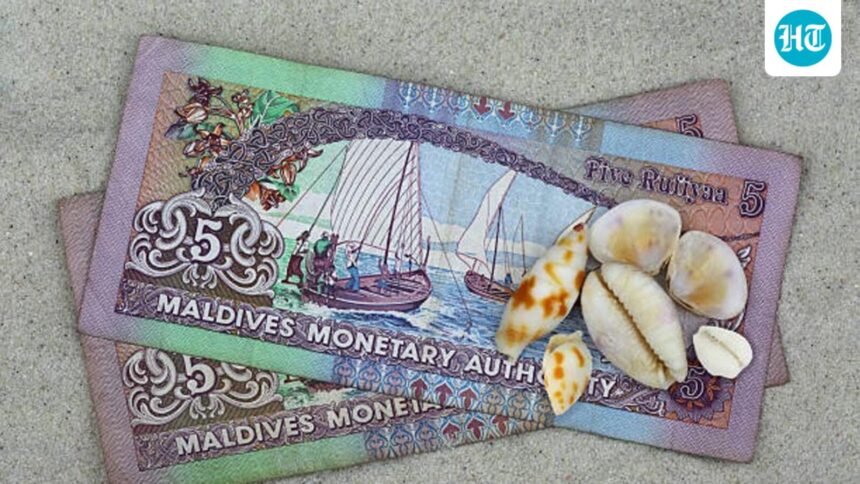
The Maldives’ request to extend India’s currency swap facility ran into problems due to rules and regulations governing the scheme, such as the need for a “cooling-off” period between withdrawals, people familiar with the matter said.

India has played a key role in helping the Indian Ocean archipelago deal with its balance of payments and sovereign debt crises in recent years, providing credit lines and assistance under the SAARC currency swap framework. Short-term financial support, including a $400 million currency swap facility in October 2024, helped the Maldives address liquidity pressures.
The October 2024 currency swap facility was extended twice despite strict rules and requirements, and the Indian side also renewed interest-free treasury bills worth $50 million in May and September 2025 for an additional year, the people said. Residents described these measures as an “exceptional gesture” for a close neighbor.
The Maldives recently asked India to extend the currency swap facility again. However, while the Indian government is considering this application, the current rules and conditions of the currency swap facility, such as the need for a cooling-off period between withdrawals and the maximum number of rollovers allowed, make it “extremely difficult” to consider it in a favorable manner, the people said.
Relations between India and the Maldives deteriorated a few years ago when President Mohamed Moizo took power as part of the “India Out” campaign and sought to bring his country closer to China. However, relations improved after Moiso was among the regional leaders invited to attend Prime Minister Narendra Modi’s inauguration in 2024.
The thaw continued with Muizzu’s subsequent visit to India in October 2024, when India agreed to provide support to more than $Rs 6,300 crore to Maldives to overcome foreign exchange crisis. This included the renewal of treasury bills worth $100 million, currency swap arrangements worth $400 million, and… $3000 Crores.
The Maldives is currently experiencing a stressful economic situation exacerbated by the impact of conflict in West Asia. Tourist flows, especially from wealthy Gulf states, have fallen dramatically and energy costs have risen. The Maldives’ ability to raise more loans may be negatively affected in this situation, the people said.
Adding to the financial fragility is the repayment of nearly $1 billion in debt in April, including $500 million in Sukuk bonds and a $400 million currency swap with India. On April 1, the Maldives government announced that Sukuk bonds worth $500 million had been repaid, along with interest payments worth $24.68 million, from foreign exchange reserves and the Sovereign Development Fund.
The sources said that if India is not in a position to agree to the Maldives’ request to extend the currency swap facility, this could exacerbate the financial challenges facing the economy in the short to medium term.