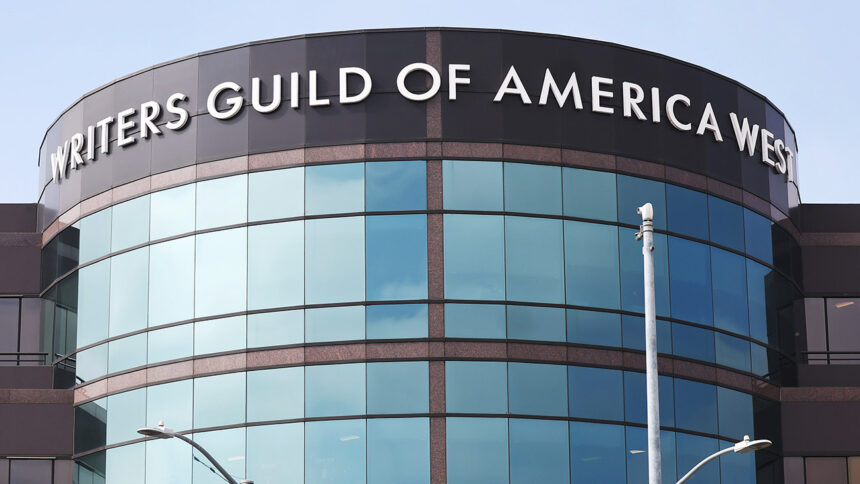
The Writers Guild of America on Wednesday revealed details of the surprise four-year deal that leaders reached with the studios and streamers last weekend, revealing that the tentative contract contains a $321 million infusion into the guild’s struggling health plan, higher foreign and domestic residuals and language covering work authorization for artificial intelligence training..
The deal also raises the minimum payout by 10.5 percent over four years, improves the union’s streaming success bonus and increases second-step payments to screenwriters.
“Thank you for your support throughout these negotiations,” union leaders said in a letter to members Wednesday containing a summary of the agreement and a memorandum of agreement for the deal. “We felt it every day, and this outcome would not have been possible without the strength and solidarity for which this membership is known.”
The WGA West Board of Directors and the WGA East Board unanimously approved the agreement when they met on Tuesday. Meanwhile, union members will hold a vote on whether or not to ratify the deal between April 16 and 24.
Health plan revitalization was the key issue for writers this round after the plan cumulatively drained $122 million in 2023 and 2024. The contraction of the traditional film and television business as well as general health care inflation have impacted the plan’s financials.
The hundreds of millions pumped into the plan under the deal represents the largest increase ever in this union benefit, according to a studio source familiar with the negotiations. This boost is due in large part to increases in writer’s earnings caps that lead to healthier contributions. For example, the cap on screen projects will increase from $250,000 today to $400,000 by May 2, 2028. The studio source said the caps haven’t changed in decades and that’s a major reason why the book deal closed in just three weeks.
The agreement also increases the Health Fund’s contribution to declared profits by 3.25 percent in the first year of the deal and 0.5 percent in the second year of the deal, at which time the contribution rate will be 16.75 percent. The deal will also transfer $25 million from the union’s paid parental leave fund to the health fund. The WGA told members in its summary of the agreement that the Paid Parental Leave Fund “will continue to maintain sufficient funding to pay benefits.”
But these changes will come with some reductions in the benefits that writers will receive in return. Starting in 2027, active plan users will go from no monthly premiums to having $75 monthly premiums. Deductibles and out-of-pocket maximums will increase and changes will be made to out-of-network behavioral health care reimbursements. Starting in 2027, the earnings limit required to qualify for coverage will increase from $46,759 to $53,773.
As WGA materials about the agreement reveal, the writers did not receive the AI training compensation they desired, which was supposed to result in pay when their work is used to create generative AI output. However, they put in place a requirement that companies provide written notice if they license scripts (or projects based on those scripts) to train a commercial AI system that will then create something new. The Guild also acknowledged that it could request a discussion of any such license that could cover potential compensation for the writer.
As is usual with union agreements, the deal also increases writers’ wages. Most minimum payments to writers will increase by 1.5 percent in the first year of the contract and 3 percent in the second, third, and fourth years. The remaining base of high-budget domestic and foreign live broadcast projects will increase by 2.5 percent in 2027 and by another 2.5 percent in 2029.
Meanwhile, the most successful streaming platforms (Netflix, Amazon, Disney+) will pay more of the foreign surplus to writers. These remaining payments will increase by 6 percent in the first year of the contract and then increase according to the remaining basis for the second and fourth years.
The union’s live streaming success bonus will also see an increase from 2027, with titles watched by 20 percent of domestic live subscribers receiving a bonus of 75 percent of the remaining domestic and foreign, up from 50 percent.
For screenwriters, the agreement increases “second step” payments when they are hired to write a first draft of a screenplay from 200 percent of the applicable minimum to 225 percent. It sets a minimum payment for a “front-page” rewrite—when a writer is tasked with essentially rewriting an existing screenplay—that is higher than typical rewrite fees.
Starting in 2027, TV writers will receive a new rule that “if/then” deals cannot be exclusive until the company pays the writer an initial fee, the first step of the pilot program. Formatting fees will increase by 42 percent and extended protection will cover more writers.
The WGA’s initial contract length – four years – represents a significant departure from the long-standing three-year rule. like THR As I previously reported, the AMPTP sought a longer deal period in order to secure greater labor stability following the twin strikes across the industry in 2023. But for the union, reaching a longer deal at a time of industry consolidation and rapid developments in generative AI is a gamble. Studios always had to sweeten any deal with the WGA to convince them the risk was worth it.
The WGA and AMPTP officially confirmed they had reached a new contract on Saturday night after multiple outlets, including THRIt was reported that a preliminary agreement had been reached earlier today.
WGA West Executive Director Ellen Stutzman led negotiations for the union with negotiating committee co-chairs John Auguste and Daniel Sanchez-Wetzel, while AMPTP President Greg Hessinger led talks for studios and banners.