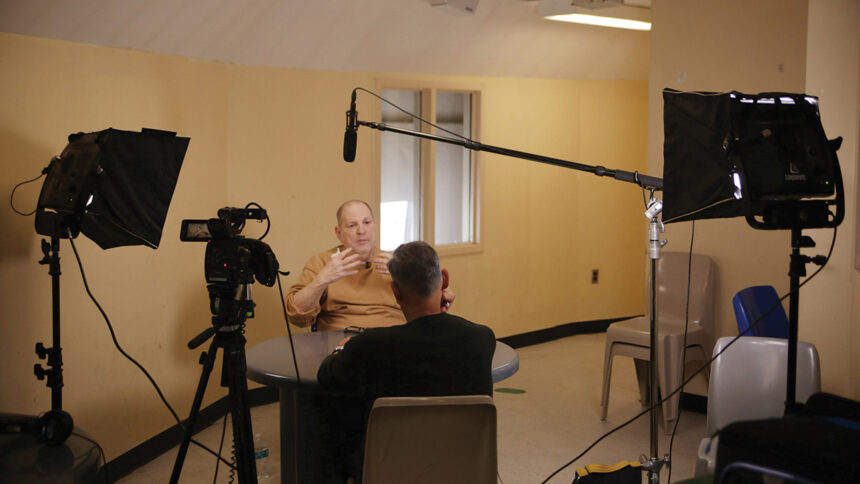
When my interview with Harvey Weinstein was published in these pages last month, the reaction was immediate and intense.
Within a day, thousands of comments flooded social media, with more pouring in THR. The story went global, spreading to Europe, India and beyond, reigniting the debate over Weinstein’s crimes and devastating legacy. In keeping with the trend of the moment, some responses crossed more personal lines — including text messages to my cell phone that read: “We know where you live, Jew.”
For many, Weinstein’s appearance was like a visit from an unwelcome ghost. “No one wants to hear from this monster” was the common phrase. Yet many people did. Millions of readers responded to the interview, which spent days among the most-read articles on our website. I’ve heard from hundreds who appreciated the opportunity to tackle something more complex than just a logo.
None of this came as a surprise. I spent six months pursuing an interview, braved a blizzard on my way to Rikers, and yet woke up with a pit in my stomach the morning I was scheduled to head out. I knew how flammable it would be. Its impending publication has raised doubts – and anxiety – even at home THR. In the end, I published it for two simple reasons: it was newsworthy, and it was interesting. Which, in my opinion, remain the basic standards by which journalism should be judged.
Weinstein is one of the most consequential figures Hollywood has produced in the past half-century — a man who reshaped independent film, dominated the Oscars, and, through his downfall, helped launch a global reckoning that still resonates. We published the interview in our Oscars issue because few people have cast such a long shadow over this ceremony, for better and for worse.
Since his arrest, Harvey has remained largely silent. He did not testify at the trial. He did not give a lengthy interview. This was an opportunity to interrogate him at length, and to record him in the report.
My interest in this story was personal as well as professional. Early in my career, I worked alongside Weinstein on… He speaks Magazine, under the leadership of Tina Brown, is at the peak of its powers. I watched his dazzling fall in shock and amazement. What did you learn from this ordeal? What, if anything, was left of the man after this stunning collapse?
I went into the interview fully aware of his victims, and determined not to do anything that would mitigate his crimes. I challenged him repeatedly — about his apology, the dismissal of his accusers, and the gulf between his self-image and the verdicts of three juries. The result was far from flattering.
The man who emerged was angry, self-pitying and delusional, and eight years of imprisonment had produced nothing resembling true remorse. Yet, at times, he was also remarkably human: engaging in Hollywood gossip, moved by movies, and sometimes strangely charismatic. It’s hard to sit with this contradiction. We prefer our villains flat and two-dimensional. Real people are more complicated than that.
The job of journalism is not to portray life as it should be. It is a depiction of life as it is, no matter how messy or distasteful. This idea once felt like a no-brainer. Increasingly, that doesn’t happen. Too often now, reporters and editors are expected not simply to inform the public, but to protect the public from people or ideas deemed too harmful to confront. I think readers have the right to decide that for themselves.
None of this changes who Weinstein is or what he did. Long after this interview is forgotten, he will continue to live a bleak life behind bars. His review of our interview was perhaps the most telling.
In the weeks leading up to publication, he phoned me repeatedly, pressing his case in tightly controlled 15-minute bursts. After the story was published, the calls stopped. Then, on Oscar night, as I approached Dolby, my phone rang. Weinstein was furious, ranting about his filming, about quotes that didn’t make the final cut, and about the full video that has yet to be released. “Harvey,” I reminded him when his outburst was over, “I no longer work for you.”
Mayer Roshan, Editor-in-Chief
This story appeared in the April 8 issue of The Hollywood Reporter magazine. Click here to subscribe.