“Sometimes, you have to be bold about it,” Cheryl Lee Ralph says. The Emmy winner is among the first to log on to a Zoom chat about her new film Rickyand before everyone else arrives, nicely sums up their film’s journey of defying expectations.
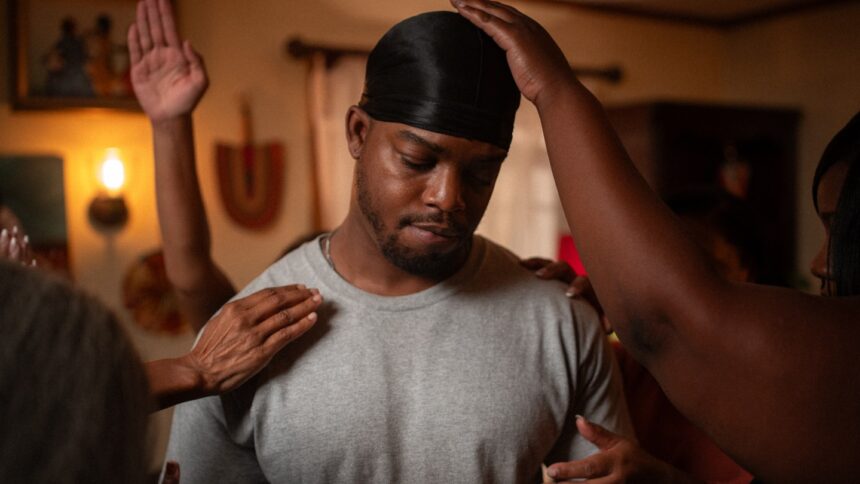
Coming from debut feature director Rashad Freight with a production team that includes Sterling Brehm, and also his first film, Ricky It premiered 16 months ago at Sundance to wide acclaim and won the directing award in the festival’s competition. The drama intricately focused on a 30-year-old man’s reintegration into society after being imprisoned since his teens, and featured strong performances from Ralph and If Beale Street could talk alum Stephan James. But in a challenging and changing independent film landscape, distributors weren’t delivering what they had hoped – and the opportunity to get creative came.
Really bold.
Facilitated by Blue Harbor Entertainment, Ricky It is self-distributed, with the filmmakers continuing to retain rights as they prepare for an April 24 theatrical release. The Kickstarter campaign also helped increase its targeted focus. “We wanted to make sure that people who are actually affected by recidivism and the prison system could see this movie,” Brehm says. “I wanted to make sure that people in Chicago and Detroit and any of the major cities you can think of that include people of color and marginalized groups could see this movie.”

Frett says he “grew up in an environment.” Rickyabsorbing many of the narratives and situations depicted in the film since his childhood. He focused on documentaries before making his first short film of the same name. The film is notable for its realism: Fret maintains a strict focus on the realities of life after prison, and the screenplay occasionally hits painfully realistic beats while the filmmaking embraces the chaos of life as it happens.
“I wanted to make this movie as visceral and real as possible, so I was telling the cinematographer, ‘Find the shots, find the frame,'” Frett says. “We were on the headset and I was always in his ear: ‘Just follow the movement.’”
James, who plays the role that bears his name, adds, “It felt like a movie that was made on purpose, with a purpose. Every frame of this movie was calculated….You’re dealing with a 15-year-old boy entering puberty for the first time [at 30]. As a character study, it was very fascinating. He has spent a lot of time with teenagers observing the way they move and engage with the world. “I had to delve into the psyche of a 15-year-old boy,” he says. This is where we meet Ricky regardless of his actual age: “I take great pride in understanding the full picture.”
Ralph portrays Ricky’s parole officer, Joan, and was drawn to working with James as well as the story itself. “We don’t see a lot of stories of successful black youth, marginalized youth going out and living the life they dreamed of,” she says. “This scenario spoke very well to a lot of the things that these young people face when they come out of the system, and how they initially get involved in the system.”
The film’s success at Sundance did not generate much commercial interest, a larger issue for last year’s competition among American feature films, many of which took about a year before being distributed. (Grand Jury Prize Winner Atropia It was acquired in October, 10 months after the festival.) “We approached this type of film in the best way possible,” Fret says.
“We’re trying to be creative as the industry changes and discover new ways to show quality independent films – and as a young producer, you don’t want to watch anything that you let die,” Brem adds. “For those people involved, I knew we had to make sure this lived and that it could live among the people it needed to live among.”
This is exactly what Ricky Filmmakers are starting to do this. Various performances have been conducted over the past year with the aim of direct community engagement. Ralph attended a question-and-answer session at the San Quentin Men’s Prison Rehabilitation Center, and is still deeply affected by his memory.
“We were in a room with guys who looked very much like the character in the movie — some of them were older, but they were still that character; some of them were that character at that moment,” Ralph says. “There were moments during the movie, and you could hear a pin drop… and they were like, ‘Wow.’ And there were moments in the movie where they started responding to the movie…. It was a moment of being a human being with other human beings trying to figure out what the next step is, even if they’re in their 20s and won’t be out for another 50 years. I’ve never experienced anything like that.”
“People are going to watch this movie and say, ‘Wow, I see myself in a way I’ve never seen myself before,’” James says. “‘People look up to me, they look up to me.’ That’s really the greatest testament to my ability to make a film like this.
There will be a learning curve as the theatrical release approaches for this group of artists, all of whom are embarking on this type of indie release for the first time. Frett teaches directing at Brooklyn College and even acknowledges the promotional aspects of directing Ricky It was a bit daunting. Prem entered Ricky After a long stint as co-host of the comedy show SarcasmAnd with his fellow producers, he did not take the easy or safe path. But none of the participants seemed to question the choice, no matter how recent. In their eyes, this was the right, even obvious, move; They hardly feel the need to explain it.
But leave it to Ralph to do that.
“The offers didn’t come in — or they came in late, or they were slow — and people didn’t know if they wanted to take on the subject,” says Ralph. “That happens a lot when it’s an independent film that has something to say about people who are often marginalized — whether they’re in prison or out of prison — just because of who they are and who they are.” “So it’s audacious to say, ‘You know what? If you’re not going to open the door for me here, I think enough about the business I’ve built to come out and say we’ll do it ourselves. “We’re building this thing ourselves because we refuse to not see it.”