Logo text
Perhaps there are easier ways to write a crime thriller steeped in gritty realism than centering it on a villain made of gas. When Japanese director Shinzo Katayama signed on to direct Human vaporNetflix and Toho’s lavishly budgeted eight-part streaming series about a Tokyo killer who carries out murders as a disembodied, shape-shifting cloud, agreed to risk his growing reputation on the most literally intangible antagonist in recent Japanese screen memory.
“What interested me most—and what I was most looking forward to as well—was how to depict human steam itself,” says Katayama. Hollywood Reporter. “I had never done a creature film, and I had no experience shooting something I couldn’t see – I had to work purely from imagination, because the creature wasn’t visible on set.”
Ironically, the fact that all of this had been done before — and with great success — only heightened the director’s anxiety. Human vapor is a serialized re-imagining of the classic 1960 Toho film of the same name, directed by Ishiro Honda – the director who had introduced the world to Godzilla six years earlier – with effects by Eiji Tsuburaya, the legendary practical effects creator who co-created both Godzilla and later Ultraman. inside Tokusatsuwhich is Japan’s long tradition of special effects filmmaking, and there are no two characters that loom larger than that.
“I would be lying if I said I didn’t feel pressure while leading this project,” says Katayama. “There are a lot of fans of this genre, and I wonder how they will receive our show. Throughout the work – until now – I have been hoping not to disappoint them.”
The strong and the weak
Katayama, at least, did not lack high-level support for the project. Toho Co., Japan’s dominant movie studio, has finally relented after years of overtures from Netflix and partnered with the company on what will become its first streaming series, opening the doors to its 90-year-worth vault of Japanese intellectual property in the process. Human vaporThe film’s screenplay was penned by Yoon Sang-ho, the Korean auteur behind blockbuster zombie films Train to Busan and colonyHe writes with his regular collaborator Ryu Young Jae. Most importantly of all, the series’ ambitious visual effects came from Shirogumi, the Tokyo troupe that made history at the 2024 Academy Awards by winning a Visual Effects Oscar for their role in Shirogumi’s film. Godzilla minus one. Netflix provided the global platform and generous budget — along with expectations to match: Co-CEO Ted Sarandos singled out the show as a major 2026 title in a 2025 earnings call. All eight episodes premiered worldwide on July 2, and the result represents something truly new for the Asian business — a pillar of support that brings together some of the most celebrated talent and best production and post-production entities in the Japanese and Korean industries, two screen-side powerhouses that have historically collaborated much less frequently than might suggest. With their proximity, to create an address designed for travel both regionally and globally. How it will fall will become clear in the coming days.
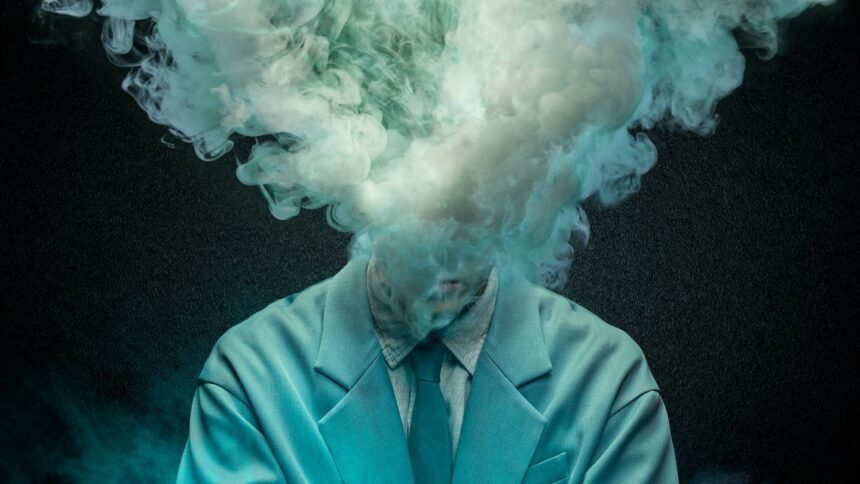
The new version of Human vapor The story begins with an image worthy of the original 1960 poster art: an obese college professor, in the middle of a live television broadcast, begins to convulse as creepy steam slides into his nostrils. It inflates, then gently lifts off the ground and explodes – a burst balloon of human entrails, raining down on the studio full of witnesses. Among them is Kyoko (Yu Aoi), a hardened TV news reporter, who is reunited at the crime scene with Detective Kenji Okamoto (Shun Oguri), her former lover, who has recently been suspended from working on the case. Before either of them can process what they’ve just seen, a young man calling himself Human Vapor (model-turned-actor, Uta) releases a video claiming responsibility and announcing more killings to come – with each target eventually revealed to be connected to a mysterious facility known as the White Center. What begins as a murder investigation escalates into a collision of suspicious agendas, as the police, mass media, hard-working YouTubers, the yakuza underworld, and Tokyo’s political class orchestrate their own version of the truth – either for the sake of justice or self-preservation. More than just source material, the new series is a dark mystery mixed with a searing social thriller.
“I also wanted to faithfully depict the social dynamics of contemporary Japan – the relationship between the powerful and the powerless,” Katayama says of his intentions during development.

Touhou opens the vault
The original Human vapor It was the third and final entry in Toho’s “Transforming Human” sci-fi thriller series, following the 1958 film. H man (The events of the film revolve around the crew of a ship that was transformed by the fall of the hydrogen bomb into liquid beings that melt when touched and living flesh liquefies upon contact) and the sixties of the twentieth century. The secret of the telegian (The film is about a man who uses deadly teleportation technology as a weapon to take revenge on corrupt military commanders in World War II), and was produced by Tomoyuki Tanaka, the game’s engineer. Godzilla privilege. Yoshio Tsuchiya plays Mizuno, a meek librarian transformed into an invader by a scientific experiment gone wrong, who uses his powers to rob banks – funneling money to Fujichiyo, a fallen dancer he loves, while a stubborn detective closes in. It ends in tragedy. What’s even more memorable is that Tsuburaya’s FX team conjured the gas man through pure analog ingenuity: a specially designed suit that slowly deflates and disintegrates on the ground as Mizuno’s body melts, the actor’s rubber mannequin inflating and deflating at high camera speeds in the strangulation scenes, the re-enactment of reverse motion and various visual tricks – all of which were a marvel to viewers and critics at the time.
The new series tips its hat to the original feature throughout – it retains the names of Okamoto and Kyoko’s characters; Her explosive professor is named Sano, after the original mad scientist; It subtly echoes the heart-rendering gesture that Tsuchiya created for his transformations – but it’s a loosely inspired reimagining rather than a beat-by-beat remake.
There are, broadly speaking, two rationales for the revival of intellectual property. One is Barbie Rot, where the property is so ubiquitous and filled with generational nostalgia that producers will do whatever it takes to capitalize on its commercial potential with an inspired infusion of story and screen talent. The other is almost the opposite: a concept so acute that it doesn’t matter that almost no one remembers it. outside its specialized niche, Human vapor It is definitely the last.
“Human vapor “It’s Toho IP, but it goes back a very long time, so it’s actually not very well known. There are some fairly cult fans, but compared to Godzilla, it’s very small,” says Hugh Nian, a young Toho producer who has shepherded the project from the beginning.
One of those fans happened to be Yoon. “I’ve always been drawn to subculture films – Tokusatsu films in particular,” says the writer-director. “So when Toho approached me about the reimagining Human vaporIt seemed like a natural fit. The original is a 1960 film, but when viewed today, it holds up remarkably well – cutting-edge in its expression of science fiction in ways that still feel fresh.
Yeon’s adaptation has arrived in 2018 — and the way it’s been put together says as much about Toho and the slow-moving nature of the old Japanese studios as it does about the final show. Japan’s largest studio and dominant theatrical exhibitor — home of Godzilla and Seven samurai – It has also long been, like many Japanese companies, cautious It is intentional, local, and resolute in its future outlook. But that year, Hugh and his colleagues decided to take stock of what was dormant in the studio’s library and revive something other than kaiju.
“Toho is almost 90 years old, but I felt like we weren’t getting the most out of our intellectual property other than Godzilla, and it seemed like a waste of time,” he says.
At that moment, Yeun was the most famous director in the region Train to Busan It premiered at midnight screenings at Cannes in 2016 and went on to earn over $100 million worldwide. Hyo and Toho’s then head of planning tracked down Yeon’s contact information, traveled to Korea and presented him with 10 classic titles for Toho’s library and an open offer to remake one. The film that the director immediately seized upon was Human vapor.
“Director Yeon comes from an animation background and has a deep knowledge of Japanese manga and anime – but the fact that he was so aware Human vapor “It was a surprise,” Hugh recalls. “He immediately gave us a two-page memo with ideas on how to reboot Human vapor For a contemporary audience, it was very exciting. “I knew we had to make it happen.”
Then reality enters, some of it science fiction. Yeun initially conceived the project as a feature film, but the visual effects required to bring a villainous character to life on the big screen put his proposed budget range well above what Toho—accustomed to Japanese production costs of one-half to two-thirds of those in Korea—was willing to spend. Before the impasse could be resolved, the global pandemic shuttered Toho’s cinemas and froze most of its business, and the project entered a slump.
Slow burn, then breakthrough
But the intervening years have given Japan’s entertainment giants increasing cause for urgency. Korean drama like The plane crashes on you and Itaewon class has had huge hits in locked-down Japan via Netflix, while Yeon has had his own success on the streaming device with Korean supernatural titles like Hell (2021) and after that, Parasite: grey (2024). When the long-running talks between Toho and Netflix finally gained traction, streaming’s market share was steadily growing in Japan and the title of the country’s regional neighbor – Squid game – It became the most watched show in the world. Human vapor It was then reborn as a premium series – with Yeon’s track record helping seal the deal. “The strong relationship he had with Netflix was a huge boost for him,” says Hugh.

For Toho, the late step into series production now has an existential undertone.
“When we started the project for Human vapor“The industry was largely local – people weren’t really looking to travel outside of Japan,” says Hu. “But we had our eyes on the future, and we had this strong desire to take our work to the world.”
“Whether it was a new creator, whether it was working with Netflix, or rebooting our IP – this was something we couldn’t fail at. So we really went all out,” he adds.
For Netflix, the show is the next logical step in its established strategy in Asia, where streaming still has room to grow and global interest remains undiminished. Having turned Korean content into one of the most bankable global export engines, the company has spent recent years growing Japan with resonant assets domestically — a strategy that paid off somewhat in the second half of 2025, when titles like Season 3 of Alice in Borderland and Last Standing Samurai It drove hours watched for Japanese titles to all-time highs on the service. But the company is still waiting for a Japanese live-action title that will become a true global hit – a blow to the competition Squid game Or foreign currencies Shogun For popular cultural spread.
To direct this first-of-its-kind project, Toho set its sights on Katayama, one of his country’s most in-demand filmmakers recently — and one of the few with real experience collaborating with a Korean auteur. Having worked as an assistant director under respected independent director Nobuhiro Yamashita, Katayama gained experience as Bong Joon-ho’s local right-hand man during the Japanese filming of 2008’s Omnibus. Tokyo! – He was so inspired by this experience that he moved to South Korea to serve as Bong’s assistant the mom (2009), learned some Korean in the process. His self-financed debut Ultimate in 2018, Cape brotherswon Best Film at the Skip City International Film Festival. His movie serial killer Missing (2022) premiered at the New Currents Competition in Busan and won the New Director Award from the Directors Guild of Japan; and the critically acclaimed popular horror series Disney+ Janibal (2022-25) brought him an international following among genre fans. By his own admission, Katayama knew vaguely about the 1960 film, but had never actually seen it until he received Toho’s surprise offer to direct the remake.
“It was such a huge proposition that at first I thought this must be some kind of mistake,” he recalls. “Then I got a Facebook friend request and a direct message from Director Yoon, and I thought, ‘Maybe this is actually real’ — and I was so excited.” He eventually said yes to the gig on two conditions: that he could direct all eight episodes himself and be deeply involved in the development process.
Yeun and Ryu eventually spent four years writing the scripts for the series’ eight episodes, culminating in a 2024 writers’ retreat in Seoul that Katayama joined.
“When Korean creatives work in Japan or Japanese creatives in Korea, there can be a sense of awkwardness because emotional sensitivities are different,” Yoon says. “For this project, I had many conversations with director Katayama and Toho producers about even the smallest details of the scenario—what would it be like in Japan?—and I made every effort to accommodate this feedback.”
The man who plays puzzles
most Human vaporThe main cast, made up of some of Japan’s biggest stars, was assembled quickly and effortlessly. However, the casting of human steam itself presented new questions. Unlike the 1960 film, in which Mizuno narrates his own tragedy, Yune and Katayama’s new steam is an object of mystery and dread rather than the hero of the story.
“That led us toward wanting someone who had a completely blank slate — an actor with no preconceived image,” Hugh says. It was Katayama who suggested Ota – a complete newcomer to the screen who nevertheless carried a family legacy akin to the royalty of Japanese pop culture. Born 28-year-old Ota Uchida, he is the eldest son of veteran Japanese actor Masahiro Motoki – star of the Oscar-winning drama. Departure She was recently seen in Kiyoshi Kurosawa’s historical thriller at Cannes, The samurai and the prisoner. On his mother’s side, his grandmother is Kirin Kiki, Hirokazu Kore-eda’s endlessly beloved muse and co-star of the Palme d’Or-winning film. Thieves; His grandfather was Yuya Uchida, the Japanese rock pioneer who opened for the Beatles’ 1966 Japan tour and appeared on Happy birthday, Mr. Lawrence.

However, Yuta has taken a long road to claim his family’s legacy on screen. After attending boarding school in Switzerland as a teenager, he accepted a scholarship to play Division II basketball at Dominican University in California, before eventually signing with a modeling agency in Paris and building a modeling career across Tokyo, Milan, Paris and New York. Because he spent most of his life speaking English, he hired Toh’s production o-Netflix hired a Hollywood acting coach to support him on set. Character designer Isao Tsuge – whose credits include Shin Godzilla – Vapor is styled in a manga-like long blue-gray coat, while Katayama suggests his alarmingly unaffected manner of speaking, which is later contrasted in flashback scenes with the cheerful young man he once was, who leans into Yuta’s natural youthful appeal.
“The name ‘The Joker’ came up a lot in our conversations,” says Yoshihiro Sato, the Netflix executive who ran the project from the streamer’s side. “He’s basically an antihero — but why was he born? How can we make his creation story relevant to the modern era? This is something we’ve talked about over and over again.”
However, it was all in service of the series’ central gamble: making the wild conceit of the origin story of a man made of gas compelling — and very compelling — to global audiences in the year 2026.
48,000 hours of steam
Since Tsuburaya’s craftsmen had transitioned from Godzilla to working in vacuum suits and rubber puppets for the 1960 film, it was imperative that Shirogumi handle the show’s CG VFX. The Tokyo-based company, which was founded five decades ago, made history at the 96th Academy Awards Godzilla minus one It became the first Japanese film to win the Academy Award for Best Visual Effects – and the first in cinema history Godzilla The franchise’s 70-year history to even be nominated — beating out Hollywood stalwarts like Mission Impossible – Dead Reckoning Part 1 And $250 million Guardians of the Galaxy Vol. 3whose expenditures on visual effects exceeded the Japanese film’s modest overall budget of $15 million and a skeleton team of only 35 artists.
Human vapor This would arguably be a more ambitious project. Due to the complexities of realizing the title character, which in many sequences are entirely in CG, Shirogumi began work a full 18 months before production, and by the studio’s own count, the show’s VFX work ultimately lasted 30 months, consuming 48,000 man-hours across 900 shots and a crew of approximately 230.

The design pipeline itself was an experiment. Hugh and his fellow producers began scouting manga artists via social media and commissioned around 200 pieces of concept art that imagined possible looks for Vapor. Eyeline Studios — Netflix’s in-house VFX operation, the former Scanline VFX, from which the credits roll Strange things to Avatar: The Last Airbender He then boarded the project, along with Japanese-born visual effects supervisor Ryo Sakaguchi (Netflix’s Yu Yu Hakusho) which turns hand-drawn art into a computer-ready visual language. The goal was to translate the original manga’s aesthetic into photorealistic visuals before handing it over to Shirogumi, which would bring it all into an action-packed life.
The range of behaviors that the script demanded of the character was daunting. In addition to the aforementioned opening sequence, in which steam slides into the victim’s nostrils and inflates him to the point of explosion, in the fight scenes, steam flashes between instances, landing a dizzying array of solid punches before evaporating from counter-punches. In the thrilling series, James Cameron’s car chase expands into an elongated howling vortex – a vortex capable of violently splattering itself onto windshields in an attempt to crash inside.
“There are basically too many ways to express puzzles,” says Masaaki Takahashi, Shirogumi VFX supervisor who was among the Oscar winners for his film. Godzilla minus one. “In a car chase situation, what shape would the vapor take? At the moment of explosion, how would it behave? And what would be its overall texture? We discussed each situation in depth, and had to make countless small adjustments.”
“The basic trend we were working with was that he could be anything, do anything,” anything, as long as it remained “real, not fantasy,” says Takahashi.
“This is what made this project difficult,” he adds.

Hugh adds, “In short, the gas has six or seven different modes – gas that moves slowly like a ninja, gas that moves at high speed as seen in a car chase, gas rising from a human body, etc. We had to think of each mode in each situation, and work it out in discussions between director Katayama, I-Line Studios, and Shirogumi.”
Katayama added many poetic and complex notes to the final form of Human Vapor. Rather than having the figure flash from man to gas, he asked that the change be done in stages – the skin evaporating away as if under a chemical burn, then the muscles underneath and finally the bare skeleton – a more horrific gothic progression (the team saw it as evolving in the 2000s). The hollow man) which also echoes the industrial horror of the character’s origin.
“I wanted to clearly show his transformation,” says Katayama. “By showing the process, we will create a greater sense of realism.”
He also insisted that the gas itself had a personality. “I was very conscious of treating the gas as if it were a life form or a living entity,” he explains. “There are some scenes where she seems to be moving in a gentle, almost adorable way. Even though it’s scary, it has a playful element to it that makes it seem closer to life.”
What comes next?
For Takahashi, having just won an Oscar, the visual effects work on the show was monumental in scale, but ultimately involved not so much a technical breakthrough as an emotional one.
“Technically, things haven’t changed much,” he says. “But that experience — and that recognition — gave me confidence. Now I have this belief that what I think is great is not far from what the audience will feel when they see the picture.”
if Human vapor Already finding traction with Netflix viewers globally, Japan’s most popular studio may have every incentive to extract more from its trove of intellectual property.
In January, Netflix announced an expanded production agreement with Toho Studios that would double the streamer’s physical production footprint in Japan, but the companies remain coy about whether more live-action co-productions are already under discussion.
Hu points out that the studio’s Transforming Human series has other characters and stories — and Toho has a lot of intellectual property outside of its own: “When the right opportunity comes along at the right moment, we’ll definitely be open to it.”
“I’ve been sending love letters to Hyo-san,” Netflix’s Sato joked. “I don’t know if he’s received them yet.”