It’s not just film screenings at the Karlovy Vary International Film Festival (KVIFF), whose 60th edition takes place in the Czech Republic from July 3-11. For people working in film, TV, publishing and beyond, there’s also work to be done on the festival’s extensive and expansive Industry Days programme.
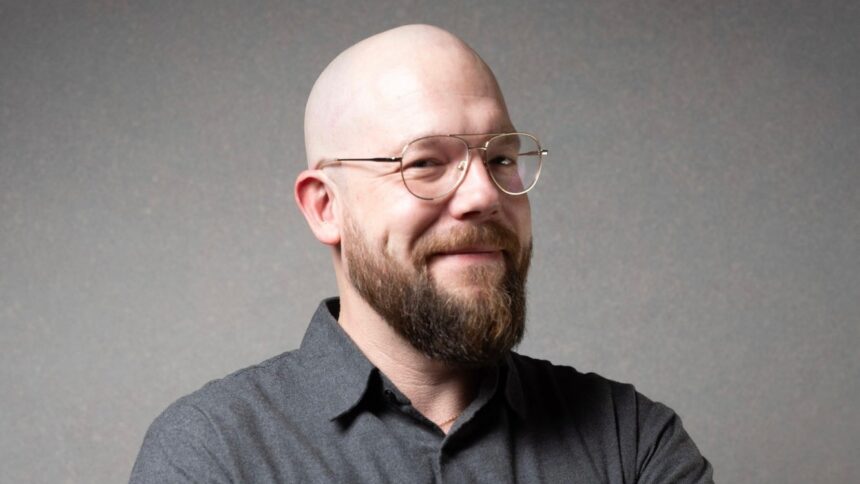
Hugo Rusak, head of KVIFF’s filmmaking bureau, has been particularly busy this year, preparing innovations, additions and modifications to existing events under the umbrella of the major Czech festival.
His team has garnered star power for the program, which runs July 5-8, with writer, producer and actor Sharon Horgan and cinematographer and director Andrej Parekh (succession) Discussing “The Cinema Series: Storytelling in the Age of Streaming,” highlighting Jude Law’s production company Riff Raff Entertainment with co-founder and producer Ben Jackson and Katie Sinclair, Head of Film & TV, among other big-name shows.
In a conversation about what the 2026 edition of KVIFF’s industry programming will bring, whether new, improved or traditional, Russak said THR On the need to constantly evolve in line with industry trends and needs, how the rise of artificial intelligence and micro-drama will be reflected in the program this year, and why the film industry shouldn’t feel too insecure.
Let’s start by talking about some new things this year. You’ve unveiled 11 directors for the second edition of KVIFF’s Center Stage Films-in-Progress showcase, and you’re presenting the inaugural Book-to-Screen program.
Yes, it’s always about where an industry platform can help. The idea is that we have to play a certain role within the ecosystem that can support filmmakers and also the wider industry. In our context, we’re really trying to look at the Central and Eastern Europe region and identify some things that maybe could be improved.
The question of books came up naturally, because we saw that even though other markets were seeing similar events, they didn’t necessarily offer the opportunity to choose books from our region. So when the possibility of partnering with Frankfurter Buchmesse came up, we felt it made a lot of sense. Adaptation rights in the region do not work in the same way as they do, for example, in France, Germany or other parts of the world. It is often very difficult for producers, especially for independent producers, to have access to book titles, and authors do not always give up adaptation rights to publishing houses, but rather retain them. Sometimes, they give up without necessarily being able to evaluate the different options and opportunities available to them.
So, we saw a need to step up the industry a little bit and provide a space where independent producers could access and see the different titles we helped select, and through partners, access the publishing world. We also wanted to start a discussion, so we will have a think tank this year to have conversations to identify some of the missing or potentially problematic issues that may need some support. We hope that next year in Karlovy Vary we will already have a list of recommendations, or some white papers.
What role did the Berlinale Book Adaptation Initiative play at KVIFF?
This whole idea of modifying books actually comes from the Berlin market. We were inspired by this idea, and with their kind support, we were able to capture the Central and Eastern European region.
Can the quotes be from a movie or a series?
We leave this open. A story is a story, and it’s really up to you how you handle it best. So we’re not saying it needs to be a movie-type story, because series nowadays provide more time and more opportunities to delve deeper into the stories. So it is open in both directions. I think these worlds are not that divided. Producers often work across both formats nowadays, and the same is true for writers and directors.
What about emerging forms?
We also hope to address other on-screen objects and shapes. This year we’ll be dedicating some time to small vertical drawings. I see it as part of how the landscape in cinema, and in the audiovisual industry in general, is shifting so quickly. I see the need for producers to start diversifying what they do a little bit, because eventually they will have to face moments of survival.
So I want to focus on the idea that stories can be told in many different ways, and as producers or directors, the different channels that we work through in different ways can allow us to continue doing the things that we care deeply about. We’re seeing this huge boom in Asia and the US with mobile-related formats, and even though it’s a completely different storytelling structure, it still requires people behind it to create and craft it.
I think that in Central Europe we also face the problem of production value, especially in soap operas and television. We hope that the value of the entire production will grow, and ideally that can make different stories more exportable, so we will also dive into tools that producers can use to improve the value of the production.

Does this include artificial intelligence?
This of course touches on AI as well, although we don’t want to get into that “Hey, look, there’s AI!” We really want to provide some practical tools that producers can use and that they can discuss with different studios in terms of how they can use them at what cost and in what way.
You have revealed 11 directors for the second edition of your KVIFF Central Stage show, and they are not new faces but experienced people. Why is this?
Again, we really try to identify areas where we can be useful and helpful. In this case, we saw a gap in terms of how different markets and festivals support directors and producers who have already worked on their films, who have already come to festivals, but still have no difficulty putting a film together at the financing stage.
So, we try to highlight them better, give them a chance to show how they think about their films, and give these already experienced teams, who are working together in existing systems and still struggling to find all the money they need, a stage.
In collaboration with the U.S. Embassies in Bratislava and Prague and Film Independent, a Los Angeles-based non-profit organization that supports independent filmmakers, KVIFF Industry Days will also host the U.S. State Department’s Global Media Makers Residency, a program for 14 to 20 independent producers from the Czech Republic and Slovakia that is designed as an intensive hands-on residency. Tell me about it!
We’ve been following the work of Film Independent, which is an organization in the United States that tries to connect Hollywood with the rest of the world and connect filmmakers who work on independent films. For a long time, it was a bit difficult to find ways to collaborate just for financial reasons, but this year it happened. They were able to find a grant where we could choose 15 products.
I don’t mean to sound too pessimistic, but I really believe that in the next couple of years, the world of filmmaking, in terms of how it is financed and how films are sold, which is already going through rapid changes, will face greater threats because there will be less financing available. I think fewer films will be produced at the levels we are used to.
So I think filmmakers need to at least learn how to work a little differently, or have backup plans a little bit. The United States is an interesting system because it is very different from Europe in terms of financing and how it relies more on private equity. Putting films together is also a matter of investment, so in order to put together an independent film, you also need to put it together and put it together differently. You have to think about the audience, and you need to get someone to buy into the story, so it’s A different path than trying to convince the boards of film funds to support you for cultural purposes. So, there are things we need to learn from the American finance and marketing model.
Jude Law’s production company Riff Raff Entertainment will also be the center of attention in Karlovy Vary!
Yes, we have chosen Riff Raff Entertainment as the production company in the spotlight. It’s an interesting company in terms of how they compose their roster, how they work with talent and how they develop films. So, we want to hear a little about how they think about it, what they are doing and how they see the future.