Let’s be honest: business is slow. At this point in the typical Cannes film market, there have usually been at least a few big deals, or a bidding war or two. Instead, cockroaches.
The corridors of the Palais des Festivals are crowded enough – there are plenty of displays on display and buyers and sellers making the rounds. But the deals are not coming, at least not at the pace or volume that the market used to reliably deliver.
The independent film industry, quite clearly, is in transition – and no one has figured out where it’s going.
The old model, which maintained an independent ecosystem, is clearly eroding. At its center was the pay-TV window: a lucrative, predictable revenue stream that allowed distributors to take risks on projects in pre-sale, backing films before the frame was shot based on talent attachments and promising exposure. That window has largely collapsed, squeezed by streaming platforms negotiating their own deals directly and on their own terms. What independent distributors are left with is a landscape stripped of the financial cushions that once made the risk viable.
Without a single payment window, distributors simply won’t be willing to pre-buy the way they used to, especially at the high end, for $50 million-plus projects, unless they are clear mainstream theatrical plays with big, bankable stars. This type is few and far between at Cannes Marche this year.
For producers, says David Garrett of Mister Smith Entertainment, who has been navigating these markets for decades, “it means relying more on equity financing and soft money to finance films.”
The result, in Cannes Marche, is a buyers’ market without enough buyers – or at least without buyers willing to commit large amounts up front. Films that would previously have elicited competitive bidding are screened to attract polite attention and non-binding follow-up meetings. The producers are waiting. Sellers are waiting. Everyone is waiting.
But that’s the thing about a void: there’s always something to fill it. And this year at Cannes, you can start to see the broad outlines of what this could be — not one model, but several, each built on a different answer to the same question: How do you finance a film and find its audience when the traditional infrastructure is cracking beneath you?
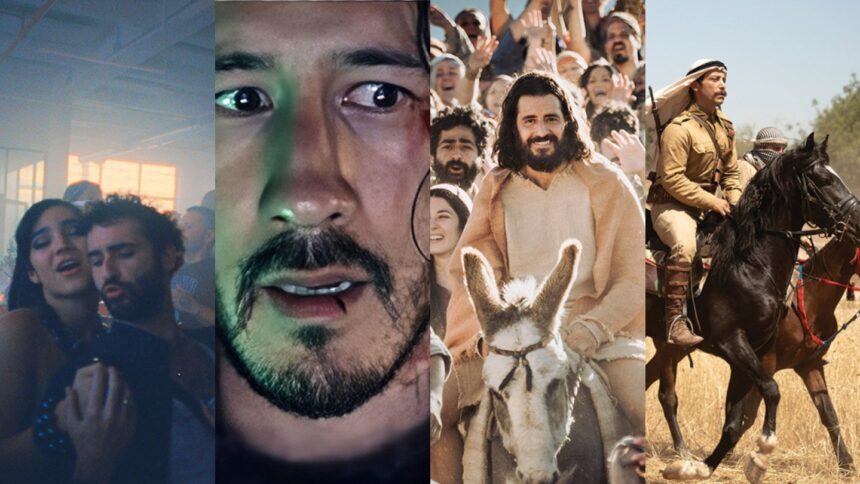
One answer, which is becoming increasingly compelling, is community. Watermelon Pictures, the Chicago-based production and distribution company co-founded by brothers Badie and Hamza Ali, has built its entire operation around the idea that a deeply engaged, underserved audience is a more reliable foundation than any presales agreement. Named after the fruit that has become a symbol of Palestinian resistance, Watermelon has been involved in the production and/or distribution of an impressive series of Palestinian-focused films – including Anne-Marie Jacir’s. Palestine 36Kawthar Bin Haniyeh Hind Rajab’s voice And Sherine Daibes All that’s left of you All three films were shortlisted for the Academy Award for Best International Feature.
Instead of relying on traditional advertising or mainstream media coverage — which often lacks the films and topics the distributor wants to highlight — Watermelon deploys WhatsApp groups, local community leaders and social media influencers to attract audiences to cinemas. The film industry calls this “popular marketing.” For Watermelon, it’s simply how you talk to the people your film is made for.
A religious alternative to the same logic has produced even more dramatic results. Angel Studios, the Utah-based company Voice of freedom and King of kingsis rapidly expanding, adding international production deals throughout Europe, Latin America and Asia. Another striking example of community-led film and television is The chosen onea multi-season drama about the life of Jesus of Nazareth that has become an underground phenomenon of astonishing proportions.
The chosen one Creator Dallas Jenkins is constantly in touch with fans of the show and maintains a live text thread for his 3.5 million followers, a form of direct engagement provided by Mark Surian, head of production at 5&2, who makes The chosen onehe says, is the key.
“In the 21st century, if you’re not in direct contact with your audience, if you let your film ‘speak for itself,’ you’ll lose control of the conversation,” Sourian says.
This lesson has been internalized — instinctively, if not always consciously — by a generation of online creators who are now moving into feature-length filmmaking with their audiences already.
The most obvious proof of this concept is Iron lungthe sci-fi horror film written, directed and distributed by YouTuber and gaming personality Markiplier, which has now grossed over $50 million worldwide.
This year at Cannes, this model is moving forward. kid club, Arguably the festival’s most exciting headline, in terms of commercial potential, comes from Jordan Firstman, a comedian who built his following through skits on Instagram during the pandemic before moving into features. The film has generated the kind of enthusiasm that was missing elsewhere in the market this week, and a deal on domestic rights is now a certainty (there are rumors that A24 has already snatched it up).
None of these models constitute a clean alternative to what the independent film industry has lost. Community-based distribution is difficult to scale. But taken together, they suggest something important: the independent film audience isn’t going anywhere. She’s just waiting to be reached in new ways, on new terms, by filmmakers willing to meet her where she lives — whether that’s via a church network, a WhatsApp group or a YouTube comments section.