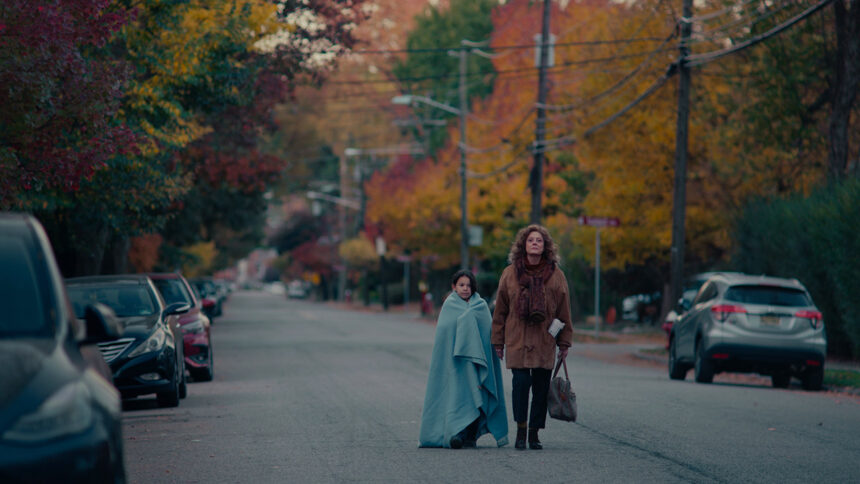
There is a high level of difficulty in what Susan Sarandon accomplishes with apparent ease Facilities. As Sylvia, the foster parent of a young girl, she plays a goofy and slightly indulgent character, kind and wise at times but with emotional baggage of her own. Sarandon turns what could have been a scheme of sentimentality and cliché into a believable, idiosyncratic, and very present individual.
In fact, all the performances in this film are the debut of director Zach Woods, known as an actor in comedies including the HBO series silicon valley, Grounded and sharp. It’s the strongest element in the story of nine-year-old Emily (Everly Carganella), whose grandfather and guardian (Kevin Morrow) are showing serious signs of dementia. Aubrey Plaza, in a small role, plays an incompetent social worker who transports Emily from her home to Sylvia’s house in a nearby New Jersey town.
Facilities
Bottom line A mixture of lovely and twee.
place: Tribeca Festival (Featured Narrative)
ejaculate: Susan Sarandon, Aubrey Plaza, Everly Carganella, Kevin Morrow, Emma Varnell Watson
exit: Zach Woods
Book: Zach Woods, Brandon Gardner
1 hour and 50 minutes
But Woods, who wrote the screenplay with Brandon Gardner, tries to bring a touch of magical realism to the slick drama, which is more problematic. Not that these two elements can’t coexist, but this part works much better than the other here.
Emily’s story is poignant from the beginning, as she worries about her loving grandfather who is no longer able to safely care for her anymore. A near miss while driving on the train track, a scene of tense efficiency, alarms even Emily. After alerting the school nurse, Plaza’s character, Sarah, arrives home and, in what she later admits was a moment of panic, rudely drags Emily into her car and takes her to Sylvia’s.
Visually, the film finds a clever balance between the realistic and the fantastic, with cinematography that is crisp and at times brighter than reality. The production design gives Sylvia’s house, filled with pictures and tchotchkes, an old-fashioned, storybook-like look.
And Sylvia herself is as layered as her cluttered house. When Emily refuses to enter the house, Sylvia lets her stay outside and then finds her at the playground where they spend the night. She smokes and plays pranks. I conveniently forgot to send Emily to school. You have to suspend logic to believe much of this plot, even the realistic elements. The well-meaning but remarkably incompetent Sarah has not made it clear whether she or Sylvia will enroll Emily in the school. And we see, long before the supposedly intelligent Sylvia, at the time when Emily might have run away. But Sylvia and Emily develop a charming relationship, and their scenes together have enough wit and ease to keep the story working for a while.
It’s too bad that the rocky script spends so much time pointing out a tragedy in Sylvia’s past before revealing it. This secret is hinted at in the film’s opening scene: a ballerina in a medical institution performs frantic movements. Here and in later scenes, dancer Emma Farnell Watson captures the suffering and pain of the character, who we eventually learn is Sylvia’s late daughter, Nadia.
Nadia’s story, used subtly at the beginning, says a lot about why Sylvia would want to foster a child without having to explain it. However, the more we learn about her and Sylvia’s grief, the more tiresome the scenario becomes, and this precision fades. There are very subtle parallels, as Emily’s recurring nervous neck twitches become a dramatic echo of Nadia’s anorexia.
The fantasy element arrives very late in the film but is frankly foreshadowed. The story begins on Halloween and Emily’s grandfather reads her a story about witches. Although magical realism is the film’s strangest aspect, it is also its weakest. The various scenes divorced from reality start out as mysterious but become surprising and disorienting. When Sylvia and Emily fly through the night sky, there’s a hint that it might be a dream. And later in the story, when Sylvia is thinking about Nadia in dance class, a scene that plays out on screen, it seems like Emily could share Sylvia’s memories or dreams or whatever. The film tries to open the door to magic, and these episodes land with a bang.
Facilities He has some nice moments. Carganella makes Emily heartbreaking with the way she finally yearns to stay with Sylvia, as she tries to learn to play the piano to please her, and slowly picks up a surprisingly poignant and appropriate line from Porgy and BS. But as it unfolds, this ambitious film becomes too precious for its own good.