Scary and sad, director Jane Schönbrunn’s latest film I saw the glow of the televisionan artifact of popular culture’s past—a culturally beloved supernatural television show—serves as a kind of seeing stone, peering through its lens to examine questions of identity. Schoenbrunn draws from the following part in his new film, Teen sex and death in Miasma campwhich uses a fictional film from last year as a gateway to a conversation about self and desire. It’s weird and amazing stuff, and maybe not as emotionally resonant as it is TV glowBut it is captivating in its confusion and honesty.
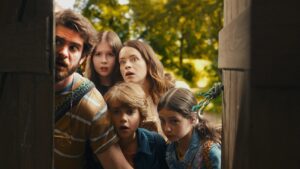
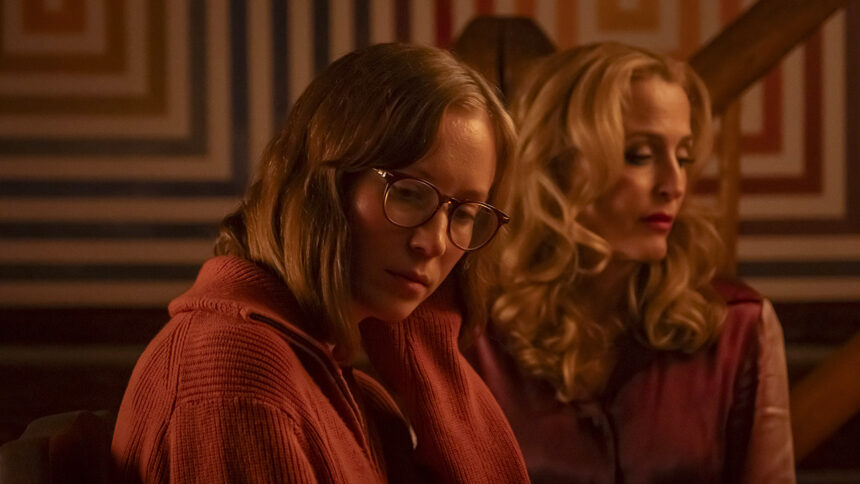
Hannah Einbinder plays Chris, an up-and-coming filmmaker who parlayed the success of Sundance into a reboot of a once-popular horror film series called Miasma camp. The original film was a smash hit, spawning countless sequels, merchandise, and an intense fan following for its killer, Little Death, who was once a sexually volatile teenager who was bullied to death by his fellow campers. Chris, a long-time fan of the series, is determined to cast the reclusive star of the first film, a mostly forgotten actress named Billie (Gillian Anderson, walking away as if she were still doing it). Tram). A trip to Billy’s house – a remote cabin near the border between Washington and British Columbia – leads Chris on a strange and blood-soaked journey of discovery.
Teen sex and death in Miasma camp
Bottom line He talked about his loss in movies.
place: Cannes Film Festival (What Look)
ejaculate: Hannah Einbender, Gillian Anderson, Dylan Baker, Jack Haven, Sarah Sherman
Writer and director: Jane Schoenbrunn
1 hour and 52 minutes
Schönbrunn has stuffed their film with cultural references to amusing effect. If there’s something about the gender bending killer that’s an issue right now Miasma camp Reminds you of 1983 Sleeping campSchönbrunn does not shy away from parallelism. If Billy, who wears a turban and a kaftan in some scenes, remembers Norma Desmond Sunset StreetSchönbrunn directly assures you that this is no coincidence. There is hyper awareness of Tasadakmdetermined to point out every Easter egg and its references, lest the viewer think Schönbrunn is trying to one-up anyone. Schönbrunn welcomes us into the collective memory group, although they have very private and very personal things to discuss once we are all there.
There’s a certain awkwardness to the film’s invitation, a kind of table setting that offers some corny (though not inaccurate) mockery of Hollywood to make it easier for us to get a sense of what the film is really about. I think this nervousness is intentional. The film is about a person who exists forever in his head, unable to exist in a moment without qualifying, explaining, and even apologizing for his existence. Chris’s main insecurity relates to sex, an act in which she has never felt comfortable, unable to fully inhabit her body and accept what others might feel.
but Miasma campspecifically, one (important) climactic scene involving Billy’s character, sparked something in Chris. She first saw the film when she was probably a very young child, and its depiction of teenage hedonism in horror films – most of its characters working on gender identity – remains both alluring and intriguing. When Chris tries to explain academically to her what the film means to her, Billie offers a simpler explanation in response: she says the film is actually about “flesh and fluids.”
In many ways, Chris aches to be reduced to such simple matters, to be stripped of all her intense anxiety and surrendered to basic neediness. Feeling so out of touch with that, so different from the teens in the film (except for the final girl, Billy, who is less sexually enthusiastic than everyone else around her), makes Chris, in a way, identify with Little Death more than anything else. Schoenbrunn, who transitioned in his 30s, reveals something very intimate here, trying to explain his long break from sex, his disconnect from something that many people seem to enjoy so easily.
This candor is refreshing, and the film’s conclusions about accepting the idiosyncrasies of individual eros are deeply moving. But Schönbrunn does not make it easy for the audience to reach those conclusions. Tasadakm It can be strangely offbeat; It lies somewhere between the real world and fantasy, and is constantly blurring those boundaries. We see many scenes of the movie within the movie, and it doesn’t look or move like actual 80s movies do. Little Death wears a giant HVAC vent on their head instead of a mask, and there are ridiculous fountains of blood that would be more at home in a Troma movie. Schönbrunn does not use blatant imitation here, craftsmanship is not their main goal.
Likewise, the landscape surrounding Billy’s cabin—which is located on the property of the abandoned camp where the original film was filmed—is composed of highly saturated colors and painted backgrounds. We ventured somewhere else, just as Chris (and in some ways Billy) often disappears in film dreams. But this abstraction does not diminish the effectiveness of Schönbrunn’s investigation; In the end, we feel keenly that a very real crucible has passed through them, and that Chris – and by extension her creator – have come to a new and important realization about their physical being.
If all this sounds too heavy-handed, instead, it’s handled with a comedic twist. Tasadakm It could be called a comedy, with its pithy one-liners and deliriously exaggerated depictions of gore and action. Just the way it is Hacks (another story about an intense relationship between a younger writer and an older actor), Einbinder is humorous and lively, while also handling the dramatic parts well. Anderson is having fun. She takes a rare role in a thriller and runs with it, happily serving as a vessel for Schönbrunn’s complex obsessions.
Teen sex and death in Miasma camp It definitely won’t appeal to everyone. It’s not a twisted nerd paean to a B-grade horror movie. Nor is it just a straight connection between two gay icons (Anderson is not gay, but she has been an idol to the community since she was gay). X-Files days). It’s a much less identifiable film, and it’s difficult to get a satisfactory commentary on it. But it makes an impact nonetheless; One leaves the theater once again in awe of Schönbrunn’s willingness to reveal too much of themselves (albeit in a strange allegory). The film is disarming in its palpable longing, in the way it attempts to explain to an audience of strangers how its creator lived in their altered bodies. It is an act of generosity, one person saying to another with wistful sympathy: “I can be weird about these things too.” And then, Schönbrunn offers a comforting thought: Life is not a movie. But if so, maybe you should write it for yourself.