The end of the NBA and NHL seasons usually signals a relatively quiet period in the American sports landscape. Baseball, the WNBA, NASCAR, and local soccer leagues continue, but the hype fades during the summer.
Not this year. With both the NBA Finals and NHL’s Stanley Cup Final reaching multi-year ratings highs, and the Men’s World Cup getting underway in a big way (in English and Spanish), the summer lull in sports on TV will be postponed by at least a month.
In fact, with the exception of Olympic years, June and July are expected to be the biggest sporting summers in more than a decade.
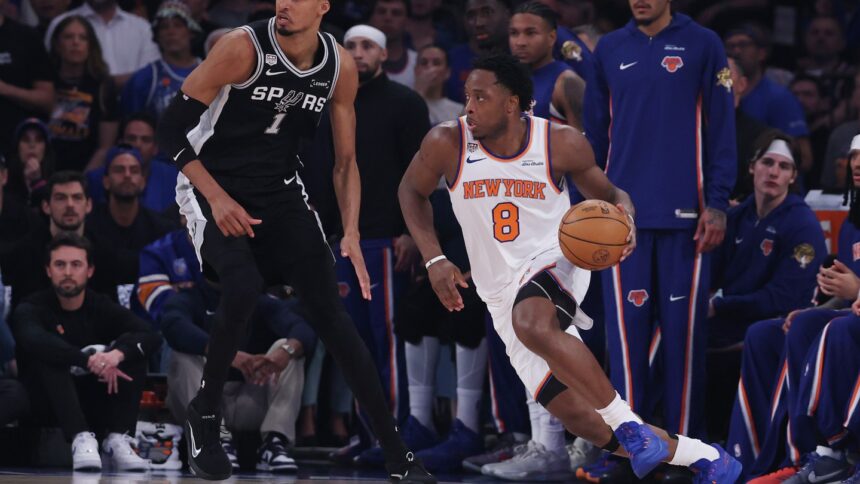
The Stanley Cup Final, which the Carolina Hurricanes won in six games, had the most television viewers since 2019. The NBA Finals, which saw the New York Knicks capture their first title since 1973, attracted the most viewers since the end of the Michael Jordan era in Chicago. And the World Cup? It appears to be off to its best start ever in the US.
It’s a rough measure at best, but the three audience totals above add up to just under 40 million viewers. In the years that a men’s or women’s World Cup has been held since 2014, no NBA, NHL, or World Cup combination has come anywhere close; The previous highest total was 27.75 million in 2014 (15.54 million for the NBA Finals, 4.7 million for the Stanley Cup and 7.5 million for the opening days of the World Cup).
Swapping the Summer Olympics for the World Cup, the 2016 and 2024 tournaments (though not the pandemic-plagued 2021 Games) expire before this year. This is to be expected, as the Olympics always bring a lot of ratings. But holding the Men’s World Cup in North America for the first time since 1994 has given a huge boost to the event’s usual US rankings.
Many other factors have increased audiences, not least because live sports is one of the few growth areas in linear television. Also helping have been changes in the way Nielsen measures ratings (including incorporating out-of-home viewing and big data) that tend to give live sports a boost. But this is not the whole story.
In the NBA, the Finals matched up a team from the country’s largest market (the Knicks) with the San Antonio Spurs, which includes one of the biggest stars — literally and figuratively — in the league Victor Wimpanyama. Three of the five matches brought in over 20 million viewers, with 24.5 million viewers for the fifth and final match on June 13. That hasn’t happened since 2016. As a result, the NBA had its most-watched Finals since 1998, which was Jordan’s last title with the Chicago Bulls, and ABC had its largest Finals audience in the 24 years it has had the broadcast rights.
The NHL hasn’t had the biggest names in its Finals, although both the Hurricanes and Vegas Golden Knights have been consistently strong over the past decade. But hockey is riding a wave fueled by popular culture as television adaptations of novels Hot competition and Off campuscombined with the growing popularity of hockey romance books, has brought some new eyeballs to the league. An entertaining and highly rated Olympic hockey tournament in February may have helped bring attention to the sport as well.
As for the World Cup, obviously having the tournament held in North America (most matches in the US, with others in Mexico and Canada) is great for TV schedules: the group stage so far has included matches starting in the early afternoon on the East Coast and continuing until late at night (or prime time on the West Coast), which is a great setup for Fox and Telemundo broadcasters (see record ratings for the Mexico-US opening matches last week). Combining English and Spanish broadcasts, several matches have already topped 10 million viewers, and both Fox and Telemundo are far ahead of the last World Cup finals. Fox has succeeded in doubling the number of viewers for the 2022 World Cup at the same point, and Telemundo and Peacock (which broadcast all television programs in Spanish) are attracting three times the number of viewers compared to 2022.
Soccer may achieve the huge footprint that American football, baseball and basketball have in the United States. But the sport has firmly established itself domestically — in addition to Major League Soccer (MLS) and the National Soccer League (NWSL), the top European leagues are widely available to American viewers as well, and the World Cup, at least in terms of television viewing, is like the Olympics for one sport. Not many people watch the gymnastics or swimming matches year after year, but they gather in large numbers every four years to watch the world’s best crowned.