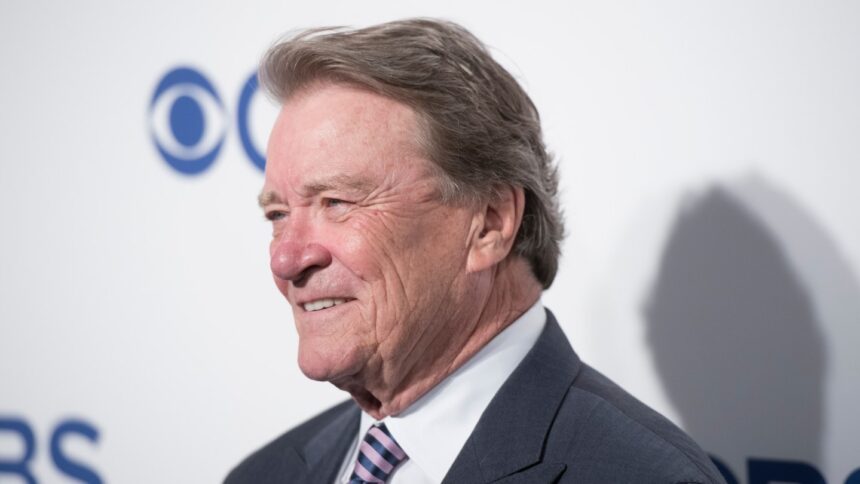
Steve Kroft probably had a famous career lasting 30 seasons 60 minutes before retiring in 2019, but if given the opportunity to do so again, he probably wouldn’t.
Croft joined Bill O’Reilly in the latter We’ll do it live! podcast, where he talked about his decades at the popular news magazine, a job he admitted he “hated.”
“60 minutes It was really appealing, and I thought I wasn’t really sure I’d ever get there. I didn’t think seriously about it. “When I did it, there were a lot of things, first of all, the job was just 24 hours a day,” Croft said of the hard work in the prestigious program. “I mean, you might get a few hours of bad sleep. The alarms go off, you get on planes, you go here and there, everything, and then you come back and spend, you know, three or four days writing the script, and then you go to the shows and then you start all over again.”
He also remembers the competitive and envious atmosphere among his fellow journalists after he got the gig.
“I can remember when I was tapped to go to 60 minutes“I thought this was great and I expected a lot of people would come up and say: ‘That’s really great, I’m really happy for you.’ “Then you realize after a while that not everyone was happy that I got this job. There were other people who wanted it. And so suddenly you have made a group of enemies. And this, you know, is just a snake pit.
Instead, Croft said the best job he ever had at CBS was when he was a reporter in the London bureau.
“I got to see the world, this was the job I always wanted,” Croft said.
However, Croft found it “exhilarating” to write the stories he wrote.
“It was exhilarating, because the reason I loved the job was because of the stories I could write, and the fact that they loved good stories,” he said.
When Croft retired at the age of 73, he was 60 minutes“The longest-serving correspondent and conducted some of the show’s most indelible interviews in a long time. He spoke to the Clinton family in 1992 when Hillary Clinton cited Tammy Wynette amid allegations that then-candidate Bill Clinton had an affair with Gennifer Flowers.
“It started out awkward because of the sensitive topic, but as Hillary became more involved and joined the conversation, I realized we had a good story,” Croft, who admitted he was nervous about the big sit-down, previously recalled: Hollywood Reporter. “When Tammy Wynette made that comment, I knew we were home free.”
He also held memorable meetings with Woody Allen, Clint Eastwood, and Barack Obama (16, including one after the 2011 assassination of Osama bin Laden), and led important investigations into Saddam Hussein’s hidden financial assets and insider trading in Congress. However, he said the story that had the greatest impact on him was a 2001 report on the financial firm Sandler O’Neill, which lost a third of its employees in the World Trade Center attacks.
“In the days following the disaster, surviving partner Jimmy Dunne allowed us to follow him and other managers as they planned funerals, comforted and counseled families and, in the face of impossible odds, kept the company running through the worst days,” he said. “It survived and is thriving today.”
When asked how his producers would describe him, the skilled and veteran reporter, who is also a perfectionist, said: “I think if you asked them during the screenwriting process, the answer would be unprintable. When the story is finished and pitched, they will be more complimentary. I’m not easy.”
Over the summer, Croft briefly returned to the spotlight when he joined forces with Jon Stewart Daily show To share his thoughts on Paramount’s controversial $16 million settlement with President Trump 60 minutes‘Editing her interview with Trump’s 2024 presidential rival, former Vice President Kamala Harris. Croft was frank in his assessment of the deal, describing it as “blackmail.”
When asked about his mood 60 minutes In light of his potentially ongoing contacts with former colleagues, Croft agreed with Stewart’s assessment that the settlement would likely be “devastating for people who work at a place that prides itself on good contextual journalism.”
“I think there’s a lot of fear out there,” Croft said. “Fear of losing their jobs, fear of what happens to the country, fear of losing the First Amendment, all of those things.”