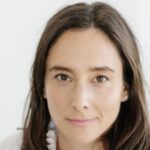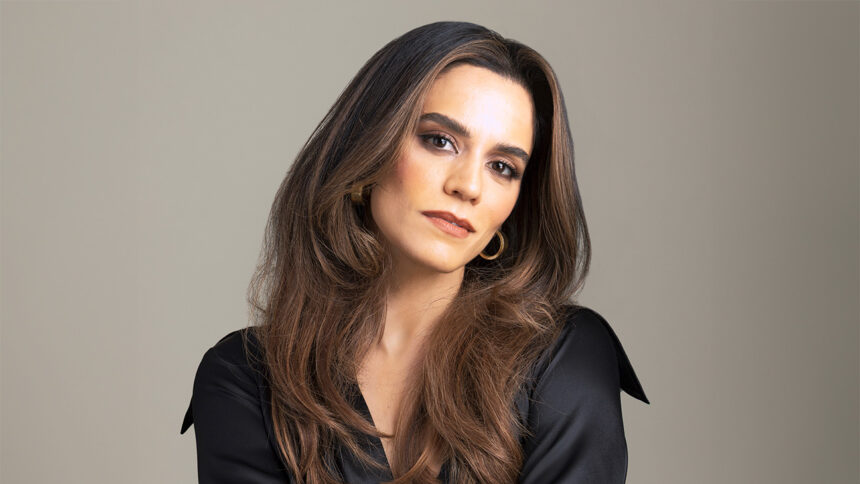
The performance can, at times, mirror the energy of a busy emergency room on Pittsburgh’s north side, making stamina and stamina key. Both are a thing the house Actress Sepidah Mowafi says she started her career early as a theater actress before becoming a regular fixture in the popular HBO series as therapist Dr. Baran Al-Hashimi. “I think when you train in theater and opera, you know how to explore and express in a more athletic and muscular way,” she says. “In television and film, everything is distilled to fit the camera.”
In the days before her television career took off, her work was in theater — which she recently returned to for a month-long stint in an Off-Broadway production of the play New baby At Audible’s Minetta Lane Theater – it was a special experience. “It immediately gave me a sense of belonging that wasn’t tied to my appearance,” Mowafi says. “It was tied to my work ethic and natural talent.” “But natural talent isn’t enough. You have to train, and I loved training. I loved falling down and getting up and being humble in front of that thing.”
At the time, Mowafi did not realize how this training would lay the foundation for a career in television and film. Shortly after receiving her MFA from UC Irvine, she booked her first on-screen credit, a guest stint on CBS. Blue blood. Other roles steadily followed, first a series of broadcast routines (primary, The good wife) and later streaming drama series (Blackbird, The L Word: Generation Q, Class ’09). It was a booking for David Simon and George Pelecanos’ HBO drama Satan This gave Maafi her first sense of being featured in the group.
“Everyone had the same intention, which was that we were all there to do the best job possible, and that was the team,” she recalls. “I work well in environments like this, when people leave their egos at the door.”
As a budding actor, Maafi says the series is like The wire, The soprano and Six feet under It showed her real people. “It was mostly white people, but they were accessible worlds,” she says. “People who were explored through a non-traditional lens, or people living on the margins… who were repressing and hiding. That’s something I’m interested in.” “I’ve always associated film, television, celebrity, beauty, whiteness, and glamor. These genres have really opened my eyes to my own potential in this medium.”

the housethen, is an apt work, with its gritty depiction of a crowded emergency room filled with frail patients and doctors struggling en masse. However, fans of the show — and its particular representation of women of color — have raised questions about whether the string of departures from actors (Tracy Eveshore, Supriya Ganesh) signal some kind of healing in the HBO medical drama. For Maffei, the answer lies in the foundation of the series.
We’ve known since season one that Dr. Robbie [Noah Wyle] He is our anchor in the show. “He’s always lived the world around him and through his point of view, and that’s been television since I’ve been here,” she says. “Recently, Cate Blanchett said something like, ‘There are still 10 women on set versus 70 men.’ It’s disproportionate. So this isn’t about this show. It’s about the culture. It’s a system where misogyny and patriarchy are well combined.”
The actress is firm that “preparation for the house “It couldn’t have been made without Noah Wyle and Dr. Robbie,” but he adds: “For people who feel similarly frustrated about the way Hollywood expresses itself over and over again, we… [need to] Sit down with our damn pens and our computers and be the solution, like Issa Rae, Michaela Coel, and Phoebe Waller-Bridge, because there are certain ideas about women and their place that are subconscious, especially for women of color.
Maafia has been doing this in her own way for years. The Iranian actress says she felt proud “every time I changed the director or producer’s mind about whether this character was supposed to be this color or this shape.” It also helped define other aspects of the characters’ identities. For example, for Dr. Al Hashemi, Maafi drew on her experiences as a child refugee and as an International Rescue Committee ambassador for her character’s work with Doctors Without Borders. It also helped the book capture the nuances of a multicultural physician with temporal lobe epilepsy.

“Dr. Al-Hashemi was written as being of Iranian descent, but she had an Iraqi or Arabic name. So I asked if we could portray half-Iranian and half-Iraqi,” she says. “I have friends who are half-Iranian and half-Iraqi who live with this cultural similarity but also dissonance. The way these two countries were at war with each other, they were both bombed by the United States, they both lived with war and displacement and mass trauma.”
It’s entry points like these that have given Mafi a path to generating the visibility that viewers so often crave.
“Although I have never lived with any type of disability, I have lived with shame, hiding, and embarrassment my whole life, feeling downcast and being told I don’t belong or being discriminated against,” she says. “I didn’t live through the war, but my parents did. They lived through the revolution, under political oppression. It’s part of my DNA. And tapping into that, it’s almost like highlighting certain parts that are on the inside and bringing them out so that these particularities become more of a collective experience.”
This story first appeared in the June standalone issue of The Hollywood Reporter magazine. To obtain the magazine, click here to subscribe.