“The future is still uncertain” is the closing title of Iranian actress-turned-director Pegah Ahanjarani. Training for the revolutiona powerful autobiography of the political turmoil that has ravaged her homeland from 1979 to the present.
“Uncertain” is indeed the right word to describe what has been happening in Iran over just the past few months, with a war – or conflict or intervention, depending on which world leader is talking – waged without a clear goal and seemingly without a workable solution.
Training for the revolution
Bottom line A burning historical biography.
place: Cannes Film Festival (Special Screenings)
Director, screenwriter: Pegah Ahangarani
1 hour and 35 minutes
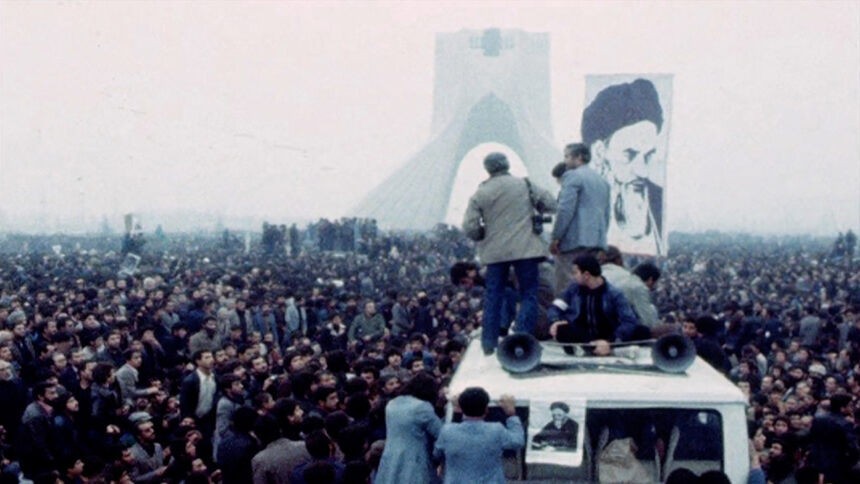
One day there will be a good documentary about this persistent quagmire. For now, it’s worth taking a look at Ahanjarani’s evocative first-person chronicle of Iran’s recent history of resistance and repression, which began nearly five decades ago with a revolution that brought Ayatollah Khomeini to power and tore apart the director’s world.
It consists almost entirely of archival footage, some of it filmed by Ahanjarani and her relatives. Exercises Divided into five chapters that place her story within the major historical events that she and her family experienced.
The first memorable section focuses on the director’s father, Jamshid, who was an emerging filmmaker before 1979, making short films highlighting the inequalities of the Shah’s regime. When that regime fell – “the most beautiful day,” as he described it – Jamshid became a staunch supporter of the new Ayatollah’s government, and then became a hero on the battlefield during the eight years that Iran fought Iraq.
But he became disillusioned with the authorities when he learned that his close friend Daoud, who starred in his early films, had been sent to Tehran’s notorious Evin Prison for criticizing the Islamic Republic. Despite Jamshid’s efforts, including letters sent to the Ayatollah, Daoud was executed along with other political prisoners. Any hope of revolution died there.
Ahangrani follows her father’s story with four more chapters, each highlighting another figure in her life who suffered under Iran’s authoritarian leadership. Among them is a teacher who had great influence over the primary school principal, but was forced into exile after she held a party without wearing the mandatory hijab. There was also his uncle, Rashid, who grew up as a child of the revolution but began protesting against the Ayatollah while in college. He found himself surrounded in a violent 1999 raid on a residence in Tehran, which left several dead, hundreds injured, and thousands arrested.
Grainy video footage of those protests reveals the brutality of the Revolutionary Guard, which drags students into the street, brutally beats them and then leaves them wounded on the ground. With few international media outlets able to freely cover events in Iran, and local internet outages when unrest occurs, we see images in Iran. Training for the revolution Rarely seen anywhere else.
During this turbulent period, Ahnajrani decided to follow in her father’s footsteps into filmmaking – as well as in the footsteps of her mother, director, producer and screenwriter Munija Hekmat (Women’s prison) – by becoming a child actor, then a professional and starring in nearly 40 films. Like her parents, she also picked up a camera and began photographing whenever she could, capturing family highlights but also documenting the waves of protests that erupted as she became an adult.
These events culminate in the film’s fourth act, which takes place during the 2009 uprising following the re-election of authoritarian President Mahmoud Ahmadinejad. Hundreds of thousands took to the streets, including Ahanjarani, who searches in vain for a friend in Tehran’s Revolution Square as police violently suppress protesters. In almost continuous shot, we follow a group seeking refuge in a private home as police storm the building, revealing first-hand the experience of bloody state repression.
It’s not hard to see a pattern here: Protest after protest is met with military boots, batons and live ammunition, an ongoing cycle that continues throughout the massacres last January, which left thousands dead in the streets. This was quickly followed by American and Israeli bombing that began a month later, resulting in many innocent casualties.
When will it end? Ahanjarani had no answer to this question, and was eventually forced into exile herself, while most of her family remained stuck in Iran. She married, had a daughter, and continues to document events from afar, trying to shape them into a story on her desktop editing system. But it’s not easy to make sense of so much of a devastating life, even if having a new baby offers some hope.
Training for the revolution It is a cautionary tale about speaking out in a place where rebellion can cost you your livelihood, and perhaps your life. It is also the desperate story of a family who lost many of their loved ones to a regime they initially supported, and even fought for, in a long and brutal war, only to find their affiliations betrayed by tyranny.
However, in its final chapter, Ahanjarani’s dark historical self-portrait also looks forward to a time, perhaps not too far in the future, when all the revolutions she has rehearsed and experienced will finally lead to a real revolution, and things in Iran will change for the better.