“Chief AI Officer” is not a classic Hollywood title like “Head of Business Development” or “Social Media Crisis Manager for When a Celebrity Loses His Mind.” But be prepared for that to change as more studios and agencies realize they need dedicated executives to oversee their AI efforts.
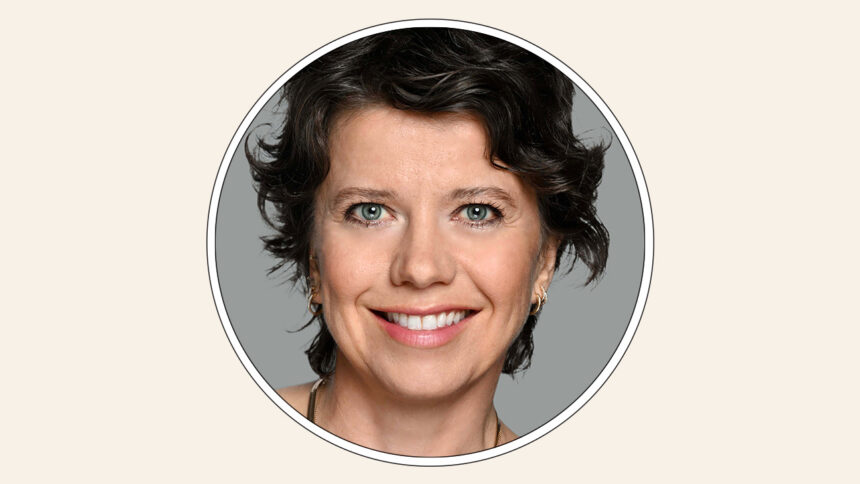
Among the first to arrive at the campfire was Kathleen Grace. Grace, a former executive at YouTube and the rights-tracking AI company Vermillio, was named this winter as chief AI officer at Lionsgate, becoming the first person at a Hollywood studio to hold precisely that title.
What does this job actually mean and how do you feel technology should – or shouldn’t – be integrated into the development pipeline? We spoke with Grace to find out.
Let’s start with the job description. What does a Chief Artificial Intelligence Officer do?
I’ve been called upon to connect AI strategy to real-world execution as we continue to invest in and find the right tools and put them in the hands of our filmmakers and directors. My goal is to move forward with the experience intentionally, but with clear guardrails and a strong focus on trust and creative partnership. Success isn’t just about saying, “Hey, let’s try the latest model.” It’s about integrating AI responsibly across production, marketing, distribution and administrative workflows in a way that supports our creative teams, protects their rights and actually makes work better.
You mentioned experimentation. I know it’s early in your tenure, but what might that look like?
For me, it’s structured, which means it’s an iterative process, like software development. We try things out before we sell them as a chain. We read texts. Software development works very similarly. So, how are we going to test the available tools in a secure way, even without using any of our existing IP addresses, and then, how do we do the work? Are they up to the standards of our creative teams? So it’s a very rigorous testing process that I try to build internally.
So what kinds of things can readers see? What will AI experiences look like for the Lionsgate consumer?
Like I said, it’s too early now. I love defining use cases and understanding what will be most impactful for both Lionsgate and our partners. So it’s hard for me to give you a specific example that I feel comfortable talking about publicly right now.
Do you see AI as a comprehensive effort? That is, is this more of a subsidy for the filmmakers, and more invisible to the consumers? Or can you envision creating platforms for the public?
I believe we will work across production, marketing, distribution, and even administrative workflows – and therefore every aspect of our business. My vision is to support exhibitors and filmmakers and what they want to do. So they came to me with an ambitious and brilliant idea. We will do everything in a safe way. And be open. If that deepens the experience of the audiences we’re speaking to, I’m interested.
What do you say to people who see this as just an efficiency tool or a cost-cutting tool? Is this something you’re okay with, or are you going to try not to use AI for this?
Every era of filmmaking has been shaped by new technology. Things have changed from black and white to color, from film to digital, and obviously, more recently, streaming. And every time, there was this concern, but every time the tools changed. Filmmakers and genres have never had a role as creative leaders, and so we see a similar path being followed, opening up creative possibilities, expanding the world that can be built, and enabling new forms. Yes, it can deliver efficiency and speed, but it’s more about removing friction from the process, not removing people from it.
So those who say it will be the same amount of production, now done at a lower cost and using fewer people – will back away from that scenario.
Our goal is to provide more space for creative ambition, not less, and to support the visions of our filmmakers and showrunners, not replace them. I won’t pretend that there isn’t pressure to be more efficient in our business today. But this efficiency does not necessarily mean fewer votes. It can only mean giving creative teams better tools earlier in the process. My previous role at Vermillio was to build technology that allows people to receive fair compensation for the use of their names, images, and likenesses. I previously worked at YouTube as well, and was very involved in the creator ecosystem. So I continue to bring that experience, and understanding of how to love working with creative people, to build trust and great working relationships with technology partners. This is the goal.
When Lionsgate closed the Runway deal in 2024, many around town wondered what it would mean to have a model trained exclusively on all of these Lionsgate properties. We haven’t seen, at least publicly, many results from that deal. How do you imagine this type of relationship can be benefited from?
I can’t go into detail about that. We combine them in several ways. We have a lot of different partners, but obviously we love Runway, and we continue to work with them. It’s just a matter of where their techniques can have the most impact, and we’re learning that together. I will say I’m excited about that — the fact that we’re going to get some really cool new ways to deeply interact with the people they love twilight Or the people they love John Wick. Like, I’m just into it.
You mentioned the marketing aspect of this. I don’t think people talk enough about that, about how AI can connect consumers to something made. What are your views on how AI can be used to reach people or help them engage?
I believe we will see exciting uses of AI throughout our entire business process. And I think we have to think about it less as a surgical tool and more as a change in the way you think about what you do, no matter what you do, across our entire business.
Some questions regarding speed. In five years, do you think the majority of movie or TV content or creators will be AI-powered or human-led? How about 10 years?
I think it’s hard for me to think about it that way because I consider him a partner and a collaborator. If the question is whether AI will be an integral part of creative processes in five years, then yes, I think it will be, and even more so in 10 years.
Will it be human-led??
I think we’re going to need people to stir up emotions.
So they will be at the heart of the process, rather than in the background, overseeing the model.
Yes, it will be human-led; They will be involved in creating all the time.
partnership.
Yes. You know, being a filmmaker and a creative person, and having a vision, can be very lonely, and having a team that believes in you can be very powerful and empowering. And having people to collaborate with, people and technology to collaborate with, can make you grow exponentially.
Give me the best thing AI will give Hollywood and the creator economy, and maybe the worst thing ever. The most excited and the most fearful of.
I’m so excited about how to make a bigger board to make more cool stuff.
And the biggest fear?
My biggest fear is that we will erode trust in our creative partners.
Thank you. I’m excited to see what form this takes.
Thank you. Me too.
This story appears in The Hollywood Reporter’s Artificial Intelligence issue. Click here to read more.