Skip to main content

Noah Kahan Patrick McCormack
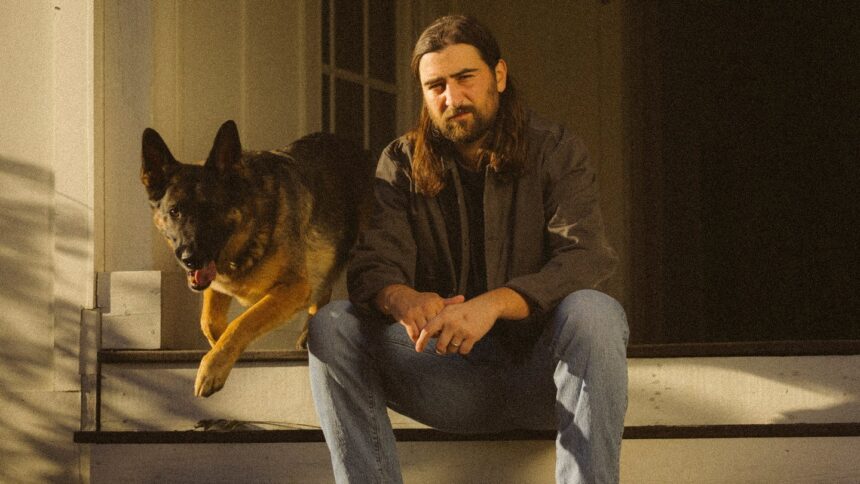
Following up on his hit song, “Stick Season,” the Vermont native explores what fame can do to one’s relationships with loved ones, their home, and themselves.
In the wake of his breakthrough success “Stick Season,” Grammy-nominated singer-songwriter Noah Kahan finds himself at a crossroads.
How does an artist follow up on an album that radically changed his life? Breakthrough success is what most people dream of, but what comes next is rarely talked about. Kahan outlined much of this conflict in his recently released Netflix documentary, Noah Kahan: outside the bodyBut the real exploration comes in his recently released fourth album, The great division. The 17-track album is expansive and features several songs that are over five minutes long.
The album explores Kahan’s life now and how fame has changed his relationships with his loved ones and himself. Of course, the singer also delves into how fame has changed his relationship with his home in Vermont, which comes up frequently in his lyrics. He makes several references to Route 89, the highway that runs through the New Hampshire and Vermont area where he grew up (I personally live on Route 3 and 293), and there are a variety of Easter eggs for those familiar with the area.
Kahan’s next chapter is certainly bright and long. less, Hollywood Reporter digs in The great division Track after track.
“End of August”

Image credit: Mercury Records Kahan drops listeners into a world The great division With the opening track “End of August”. The track, produced by Kahan and Aaron Dessner, begins with the ambient buzzing sounds of insects. If you close your eyes, it’s easy to imagine yourself sitting outside in the Vermont golden hour evoked by the song.
The song appears to depict a car trip to Kahan’s home state of Vermont. The singer-songwriter name-drops his siblings, as he spots license plates from neighboring New York State and Interstate Highway 89 that criss-crosses the New Hampshire-Vermont region, where he grew up. “The End of August” is the perfect opening to Kahan’s next chapter. It sets the scene that, yes, this will be another album that seems to be inspired by Kahan’s own life, but sonically, it’s a clear indication that this not so last Stick season.
The idea of that The great division It will be more than he has put out before with the detailed album Stick season This was the fear expressed by Kahan in his recently released Netflix documentary Noah Kahan: Out of the body.
At just over five minutes, “End of August” ignores the increasingly depressing trend of shorter songs. It’s a decent warm-up for the next 16 tracks. It starts off quiet and builds throughout the song, almost like an anticipation of what’s to come.
“doors”
If “End of August” is the warm-up period, “The Doors” is the moment when things start to look up. throughout outside the bodyKahan expressed that he was struggling to find the right inspiration and tone for the album it would become The great division. The end point of the film finds the singer in the studio playing this song.
The nearly four-minute track is both cinematic and subtle at the same time. Kahan’s explosive vocals come alive in the second verse. “Have you ever stared directly into the sun? / Have you ever shared some closeness, exposed, until someone spits it out,” he croones. “So forgive me if I jump/At the jangle of your keys, oh, are you leaving, no, baby, I’m just waking up.”
“American cars”

Image credit: Patrick McCormack The album’s third track finds Kahan at the height of folk-pop. One of “The Great Divide.” Among the catchier songs, “American Cars” feels right at home in Kahan’s discography, while simultaneously feeling like a bit of a sonic risk-taking.
Anchored by a groovy guitar riff, the song tells a straightforward story about calling someone home – “Headlights, your panels / 4CB3A” and “You’ve been driving all day / But you’re here and we’re so grateful you’re” – to get them to “fix” something, or more likely someone.
“American Cars,” which should be a final contender for a radio single, is an album highlight.
“fall”
“Downfall” is one of the most lyrically dense tracks ever. The sad anthem is romantic in its own way – sort of. The song seems, in a way, to be a spiritual response to… Stick seasonThe song “All My Love” seems to describe a past love that never seems to stay away. “You express a feeling like a truth / I’m glad you left, but you’ll come back,” he sings in the pre-chorus.
Kahan is affected by the fall of his former love, but it’s all in the name of her return. The song is a little sarcastic, at times, but it’s also what the inner monologue of a revolving door relationship can sound like: “I won’t rub your face in it / I swear I won’t tell anyone / I wouldn’t mind being your dead end / I guess it’s a good thing you never move on.”
“Paid leave”
With the fifth track, Kahan takes a pop-filled moment to breathe with “Paid Vacation.” The nearly four-minute song is a narrative-heavy track, which the singer-songwriter is perhaps best known for. Kahan produced and wrote the song alongside frequent collaborator Gabe Simone. “Paid Time Off” feels right at home with some of the other calming tracks from previous releases.
“The Great Divide”
As the first single released from the album, “The Great Divide” set the tone for the album, and the rock-infused song remains a standout. Kahan said earlier THR There were many discussions about whether or not the title track should be the first single The great division.
“It’s the best entry into the record from a storytelling and audio perspective. I think it offers something a little different than a lot of the stuff on Stick seasonKahan said.
“There’s more musical stuff going on, more rock, and I think that’s really fun because that’s the direction I want to go in,” he added. “It also tells a story that I think symbolizes the whole album.”
“hair cut”
Image credit: Patrick McCormack This straightforward folk track digs into some intense feelings of resentment towards whoever the subject of the song is. “You’ve grown your hair long/Now you think you’re Jesus Christ/No one thinks your sin is a great sacrifice,” Kahan sings. As the song’s bridge ends, he sings, “Pardon us all your pitying love / Save it for the microphone.”
“Willing and able”
Kahan explores what life looks like in the afterlifeStick season The world is to him, but more importantly, what it looks like to the people in his life. It’s another topic the singer delved into during his documentary, and all roads seem to lead to the idea that Kahan is at a different stage emotionally and physically now — which is a big part of outside the body It shows Kahan’s conflicted feelings about leaving Vermont for Nashville, and what his relationship with Stafford looks like now.
But “Willing and Able” hits a little stronger than the other songs on the album, leaving the listener feeling complacent with its dreamy vocal melody. The second verse of the song cuts like a knife. “Look at you gone again, that’s all you know how to do / Come on, take the last drink; the world’s your oyster,” he sings. “They say you’re light; all I see is shadow / And I’ll see you again in six months, when you need your next song.”
“Dashboard”
As the singer heads to the back half of great division, The “Dashboard” provides another classic Kahan model. It’s catchy, addictive and full of his signature lyricism. The chorus is one of the highlights of the song and album, and is sure to stick in listeners’ minds for days: “Look at you, state lines crossing your shadow / Trying to escape / Change your zip code / Turns out you’re just a fool.”
“23”
On “23,” Kahan delves into another throughline of the album: anger. The singer does not need to sort out his feelings at least m n Excellent on large and aggressively noisy tracks; Instead, he chose to include some of his most beautiful lyrics and big emotions The great divisionThe most mellow performances. The song also features one of the most memorable moments on the album, as she sings the lyric (“I tattooed your initials on my right arm / So I see your name when I take a drink”).
“porch light”
Kahan and Dessner collaborated on this song, which was released in March as the second single from the album. Kahan and his team have a lot to be proud of The great divisionBut perhaps their greatest achievement is how they chose the two songs to drop before the album’s release. “The Great Divide” showcased the stronger side of this album, while “Porch Light” reminded listeners of what Kahan does better than anyone else – subtle yet devastating tracks that manage to be so catchy that they feel right at home on Top 40 radio.
“Rejection Rejection Rejection”
Image credit: Patrick McCormack like The great division Towards the end, Kahan switches into full-blown folk rock with “Deny Deny Deny.” It is without a doubt the strongest track on the album and a windowsill-addicted summer anthem. As long as you look beyond the simple destructive tale of interpersonal conflict, Kahan seems to be working on that problem here.
“I’ll pay for your house so the feds can’t touch it / Another thing we don’t talk about anymore,” he sings in the chorus. “Don’t worry, I won’t bring it up / You can scream at me when you come home drunk / And it’s okay, I know the company line / When I ask about the past you deny, New York, New York.”
“””””””””””””””””””””””””””””””””””””””””””
We’re back to the insect sound of a New England summer in this folksy track, featuring two separate guitar solos. The song is a town anthem, meant for greater love, as the singer appears to be reporting to someone who has left the area behind. It’s an “if you know you know” phrase for those of us who grew up or spent time in these rural New Hampshire and Vermont towns full of contradictory ideas. The best example of this is some of the lyrics of the first verse – “I always wish you luck when I pass the old gas station / With a sign out front saying how tolerant they are / Some flat earther in the summer will tell you to go to hell / With a coexistence sticker on their bumper.”
“We go back”
Kahan is back on “We Go Way Back.” It’s a largely laid-back track that allows the lyrics to shine. It starts strong and only builds from there. “I’ve seen the world up close, there’s not much worth looking at / Compared to you in your business clothes, waving hello from the driveway,” Kahan sings. “I can’t get myself back, most days I’ll be lucky to only get half / But you’ve seen me in such low places, you can tell when it’s really bad / When it’s really bad.”
“spoiled”
Kahan is never shy about sifting through his thoughts and emotions into these songs, but “Spoiled” is perhaps the most introspective song of all. The great division. He seems to remember the fleeting nature of a career like the one he worked for. “Tell your buddies at the morgue / I’m coming back round / I’ll put these boys to work, wipe your hands and wash your face” and “If I go this time next year / If I breathe smoke and break mirrors / Damn it, I might just disappear, I hope you had a decent time” hit that point in the house.
But Kahan shines most clearly on the chorus, as he laments what could have been. “Just so my kids get spoiled when they grow up / So they can do whatever they want and blame their daddy / So they can watch me go to work, fall asleep on the couch / They’ll say, I want to be you, but I don’t want to be you.”
“They’re all horses.”
The album’s penultimate track, “All Them Horses,” is another introspective offering. The song, which again clocks in at just over five minutes, is, quite simply, beautiful and the strongest song on the album. Kahan has played the track live before, and previously said it was a tribute to his home in Vermont after floods devastated the area in 2023. But it’s also a reflection of his now complicated relationship with his home.
Kahan’s love for the place he grew up in is present in every song he releases, but it’s also easy to understand that fame changes that relationship, especially when that place isn’t actually home anymore due to the nature of the music industry and frequent touring.
The singer said earlier: “I was afraid that when I came back I would feel like a tourist or that I wouldn’t belong or that I might reveal some secrets.” THR About sharing a lot of his house on Stick season. It’s a line of thought that continues on this path – “This isn’t me anymore / I made too much fucking noise / I’m done staring into the void / I’m rolling with the boys.”
“Dan”
Image credit: Courtesy of Netflix This five-minute track is a great choice for an ending The great division. The album takes listeners on an emotional journey, but Kahan closes this chapter with a nostalgic ode to his friend. It’s exactly the kind of song you conjure up in your head when looking at the album’s main artwork.
“Dan” is one of the standouts on an album of outstanding lyrics. “You’re attractive for the parts you know I appreciate / You’ve been the best five minutes of a whole bad year” is a highlight, but Kahan saves the best for last.
“Everybody’s asleep, let’s talk about it / Let’s talk about high school and talk about death,” he sings in conclusion The great division. “Before the moment tries to disappear / Doesn’t the sky look beautiful up here?”


THR Newsletters
Sign up to get THR news straight to your inbox every day
Subscribe subscription