Without lithium, no electricity storage facility, data center, or electric car would work. Don’t you care? What if we told you that without lithium, smartphones wouldn’t work either?
Prima materialismJens Schanze’s new documentary, goes to the frontier, focusing on this raw metal and the new gold rush surrounding it. The film, which explores the hidden mechanisms and dynamics of global interests and local realities, has its world premiere on Thursday 12 March in the F:act Awards section of the Copenhagen International Documentary Film Festival, whose 23rd edition kicks off on Wednesday and runs until 22 March.
“The Europeans want the raw materials to save their auto industry. The Bolivians want them to fight poverty,” the document’s summary said. “At the center of it all is the Bolivian government and companies, but also civil society groups, mainly organized by women. By situating today’s lithium negotiations within 500 years of colonial history, the film confronts the continuity between past colonialism and current resource politics.”
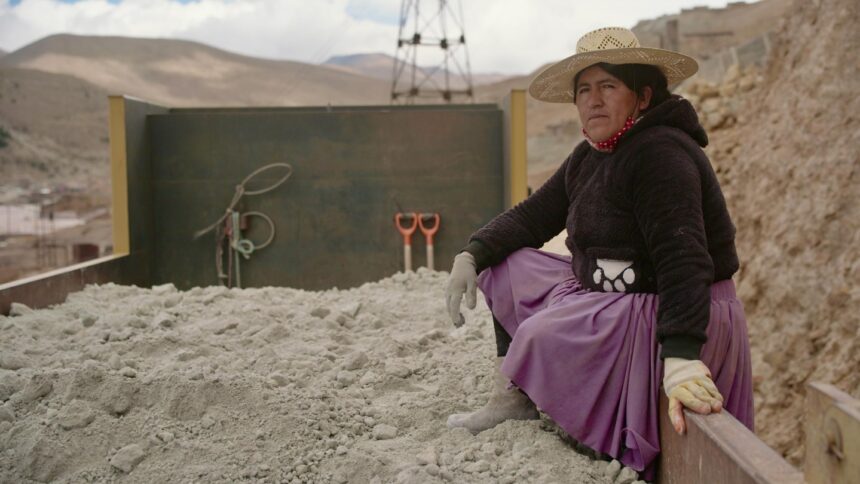
Why Bolivia, you ask? Well, the Bolivian Andes are home to the world’s largest lithium deposits. That is why, as European governments and multinational corporations compete for this “white gold” to support the energy transition, local communities – farmers, miners, llama herders and activists – face the profound and lasting impact on their daily lives,” the press notes. Prima materialism Highlight. “It is told through a multi-perspective observational lens, Prima materialism It reveals how global aspirations intersect with human stories, and how the past resonates in the present.
Produced by Mascha Film GbR in co-production with Filmtank GmbH, the film will also be screened in CPH:DOX’s Right Here, Right Now programme. Produced by Schanzi and Thomas Tilsch, the film features cinematography by Boris Pfeiffenbach and editor Ulrike Tortora.

“After spending a year in Bolivia in the 1990s, I began to closely observe the struggle for natural resources in the context of colonialism and economic justice,” Schanzi said in the director’s statement. “in case Prima materialismThe extraction of raw materials has not yet begun. The narrative revolves around the expectations of those involved and the negotiations between them. What image do the players involved have of each other? What role does the historical experience of colonialism play in their thinking and decision-making? How do the different parties interact with each other?
“Thanks to the long production period of almost six years, we were able to create a network in Bolivia and reach all interested parties: village communities, EU diplomats, EU businessmen, and the Bolivian government,” emphasizes the director.
THR A trailer can now be viewed exclusively for Prima materialism. He takes us to Bolivia with epic images and words full of hope, promise, sweat, llamas, and talk of guerrillas.