Logo text
When Mario Cuomo is discussed today, it’s most often in the context of how frustrating his son Andrew is (and Chris, too, if you work in the media), or his universally relevant observation that politicians “campaign in poetry and govern in prose.”
It’s one of those aphorisms so indelible that it’s hard to imagine it emanating from any one person, and it hovers over every moment in Peter Kunhart, George Kunhart and Teddy Kunhart’s new documentary, MarioWhether it is discussed or not.
Mario
Bottom line Dry but convincing.
place: Tribeca Film Festival (Documentary in Spotlight)
Managers: Peter Kunhart, George Kunhart, and Teddy Kunhart
1 hour and 27 minutes
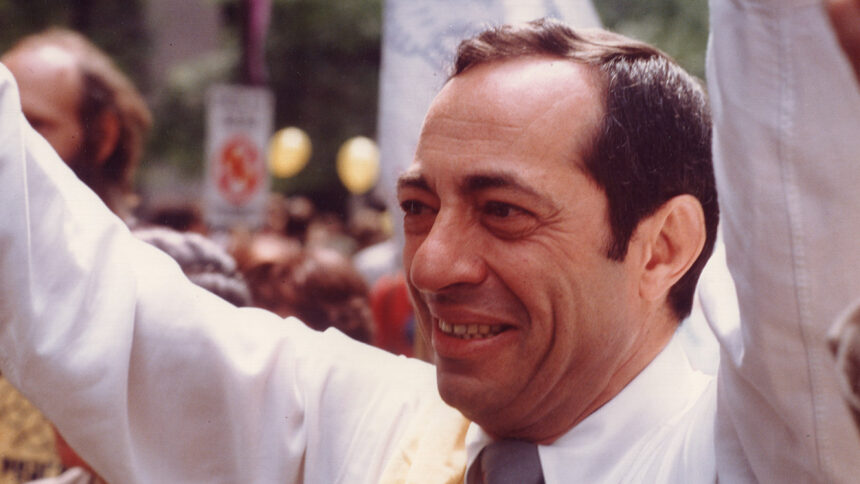
Premiere in Tribeca, Mario It is an interesting documentary, both hagiographic and practical. It’s a documentary devoted to the yearning for what now seems like a fictional politician, and a character study of a real man whose difficulties reconciling his aspirations with reality often left him disappointed — and ultimately left his ardent supporters disappointed, too, when he rejected a bid for the highest office in the land in 1988.
It is also a documentary conveyed entirely in prose, with no trace of poetry to be found; It’s easy to feel like this 87-minute film errs in a dry recitation of biography.
It is told that all five of Cuomo’s children are involved – only the presence of Chris and Andrew distracts and bothers him – as well as his long-term wife Matilda, Mario It takes pride in tracing Cuomo’s path as a man of his historic moments.
Cuomo was born during the Great Depression and grew up at a time when the influence of Franklin Roosevelt and the New Deal on his immigrant family’s success could be seen across the home of his youth in Queens, and across the country. He came of age in unruly New York City in the 1970s, amid growing discontent directed at the abandonment of local government, and he came of age as a leader in the 1980s when New York’s governor put him in ideological opposition to Ronald Reagan in every way.
The documentary is always disappointing, or at least underwhelming, using Cuomo’s keynote speech at the 1984 Democratic National Convention as the film’s climax. The speech, the writing and rewriting of which Andrew can effectively explain, remains a stunning evocation of Democratic principles and ideals, the kind of impetus the party has lacked outside the tenure of Barack Obama, another politician thrust into the national spotlight by a major convention speech. As great as the rhetoric was, the left’s lack of clear successors to Cuomo, both in the ill-fated 1984 election and in 1988 when the party waited impatiently for months only for Cuomo to choose not to run, is always deflating.
It is, as writer Ken Auletta has said many times, the importance of telling the stories of people who did not become president, but were perhaps more interesting for not having reached the individual summit.
The documentary doesn’t exactly skimp on Cuomo’s humanity, whether it’s the story of the key adviser who died in the early stages of the AIDS epidemic or how Cuomo played basketball with his kids. But these tidbits are integrated into the laundry list that makes up the rest of the film.
Despite the existence of Cuomo’s voluminous memoirs, read by his children with no consistent framework, the effort to find anything interesting to say about Cuomo the man, rather than Cuomo the public figure, proves frustrating. We learn about Cuomo’s devotion to Catholicism and how he found ways to make his religion a consistent part of his progressive ideology at a time when the right was aggressively co-opting anything resembling faith. It’s a valid observation, but it doesn’t go much deeper.
We get a few similar superficial internal conflicts — the consensus maker with a tinge of superiority, the politician who loved meeting people but hated campaigning — but for the most part, the documentary tells us about these traits directly rather than spells them out. When he explains this, the documentary relies on familiar period news footage, interspersed with very nicely staged shots of an empty office full of books and faded text on the screen to animate parts of his memoir.
It’s a Como-ian paradox that a documentary so lacking in emotion still generates a visceral sense of what could have been. I was too young to vote at the time, but perhaps because my parents had a colleague in academia who was a Mario Cuomo biographer, I vividly remember the sadness when Cuomo announced he would not run for president.
Although those memories are still fresh, Mario It pushed me toward questions like, “How did the Democratic Party lose the ability to express a message as frankly and comprehensively as Mario Cuomo once did?” or “Where is Mario Comos today?” Instead of hitting me hard on any artistic level. The thoughts lingered, even if I didn’t remember any moment in the documentary produced by the craft of the filmmakers.