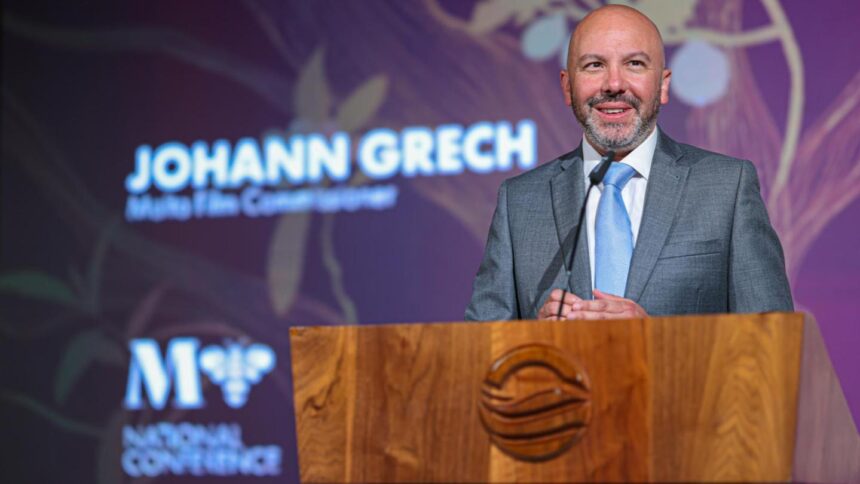
Malta has returned to the international cinematic spotlight. The island nation hosted the fourth edition of the Mediterranean Film Festival in late June by welcoming Hollywood talent such as Colin Trevorrow, Renny Harlin, Famke Janssen, Derek Kolstad, Dove Cameron, Andy Tennant, John Cleese, Omar Epps, DeWanda Wise, Robin Tunney, Jack Whitehall and more to the festivities. Amidst his hectic schedule, Johan Gresch, Malta’s main man at the center of the film industry as Commissioner, sat down with Hollywood Reporter For a status update on his ambitious plans for a new land and sea soundstage, a new €2 million scholarship fund, and his view on Malta’s future after celebrating the 100th anniversary of filming on the island last year.
When I spoke at the Golden Bee Awards last year, I said that the next 100 years would be better than the first. A year later, how are things going in Malta?
We continue to lead this commitment. And you will stay. In fact, we invest heavily in improving the skills of our staff. We are determined to continue investing and building the necessary infrastructure in film studios. We are committed to continuing to strengthen our discount program to remain major players and leaders on the global stage. Through these three elements of our strategy, we are ensuring that the next 100 years will be better than the first. We put words into action. We are making sure we are building a sustainable industry for the many, not just the few. We are proud of what we have achieved so far but there is still a lot to do.
What are you most proud of during your nine years as film commissioner?
Transforming the industry from a seasonal industry to a year-round industry. Giving more people the opportunity to work in the film industry. We give opportunities across different sections of our industry. We have just launched a €2 million scholarship fund to support our crews. We are currently conducting a census to determine skills analysis and where investment can be made in improving skills. The opportunities are endless, but what we want to do is invest in the right people in the right jobs to help them move up the career ladder.

When I was here for the film festival last year, there were seven filming projects in Malta at that time. What projects are here in 2026?
This year we had 17 projects including TV series, six feature films, animation projects and co-productions. There were 12 companies from the UK and two from the US. The UK and US are key markets for us, as well as Canada, the rest of Europe and now Australia.
Last year, I was moved to see so many Hollywood studios and production managers here on the ground. I know this was a big part of your strategic efforts in creating the film festival. Instead of traveling to them, build something and invite decision makers to Malta to see what you have to offer. How successful is this?
it has been. I created the festival four years ago. He’s very much my baby. I created it from a marketing perspective as a tool to help promote the film industry. We invite press, directors, executives, screenwriters, location managers and others so that they can literally feel and see our product. They can dream here and come up with stories built here. It’s not just about the opponent. It’s not just about location. It’s about making business easier here in Malta. The festival is also a place to discuss ideas, collaborate on projects, discuss co-productions and dreaming, and participate in the global conversation to ensure that future generations here have a better future in cinema.

It has been a big part of your vision for a long time to build a soundstage in Malta for film studios. You had charts last year. What is the update?
We have now received government approval for the project and it is greenlit. We are now in the process of finalizing our papers to issue an international invitation to finance, build and operate the project. Our idea in the invitation is that these studios will be under franchise for 65 years, meaning that the operators will be running the show for years to come. We will build another water tank inside the stage here with a height of 20 metres. The water tank looks like a football field and is six meters deep. Can be used dry or wet. It will also be able to carry two Black Hawk helicopters, which tells you the strength of the entire building. It would be easy for me to build a regular soundstage, but will that strengthen our position in the global market? i don’t think so. We want to create something unique – and unique is the world’s first Land Sea Super Stage.
How long will it take to complete?
To build the entire facility – in addition to the soundstage, there will be workshops, offices, production offices, warehouses, etc. – it will take two years. We have all the details in place. We just need to issue this public call.
Have you lost projects because you don’t have a soundstage?
Yes, unfortunately. Let me give you an example. Jurassic World: Sovereignty and New birth Both were shot during my time. They needed stages, and if there had been a stage, they would have increased the shooting days here in Malta and hired more people. We had other productions that required stages, and they went to other countries to continue filming. Work here. We are investing in infrastructure so that we can serve more productions and increase shooting days in Malta. Completing the Land Sea Super Stage will allow Malta to host big films and more high-end TV shows because we will have the right infrastructure to literally win the future.
Who do you consider your competitors?
Everyone is a competitor. It is a very competitive market. But I will say that other countries are trying to compete in terms of our model with the adversary and we will continue to enhance it to remain a market leader.
I know that a point of pride for you is Malta’s diversity. Not only do you have water tanks and the ability to film at sea, but you have long been proud of Malta’s ability to be present in so many locations. I remember that Malta traded six or seven countries for Munich. What’s the other part of your pitch when you’re trying to get projects here?
We have a history in filmmaking that goes back 100 years. We have hosted over 400 productions, about half of which were completed during my time here. On average, over the past eight years each crew member has worked on 22 productions. Seven out of 10 film crew joined the industry under my management. For every euro we invest in discounting, the industry generates four times as much. Numbers don’t lie.
When we pitch to studios, we talk about water tanks, we talk about locations, we talk about how good Malta is for films, we talk about the skill of our crews and we talk about the antagonist. The possibilities are endless and we get things done. We are a country of philanthropists. Our dreams have goals, otherwise they are just dreams. Our goal is to continue to grow, and maintain momentum. I never say it’s enough. “Enough” is not a word in our dictionary. The past eight years of growth are just the beginning.
The topic on everyone’s mind in Los Angeles is artificial intelligence. How do you think AI will impact location photography?
I will admit that I am not an expert in AI, but I know that AI is a tool that can be used to enhance services or projects. But I still think filmmakers want real locations. Shooting on water tanks will always outperform anything because you can’t replicate shooting on a water tank. AI is a tool to support filmmakers, but I always prefer a human-written script and a real location. I do not use artificial intelligence in my speeches.
Let’s end with something personal. Your passion never seems to go any slower. How do you rest or relax?
My personal problem is that my mind never stops. It can drive me crazy because you need to rest. I sleep maybe four or five hours a night. Every time I try to go to the gym, I always think about work. But I love nature and animals. I have two dogs, a German shepherd named Scott named after Ridley Scott because I’m very proud that Ridley Scott has filmed here twice under my management with Napoleon and Gladiator 2. My other dog is Benji, he is 10 years old. Scott is one year old. I also love the garden. I love cigars, traveling, and I love socializing. But even when I’m social, I still dream.
The interview has been edited for length and clarity.