Los Angeles’ film and television production crisis, which has hit the entertainment industry’s working classes, is emerging as a major issue in the city’s mayoral campaign. Suddenly, each of the top contenders has declared himself the one serious about solving the problem — and one of the punching bags is the city’s film permit office, FilmLA.
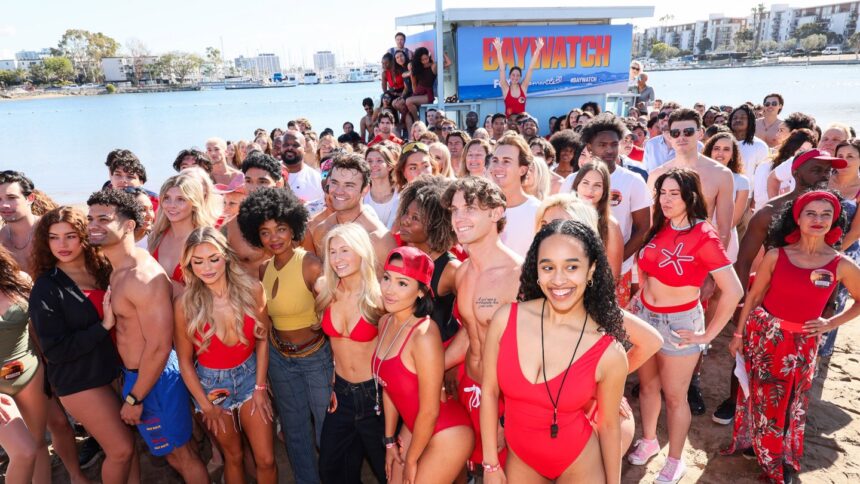
Mishaps on Fox Baywatch Renaissance, which received $21 million in tax credits for filming in Los Angeles rather than Australia, brought that fight to the forefront. The Venice Beach shooting led to a myriad of complications, sparking complaints about red tape over the past month. Perhaps sensing that the matter would become a campaign issue, Mayor Karen Bass quickly announced that her administration had taken “immediate action” to “remove bureaucratic barriers.”
after Baywatch The blunder still prompted an incendiary Substack post from Bass opponent Spencer Pratt, the reality TV veteran turned Internet influencer who, after the Pacific Palisades wildfires burned down his home, is running as an anti-establishment outsider with a focus on government negligence. “All my friends in the industry have the same complaints: Permits arrive at 5 p.m. the night before filming, with surprise fees. Drone approvals, helicopter permits, and even lane closures result in extras,” he wrote on April 2, adding that other cities “prioritize filmmakers. LA treats them like a nuisance.”
Pratt’s pressure is a reminder that shooting in Los Angeles is often unwelcoming and expensive.
In an interview with Hollywood ReporterBass answers: “Everything I’ve done in terms of industry has been done with them at the table. It was a request they specifically made. They know I’m open to continuing to do more.”
“You can,” the mayor adds of the prospect of a second term [enact] Policies but you have to follow them and make sure they work and know where you can modify them. As for FilmLA, the city’s permitting office, whose longtime head resigned last year after sustained criticism, Bass admits that it “could be improved — and it’s clearly not as effective as it could be.”
The collapse in Hollywood’s backyard has been a governance disaster that has been dormant for decades. Other places — states and countries — have lured jobs away with tax incentives. Vancouver and London are now where major films and TV shows are produced.
For a while, the streaming boom’s overall content spending masked this downturn. Then came the bust. The past few years have seen historically low levels of shooting days in Los Angeles, and the declines have escalated in recent months. Filming of TV shows in 2025 ended more than 50 percent below the five-year average, and features were down more than 30 percent in the same period.
Last year, California Governor Gavin Newsom successfully raised the state’s maximum stimulus from $330 million to $750 million. Programs in New York and Georgia remain more generous, but this move shows a serious attempt to restore production. During an April 15 press conference for the 2026-2027 CBS prime-time block, George Cheeks, president of Paramount Television Media, noted that his company would like to film in California “as much as possible, but we have a financial model that we have to achieve,” adding that the state covering the excess costs through tax credits would make it more attractive.
In March, the Los Angeles City Council unanimously greenlighted some measures of its own to respond. They include speeding up the audio certification process, improving the coordination of permit regulations, launching an independent audit of the permit system, and allowing free “mini-photo shoots” involving a small number of people. Adrien Nazarian, the council member who proposed the effort — whose industry-oriented district includes North Hollywood, Studio City, Valley Village and Toluca Lake — is now pushing for new transparency and accountability for the photography office, as well as a pilot program to waive fees for productions with 50 or fewer employees.
The three main mayoral candidates appear to have finally prioritized the problem, or at least understood its value as a cudgel against each other.
Pratt offered a list of policy prescriptions, including cutting location fees “in half,” creating a “dedicated concierge team” to resolve issues, speeding up approvals, “no city staff for 90% of productions” and public subsidies to the local photography office that are currently paid for by production fees. He continued, “I will direct all departments to waive all site, staff and inspection fees for shoots under $2 million. I will require immediate pre-approvals from LADOT/Police/Fire for standard street closures and safety plans.” (Pratt did not discuss his proposals with… THR.)
For her part, during her first term, Bass streamlined some processes, and in May 2025, she issued a directive asking city departments to make iconic city properties like Griffith Observatory more accessible and affordable for filming by reducing review timelines and lowering some fees. It also pushed for reducing the number of city employees required to work on set to just one, and improving communication by the government about ongoing infrastructure projects around the city that could impact filming schedules.
Perhaps most surprising in this discussion is Nithya Raman, the insurgent progressive candidate who, as a City Council member, represents a wide range of Los Angeles industries including Sherman Oaks, Los Feliz, Silver Lake, Koreatown, the Miracle Mile and the Hollywood Hills. Her 2020 primary campaign had a lot of support from the entertainment industry — she’s the former CEO of Time’s Up and her husband is an experienced TV producer (30 Rock, Modern Family).
While Nazarian, her neighbor in the council district, has led the way with his reform efforts, Raman has been noticeably quiet on the issue, focusing attention instead on her distinct civic concerns, such as housing affordability. At least until Baywatch It became a flashpoint in the mayoral race.
On April 14, she wrote on the social media platform
talking to THRits solutions — which focus on cutting red tape and striking back at NIMBYs who discourage shooting — aren’t much different from those of its competitors. Raman’s main gist: Bass did too little, too late.
“It didn’t seem like the mayor was fighting to preserve jobs using every tool at the city’s disposal,” she says. “There doesn’t seem to be timely changes. We need to respond to this problem more urgently.” In Illustration A, Raman pointed to a film czar assigned to the city who was hired in late 2024 and began work in early 2025 — deep into Bass’ tenure and L.A.’s production emergency. “That’s not good enough.”