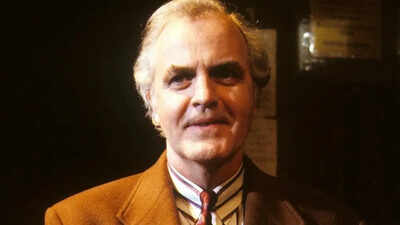
Trigger Warning: This article contains shocking details of murder and violence, which may upset some readers.James Handy, the legendary Hollywood actor who starred in projects such as “K-9”, “Top Gun: Maverick”, “Obsessed”, “Jumanji”, “Presumed Guilty” and others, died on June 3, 2026.
The 81-year-old was reportedly stabbed to death in the Tarzana neighborhood of Los Angeles. His girlfriend’s son, Michael Gledhill, reportedly confessed to being the suspect.Here’s a closer look at James Handy’s unfortunate death and career.Authorities received a 911 call reporting an “unknown problem,” and police officers went to Handy’s residence. “I am the Son of Man, I have just killed the man of sin,” the person told dispatchers, according to People magazine.
The actor had injuries to his chest and was lying unconscious in his front yard.After paramedics took him to the hospital, he was declared dead upon arrival. The 44-year-old suspect was arrested and transferred to Van Nuys Prison. On the murder charge, Gledhill’s bail was set at $2 million.
About James Handy
The late actor James Handy was born in New York, USA, and has around 150 credits for his contributions to Hollywood on IMDb.
From playing roles in major films across some 148 projects, he also starred in and produced the critically acclaimed film, “Street to Table,” about chefs trying to afford to live in New York amid rising competition and rent.Handy was also part of David Hare’s play, Things Happen, which responds to the Iraq War with profound political and historical significance. Aside from guest appearances in multiple shows like “Commander in Chief,” “The Closer,” “Cold Case,” “Alias,” “Crossing Jordan,” “9-1-1,” “Mulaney,” “Criminal Minds,” “Castle,” and more, he recently starred in the movie “Top Gun: Maverick” as a waiter named Jimmy. In the 1995 film “Jumanji”, he played the role of the Exterminator.
He made his screen debut in 1977 in Taps, and his career spanned five decades.Disclaimer: If you or someone you know is experiencing any form of abuse, please seek support. Contact a mental health professional, NGO, or trusted person. Several helplines are also available for assistance.