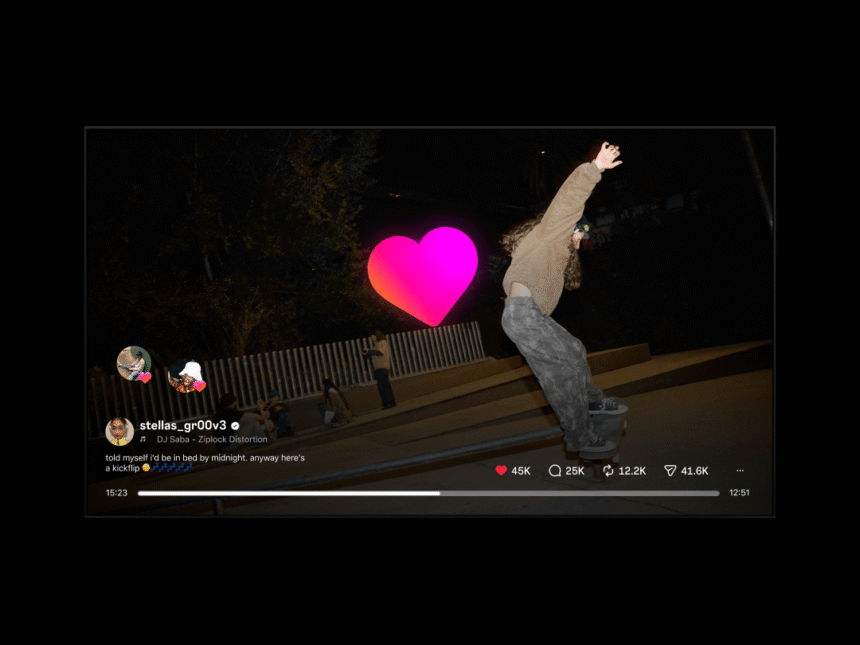
Instagram is ramping up its efforts to attract more viewers on TV in a way that may seem very old-fashioned.
Starting Monday, the Meta-owned social app will test Instagram’s horizontal video for TV, the pre-existing feature that lets viewers watch social videos on the big screen in their living room. And that’s not all. Soon, the company will also experiment with long-form storytelling and episodic series with creators, as well as trialling live TV creator experiences for scale.
The changes are timed with the launch of Instagram for TV on Samsung TVs on Monday, a move that will significantly expand the reach of the feature. Previously, Instagram for TV was only available on Amazon Fire and Google TV products.
In an interview with Hollywood ReporterInstagram’s VP of Product, Tessa Lyons, described TV as the app’s “next frontier.” “Ultimately, Instagram is about connecting people around creativity. We aim to help creators find their audiences and are constantly evolving how we do that in order to meet their needs. [their] “I really think television is in many ways the next frontier of that for us,” she said.
The ability for users to view “Stories” (limited-time posts that appear at the top of Instagram feeds) on TV will also be rolled out on Monday, after the app’s audience requested it. Also new is a test for users to send reels from their phones to their TVs.
Lyons said Instagram’s push toward more traditional forms of storytelling — such as the long-form episodic videos that have dominated television since the early 2000s — came from observing how creators were already using the app to post more extended videos they were sharing elsewhere. Moreover, Instagram has not ignored the emergence of micro-dramas, and Lyons believes that its creators can move to this format, where stories are divided into sequential one- to three-minute episodes.
“Today there are many of them [microdramas] “It’s produced by production houses and that’s great and there will be a role for that,” Lyons said. “But we also think there’s an incredibly compelling opportunity for creators themselves to create in this format. And for a lot of short-form creators who use Instagram, it’s a very accessible way to tell longer, more episodic stories.”
Instagram began reaching out this week to encourage creators to start producing these episodic Stories. Microdrama companies have historically marketed their fare on both Instagram and its rival app, TikTok, but have eventually used the platforms to direct viewers to their own apps. Starting earlier this year, TikTok began producing its own mini-dramas through the PineDrama app and signed a deal with Issa Rae’s production company, HOORAE, to retain some of that audience.
For TV executives, Instagram’s redoubled efforts to attract TV viewers may provide another source of concern at a time when competition for eyeballs is fierce. YouTube, the social video giant, has already overtaken streaming programs like Netflix and HBO Max in viewership on TV, and in 2025 it will become the most watched US video provider on tube. In turn, Netflix has begun to venture into traditional social media territory, inking deals to stream podcasts from the likes of Pete Davidson and Bill Simmons, and offering vertical video feeds “Clips” on mobile.
As the lines between digital and traditional entertainment continue to blur, Instagram is giving its creators the ability to experiment with some time-honored storytelling formats. “I think what’s old is new again, as people like to come together around stories,” Lyons said. “And I think giving creators more ways to directly reach out to their audiences to do that would be a great way to support creativity.”