When a digital content creator wants to showcase their body of work to potential collaborators or clients, they can post some past work on Instagram or LinkedIn, and maybe dig some old contracts out of the drawer. But with the volume and variety of output successful creators produce, from quick sketches to large-scale branding campaigns, this is an impractical and imperfect approach.
A new initiative from the Creators Guild of America aims to solve this problem. On Tuesday, the nonprofit (led by Daniel Abbas, former director of judging at the Producers Guild of America) launched an open beta of Mosaic, a “first-of-its-kind” certification platform designed specifically for the vast, endemic workflows of creators and their creators behind the scenes.
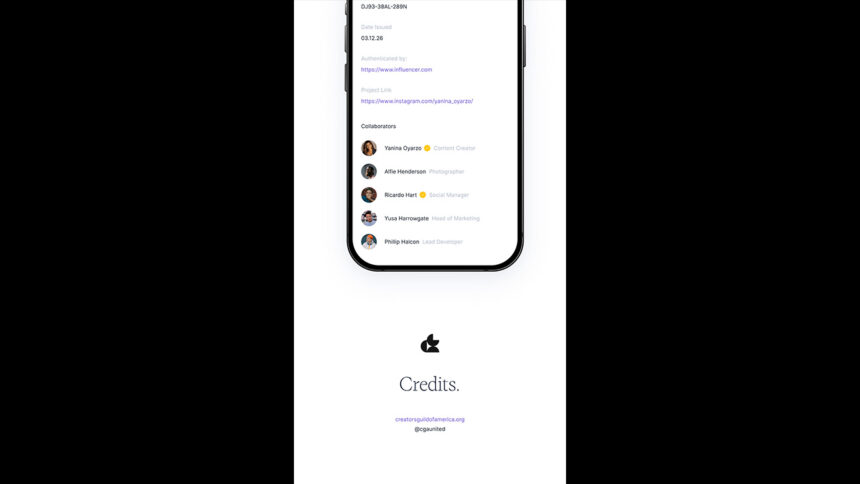
Branded as “IMDb for Creators,” Mosaic offers creative economy workers a digital resume to help them showcase their work history to collaborators, brands, and audiences. A few thousand beta testers have already signed up for Mosaic ahead of its launch on Tuesday.
“Without credit infrastructure, it is difficult to know what creators are doing and provide recognition,” Abbas said. “Mosaic is exactly that. It is an infrastructure to prove work and provide recognition.” Hollywood Reporter. “Creative work is very precise. It’s project by project, hence the name Mosaic. When you put that work together, you can see someone’s full creative arc.”
All credits submitted to Mosaic will be verified by third parties with knowledge of the functionality, according to CGA. They will also be judged against the CGA’s “professional eligibility criteria” (for example, for an individual influencer to receive CGA credit, they must be paid by a brand, agency, or platform or have a paid subscriber base of 10 or more people).

Mosaic will also give each participant a unique creator ID that they can use across different social media platforms. Comparing it to a driver’s license number, Abbas says the number will help give creators more independence from certain title names, will help differentiate between creators with the same names, and will provide safeguards against fraudulent promotions or fake videos.
In a statement, lifestyle creator Yanina Oyarzo confirmed that the platform’s Creator ID component could protect influencers like her from being associated with fake promotions. Last year, Oyarzo discovered that her image was being used to promote products without her knowledge or consent. “I’m excited about Mosaic because we need the protection it will provide today’s creators,” she said. “We have this for writers, actors and other forms of creatives in the entertainment industry. It’s time we were able to protect and work alongside AI with the right contracts and safeguards.”
While the idea of the platform predates recent developments in the world of generative AI, the rise of artificial creators and fake videos has accelerated CGA’s work on Mosaic, said Abbas: “Truth is important in the world we are entering. What is real? What is not real?”
The platform is free and open to any creator and innovator working in the creator economy, not just CGA members, though only members of the organization can be verified on the platform as human creators.
“I’m excited about Mosaic because when we watch creators, we usually only see the person in front of the camera,” said content creator and CGA board member Justine Ezarik (her name is @iJustine) in a statement. “We don’t always see the writers, producers, editors, and videographers behind the scenes who help bring that content to life. So having this new platform that properly credits the entire team feels like a missing piece of the creator’s puzzle.”