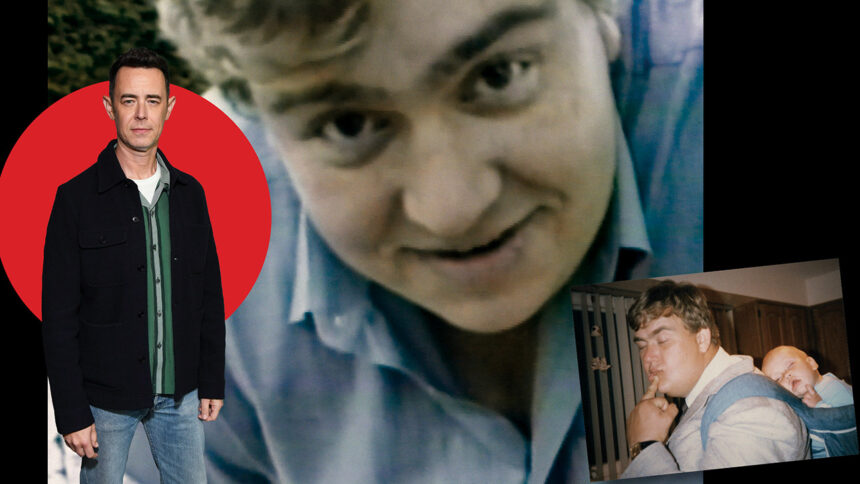
John Candy: I love me It’s an anomaly in the context of celebrity documentaries. It contains few of the famous people’s struggles that have become clichés of the genre—no scandal, no addiction, no bankruptcy, no noticeably objectionable behavior. The comedian wasn’t without his difficulties, but this is a beautiful film. It is produced by the Hollywood son of Colin Hanks, who met Kandi when Kandi co-starred with his father Tom in 1984. splash.
“He was an incredibly charismatic character,” Colin Hanks recalls. “It takes a special person to leave that kind of mark on a child.”
i love mereleased by Prime Video, came to Hanks through producer Ryan Reynolds, who had a long affinity with Candy and had already garnered input from Candy’s children, who supplied the production with home movies, scripts and other highlights from their father’s extensive archives.
The resulting film is a moving tribute to the artist who somehow held on to his sense of self despite losing his father on his fifth birthday, battled anxiety at a time when mental health was not commonly discussed in mainstream culture, and was grilled by journalists about his weight. The title comes from Ma’ruf Planes, trains and cars The monologue in which Candy’s character, friendly salesman Dale Griffith, responds to insults from Neil Page, Steve Martin’s unsympathetic advertising executive, by saying: “Think what you want about me. I’m not changing. I love me.”
One of Hanks’ greatest research discoveries was Excerpts from Candy Alone at home Improvisations. His role as the “Polka King of the Midwest” is one of the most memorable elements of this blockbuster, and director Chris Columbus dug up dailies from his basement. The footage is now a tribute to Candy’s scene partner, Catherine O’Hara, who delivered Candy’s eulogy in 1994 and died in January.
Hanks acknowledges that there was a more “saucy” version of the film that draws contrasts between Candy and his two colleagues who died of drug overdoses, John Belushi and Chris Farley, but he chose not to go that route. “My job as a director is not to produce drama, but to show where that drama actually exists and present it in an engaging way,” he says. “Everyone experiences trauma in one way or another. It doesn’t have to be a big shock. But the personality traits — that collective energy that everyone comes together in — is what made John special. They also learned coping mechanisms.”
The goal, in Hanks’ eyes, was to deepen the audience’s understanding of the man who helped introduce the comedy generation to Second City TV, Brewster’s millions, Space balls, Uncle Buck and He ran cool. “I remember thinking early on that John was this everyday guy, and people saw a quality in him that they connected with,” Hanks says. “What if the quote-unquote problem our subject faces is just as relevant as everyone else’s?”
This story first appeared in the June standalone issue of The Hollywood Reporter magazine. To obtain the magazine, click here to subscribe.