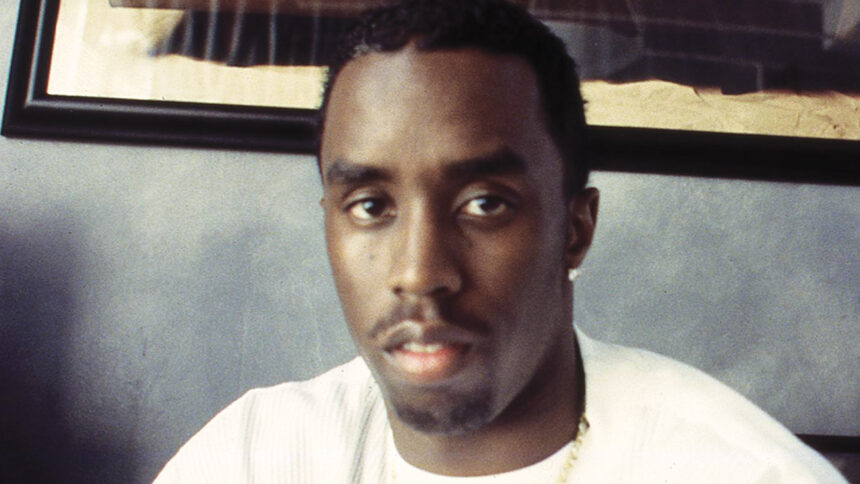
When Curtis “50 Cent” Jackson announced his intention to develop a documentary about the sexual assaults, rapes and sex trafficking of Sean “Diddy” Combs, many did not believe him. Those who thought he was opportunistic to pursue what he assumed would be a hit track about his former rap rival.
“I knew some [people] They’ll have something negative to say about the doctor because they’ll look at him and say, “Oh, I’m kicking the guy while.” [he’s] “These are people who have had relationships,” Jackson says [with Combs]. …That’s not what it is. “He’s finally saying something about it.”
Despite the dismissals… Sean Combs: The Accountexecutive produced by Jackson and directed by documentary maker Alex Stapleton, premiered in December on Netflix to critical acclaim. The four-part docuseries was praised for its meticulous timeline, its unwillingness to grapple with the most sensational allegations against Combs and its inclusion of candid footage of the hip-hop mogul in the days leading up to his arrest in September 2024. The duo provided perhaps the most comprehensive examination of what Stapleton calls the “tentacles” of industry-backed power that enabled decades of alleged exploitation and violence.
Six other reality projects have been produced about the charges against Combs since 2024, but none of them began the true shaping of his career. Jackson and Stapleton carefully connect the entrepreneur’s business trajectory to the rise of hip-hop in New York City, a crucial context they believe is missing from the public’s understanding of Combs’ influence.
“It’s hard to understand, just on [historical] Timeline, how did it all happen? “It was the perfect storm in a lot of ways,” Stapleton says. “You don’t have Sean Combs without the start of hip-hop excitement, and all of those things had to go right for him to be able to do the things he did.”
Although the collaborators were already developing another project together, they spoke by phone after news broke of singer Cassie Ventura’s sexual assault lawsuit against Combs in November 2023, and began a series of “intense” conversations about producing a documentary.
Rather than take a reactionary approach to the more salacious titles, Stapleton says they chose to “pause” while they “watch other documentaries come in” and eventually finish. “It’s not like we’re telling a story that happened 30 years ago. It was unfolding every day,” she says. “It was also important to us and to Netflix that we wouldn’t bring this up until we felt like we were done with it — and we certainly wouldn’t bring it up before the trial. It felt like shooting yourself in the foot. And you weren’t even letting the process happen.”
Stapleton relied on Jackson’s immersion in the New York rap scene to identify sources who had long been close to Combs — and would be willing to collaborate — to craft a comprehensive portrait of him in the doc, including former Bad Boy Entertainment co-founder Kirk Burrows, musical collaborators Aubrey O’Day and Kalina Harper, Combs’ childhood friend Tim “Doug” Patterson, and one of Combs’ early alleged victims, Joey. Dickerson Neal.
“No one has heard of it. [That’s why] “Her voice is so powerful,” Stapleton says. “There was a legal and archival process to even examine her story, to be able to present these records,” she adds of the corroborating oral fact-checking and corroboration that occurred, noting that several of the people interviewed in the docuseries currently have active lawsuits against Combs. “It was really important to us
“Just so people don’t criticize him.”

Stapleton kept the production team small to protect the integrity of the filmmaking process, but called the sourcing and editing of the doc a “herculean task”—a task highlighted by three key points: ostensibly linking Combs to the killings of Biggie and Tupac Shakur; Interviews with jurors 160 and 75 of Combs’ trial; and access to never-before-seen footage of Combs the week of his arrest.
The recordings portray Combs as anxious, controlling and beleaguered, hyper-aware of the legal grip and a slippery PR team on his situation. Combs’ team claims the footage was illegally obtained, prompting Netflix to previously cease and desist the accountrelease. Jackson and Stapleton didn’t offer any additional insight into how the footage was obtained, but Jackson says incorporating the video clips into the document was a “no-brainer.”
“We had already come a long way before we got it,” Stapleton says. “So it wasn’t like a documentary or a whole team was built around this footage.” “All the footage that was taken supported and reinforced a lot of what people were saying in interviews about his behavior, the way he worked. … He was filming himself when the average person would be under complete duress.”
The initial footage elicited strong reactions from audiences and likely contributed to the film’s increased binge viewing. During the first week of its launch the account It ranked first in the top 10 movies on Netflix in the US, beating out the final season of the TV series Strange things. Globally, this docuseries is second only to the Duffer brothers’ series with over 21 million views.
However, Stapleton measures the success of docuseries by how well the stories of the alleged victims resonate with the audience.

“It was really important to make something that a black audience would respect and understand, that could be translated, and that felt like it was made of us,” she says. “It was important to make sure it was accessible to as many people as possible. That’s how you give a voice to the voiceless. … I think a lot of people say, ‘Why would you tear down a black man?'” You can look at it that way, or you can look at what the black press has done. Look at what we’ve been able to do as a team of black filmmakers.
After his July 2025 conviction on two counts of transportation for prostitution, Combs is serving a 50-month sentence at FCI Fort Dix in New Jersey, and is expected to be released in April 2028. Neither Jackson nor Stapleton are convinced his story is over.
“I think his time will be shortened,” Jackson says. “I think he’ll be home early. We’ll see who shows up at the upcoming parties.” [His conviction] Doesn’t mean they’ll stop. There is not enough time to change. … He’s gotten away with a lot of things, so you should expect him to think he can get away with more.
This story first appeared in the June standalone issue of The Hollywood Reporter magazine. To obtain the magazine, click here to subscribe.