The heat is on! Just watch the work of Swiss documentary filmmaker Jacqueline Zund (Where we belong, Almost there, Good night nobody).
She premiered her feature film, Don’t let the sunat the Locarno Film Festival last year, offering us a near-future cinematic meditation on how external factors, specifically climate change, impact and shape our internal worlds. Now, Zünd is preparing for the world premiere of a film that delves into the same themes in a different way, one that is both documentary and highly provocative.
The new film, is aptly called heatwill premiere at the 57th Visions du Réel (VdR) Documentary Festival in Nyon, Switzerland, on April 20. It will be screened in the festival’s International Feature Film Competition, which opens on Friday, April 17, and continues until April 26.
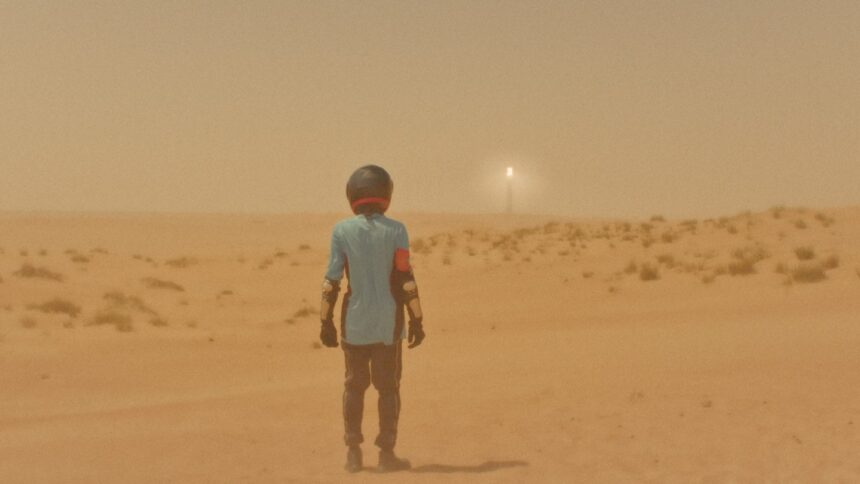
Featuring highly stylized visuals and sound to bring viewers warmth in all its intensity, the film is set in the Persian Gulf, “one of the hottest regions in the world,” where temperatures exceed the 50°C/120°F mark, and a place where “heat becomes a force shaping human existence,” as the press notes indicate. “The film invites us to consider the impact of heat on personality, economic dynamics, and social inequality. heat The layers dissolve to reveal what lies behind the climate crisis within humans.
Produced by Louis Matari of Lomotion AG, in association with Real Film GmbH. heat Featuring cinematography by Nikolai von Gravenitz and edited by Gion Reto Killias.

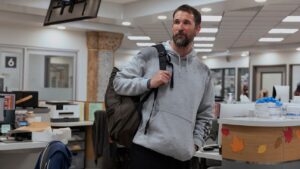
Among the people we meet on screen are Sophie, a young Kenyan woman who works in an ice bar designed to provide extreme cold to the wealthy in Dubai, and Issa in Kuwait, a meteorologist struggling to sound the alarm on climate realities.
“I want to translate heat visually without making it explicit, without falling into the trap of clichéd images; I’m looking for a kind of cinematic Fata Morgana,” Zond highlights in a director’s statement. “Is this little black statue in the middle of the desert with a tree in its hand real or not?”
heat Producer Matare praises the director’s approach of blending “societal relevance with a striking aesthetic,” adding: “Her protagonists bring emotional depth to themes of social inequality, highlighted by visually stunning contrasts.” heat It incorporates techniques from Jacqueline’s previous films, such as structuring the narrative around a single day and employing internal voices.
THR A trailer can now be viewed exclusively for heatwhich leads to an increase in temperature. So, get ready for sand and sun, but not a lot of fun! Is this a mirage? You tell us! This may seem too hot for some viewers, so watch with caution – before reading what Zond had to say THR About the documentary.
It has painted a picture for us in the near future of a world and its people affected by climate change Don’t let the sunWhich premiered in Locarno last year. How much do you consider? heat Its documentary brother and how did the two films inspire each other? I think I recognized some visual elements and ideas that connected the two…
To me, the two films belong together; I see them as companion pieces. Very early in the development of my feature film Don’t let the sunThe idea arose to create a documentary on the same topic. During my research, I read a lot of wonderful things that didn’t find a place in fiction – it felt like a calling.
It was a wonderful experience to see how the two films enriched and inspired each other. I was able to translate some elements from the documentary into a fictional story, but also vice versa. Sometimes, it was amazing to find certain details from fiction reflected in real life.
Both films explore the impact of temperatures on people’s inner lives and relationships. While watching heatI was surprised how the climate adds another divide between the privileged and the people who are struggling. What surprised you most about what you found? When did you discover that immigrants are among the people who suffer the most?
Heat is like a magnifying glass, amplifying and intensifying personality traits, moods and emotions, but above all, economic and social inequalities.
It is surprising to see the gap between the rich and the poor. Once the temperature reaches a certain point, those who can afford it no longer leave their homes; They live exclusively in air-conditioned environments, jogging indoors, eating and socializing in malls, or asking delivery drivers to bring what they need directly to their doorstep.

Migrants – who have to work outdoors – are primarily those who suffer from the heat. In the Arabian Gulf, many migrant workers die every year from heatstroke, but this is something that should not be discussed.
Not only did you give us a more traditional doc with expert interviews and data charts, but you brought warmth to the screen and through the screen and gave us a real sensory experience. How did you think about and approach what you wanted to convey and the visual, audio and other methods you chose to achieve it?
I was interested in heat as a state and a border experience. Since my first film, Good night nobodyas I devoted myself to insomnia, I was interested in making the conditions tangible and cinematically experienceable.
I wanted to translate heat visually, like a cinematic mirage. The film depicts vertigo, loss of control and distorted perception, making the heat physically palpable.

Will you be working on more climate-related films next or are you now ready to delve into other topics?
No, I need a break now. I have other topics waiting for me to explore!