Tired of seeing unauthorized AI-generated versions of its characters proliferating on different platforms, Hasbro has launched its own AI studio called Sixth Wall, which will enable the gaming giant’s character collection to be published by third parties via new experiences enabled by the technology.
Of particular note is Hollywood: Hasbro works with real voice actors, including the original voice actors of many of its most popular characters, to help it do this.
“Every intellectual property owner is looking at millions of unauthorized versions of their characters on other technology platforms and flagship models, and it’s not a great experience for the fans, and it’s not on brand for us,” says Roberta Thompson, CEO of Sixth Wall, in an interview with Hollywood Reporter. “So you have a few options as an IP owner: You can decide to enforce everything, whack-a-mole, send out a bunch of cease and desist. You can decide to enable user-generated content directly with consumers…but the question we asked is, what if we just provide the authorized end-to-end blue check version of the character that the company can license from us? And then we can guarantee that it will appear in a context that we already agree with and feel comfortable with, and appear in a way that falls within the boundaries that we have set up with the character.”
“Right now, all of our intellectual property is in static media, trapped in a toy on a shelf, or a movie, or a video game,” she adds, “but when these characters come to life and interact and talk in real time, you have to control their behavior, which is a different set of technical challenges and brand challenges, and that’s the expertise we’ve developed.”
So the company developed its own internal platform called CharacterOS (Thompson calls it the “golden record” for each piece of IP), which sets guardrails and personality traits for each character. For example, Mr. Potato Head won’t give any tips on how to cook the best French fries. Cobra Commander is primarily focused on conquering planet Earth, not making recommendations for a solid lunch, as it were Hollywood Reporter I tried to get out of it in a voice chat.
“CharacterOS is compelling because it opens up greater creative latitude while addressing a real challenge in AI: unauthorized use of content,” said Chris Cox, CEO of Hasbro. “It’s built on a creator-first model that gives voice talent and creators a meaningful seat at the table. It gives brands a reliable way to bring characters to new AI-enabled platforms without losing what makes them original.” “Most exciting to me is that it opens up entirely new surfaces for gameplay and storytelling, from making a store greeting feel magical to turning the call waiting experience into a moment with a fan-favorite character.”
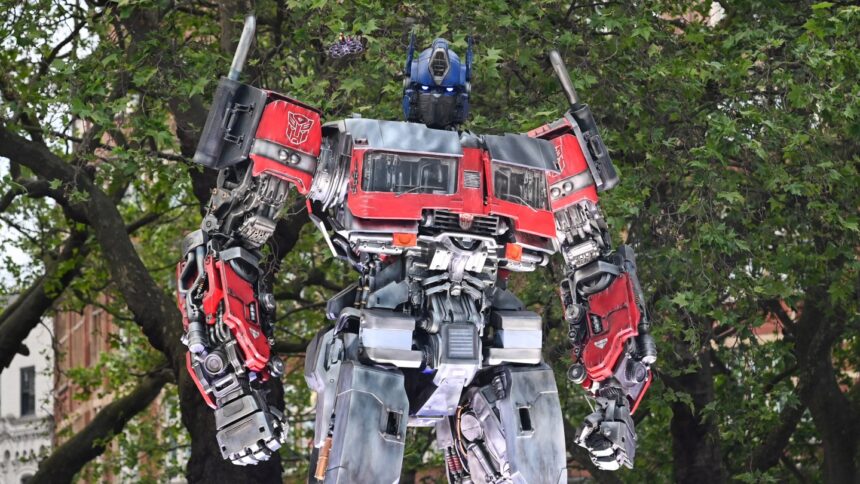
The initial roster of characters will include Mr. Potato Head, Megatron from Transformers, Cobra Commander from G.I. Joe, and the crew from the Clue board game. Others will be added later. There’s even Optimus Prime, voiced by Peter Cullen, who has been voicing the character since the 1980s. For characters who don’t have a known voice actor, the company reached out to industry professionals and found some interested in participating.
In fact, Thompson says using real voice actors is a “critical” part of the company’s strategy in this area: The studio won’t use voices to create movies or TV shows, only for AI-powered interactive experiences.
“We could have decided to go further with synthetic sounds, and all the models give a good approximation of those sounds because they are there, but that didn’t seem like the right thing to do,” she says. “When we talked to voice talent, we said in all honesty that this should be a new revenue stream for you. Because these experiences are enabled by technology, they are dynamic, interactive and personal. They don’t replace something you might currently go to a studio for, like a voiceover for a feature film. So, we won’t be using voices for these purposes, but for something that didn’t exist before.”
Instead, Sixth Wall will “act like talent agents introducing these characters to licensees who might want to build interesting experiences with them,” with real voices being part of that package, she said.
The company is also partnering with ElevenLabs to bring select Hasbro characters to its audio marketplace.
Sixth Wall has already been in talks with potential licensees, and Thompson says the enthusiasm from these partners is real.
The company currently focuses on experiences and enterprise use cases that cater to consumers ages 13 and older, with a particular focus on specific areas such as: interactive storytelling experiences; Conversation games and digital companionship; physical products and connected robots; AI-powered brand ambassadors; Location-based entertainment experiences; and dynamic customer engagement agents.
“Imagine like a giant moving robot [say, perhaps, Optimus Prime?] He wanders around an amusement park and entertains guests while they wait in line. “Suddenly,” she says, “waiting an hour in line becomes a really fun, interesting, engaging experience. Imagine you’re waiting for a customer service agent playing an audio game of Trivial Pursuit. Suddenly, you don’t mind waiting 10 minutes. You might actually say, ‘Wait, I’m not done yet.'” At their simplest, there are storytelling experiences with infinite branches that, because these experiences are new and incremental, are dynamic and personalized. You can take the story in any direction.
Perhaps Sixth Wall is a model of a new path forward for IP owners, who are all grappling with the misuse of their characters in new places. Last year, Disney struck a deal with OpenAI to bring its characters to its Sora platform after seeing abuse there, though that deal was short-lived. Perhaps licensing these characters’ traits and voices is the next logical step.