When lawyer Jess Tom heard about a person with Tourette’s Syndrome winning a BAFTA award, she had a familiar feeling: dread.
Tom suffers from Tourette’s Syndrome, and when she learns what happened with John Davidson, many of the misunderstandings and confused reactions she has spent her life trying to combat come to the surface.
“There are a lot of myths and oversimplifications about Tourette syndrome, and the global madness is not the best place to have a conversation about it,” Tom, 45, who is based in the United Kingdom, said via Zoom from her home on Monday evening as she reflected on the events. “And all of this is happening in a climate of increasing hostility toward people with disabilities, with threats to Medicaid and the Americans with Disabilities Act.”
At the ceremony, Davidson shared “ticking,” a term that refers to when people with Tourette’s Syndrome, or TS, involuntarily say or do something that can have the effect of making others uncomfortable. In this case, the executive producer and inspiration for the Tourette’s-focused winner, I swearunleashed a string of expletives and insults, as well as racial slurs, while black presenters Delroy Lindo and Michael B. Jordan were on stage. The moment exploded after the BBC kept it in the tape, which was delayed two hours later and even for a while in the live rebroadcast. (The latter has since been removed; the BBC apologized for the “strong and offensive language.”)
Tom and others in the community say the fight during the awards ceremony brings up the lack of understanding they feel that has plagued the Torit community for years. One of the biggest misconceptions is about “oppositional tic,” which basically involves saying the worst thing one can say in the room (the involuntary urge to scream “bomb” at the airport, for example).
“People don’t understand that it’s about context, that this part of the spasm is saying that completely harmful thing,” Tom said. Instead, people assume that what is said is said because someone “secretly” believes it or is intentionally trying to hurt someone. Tom founded the advocacy group Tourettes Hero, which, among other things, seeks to help people understand their background and also fights for disability benefits on behalf of people with TS.
Tourette’s Action UK charity TS sought to make this clear through its own statement on Monday where it also expressed its disappointment with the way the story played out.
“[I]It is important for the public to understand the basic truth about Tourette syndrome: tics are involuntary. The organization said: “It is not a reflection of a person’s beliefs, intentions or personality. People with Tourette Syndrome can say words or phrases they don’t mean, don’t endorse and feel very upset about afterwards. These symptoms are neurological, not intentional, and are something John, like many others with Tourette Syndrome, lives with every day.”
The organization continued: “The backlash from certain parts of the media has been extremely sad, especially given how hard John works to raise awareness and understanding.” “What should have been a night of celebration for him became overwhelming, and he made the difficult decision to leave the party midway through. This moment reflects exactly what he swears is on display: the isolation, misunderstanding, and emotional heaviness that often accompany this condition. People with Tourette’s syndrome manage their environments and their physical and social symptoms on an ongoing basis. The price of misunderstanding is increased isolation and the risk of anxiety, depression, and death by suicide.”
Another misconception revolves around what the medical community calls “coprolalia,” which involves the use of obscenities or other inappropriate words and gestures, which Davidson also engaged in. Although there is a well-established neurobiological basis, people can react to it, advocates say, in a way that does not fully take it into account, and they believe there is some intent to shock.
New York City Public Defender Jumaane Williams posted on social media on Monday that his own experience with TS made him want to correct misconceptions. “As the first known person to be elected with #Tourettes. As someone who has #coprolalia and also the ‘N-word’ tag. As a black man I have some vivid opinions and thoughts to share tomorrow. #StayTuned #bafta (feel free to Google coprolalia before then),” he wrote.
TS is a condition that involves both motor and vocal tics. A very large number – making up about 1 per cent – of all young people around the world are thought to be affected, with about 10 to 15 per cent of those also suffering from coprolalia. For many, the severity of the disease decreases significantly as they reach adulthood, but the CDC still estimates that an estimated 1.4 million people, both children and adults, have Tourette syndrome in the United States.
The entertainment industry has sought to highlight many forms of neurological conditions in the past decade, as is the case with the film focusing on autism He wonders Or the ABC series The good doctor. However, historically, Tourette’s on screen is often seen as a one-off novelty, as is the case with the famous old L.A. Law episode.
A breakthrough of sorts occurred in 2006 with A.J Big Brother UK Contestant Pete Bennett, who has TS and took the spotlight. Culturally, the syndrome has become particularly well-known in the past few years thanks to Bailyn Dupri, a Gen Z woman with Taurus who has gained a following on TikTok and, last year, a reality show on TLC about her experience as a person with Taurus, alongside Billie Eilish, who has said she also has it.
A spokeswoman for Eilish said she was not available Monday to comment on the BAFTAs, but pointed a reporter to previous videos, which included an interview with David Letterman on his Netflix show in 2022, in which she started having convulsions and then told a sensitive Letterman that this was something her reaction could get under her skin.
“The most common way people interact [to a tic] “They laugh, because they think I’m trying to be funny. And I’m always incredibly offended by that,” she said. She said she hopes talking about it more will lead to wider acceptance and awareness of how common it is. “A lot of people have this thing that you would never know about,” she told Letterman.
Part of the challenge with this condition is that hurtful words can cause real harm even if the person doing the hurting wishes very much not to do so. In a culture that simultaneously cares about accountability on the one hand and takes into account margin on the other, this can mean that it is difficult to walk in a straight line.
On Monday, the BAFTA Awards attempted such a move. The organization issued a statement saying: “One of our guests, John Davidson MBE, has Tourette’s Syndrome and has dedicated his life to educating and campaigning for a better understanding of the condition. Tourette’s Syndrome causes involuntary verbal tics, which the individual cannot control. Such tics in no way reflect the individual’s beliefs and are not intentional.”
But she also said that “our guests heard extremely offensive language that carries unparalleled trauma and pain for so many. We want to acknowledge the damage this has caused, address what happened and apologize to everyone,” adding that she apologizes “unreservedly” for the “deeply offensive term.”
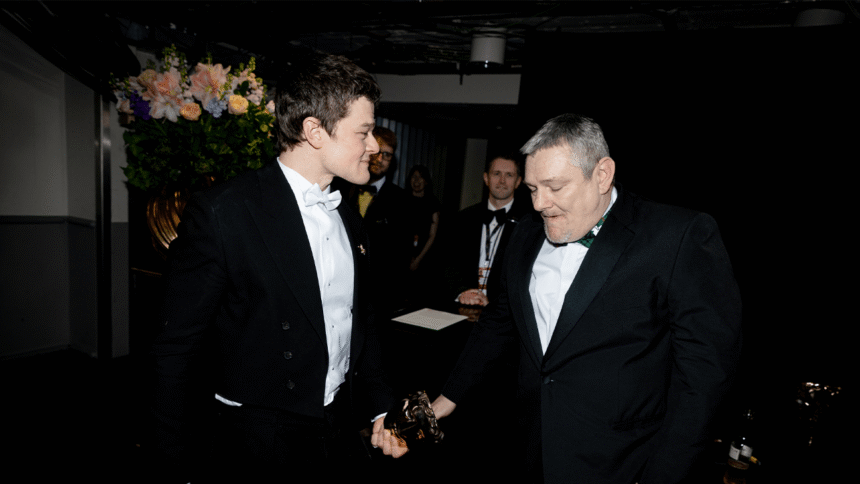
From the stage, the man who played Davidson, Robert Aramayo, who won lead actor, simply tried to inspire sympathy for the man who inspired his character. “John Davidson is the most remarkable man I’ve ever met,” he said after receiving a different honor. “Tonight in particular, I just want to say that to people with Tourette’s syndrome.” “For people living with Tourette’s syndrome, we’re around them helping them define their experience. So, as the film puts it, they need support and understanding.”
Davidson himself released a statement saying, “I have always felt very afraid if anyone would consider my tics to be intentional or to have any meaning,” adding, “I chose to leave the hall early in the concert because I was aware of the distress the tics cause.” “blood money.”
Tom said the best way to handle a situation where someone has Tourette’s syndrome is for organizers to prepare everyone in the room so there are as few shocks as possible. I attended the BAFTA Awards several years ago due to a demo they did about TS and I felt the organizers did a good job, ensuring a smooth night for everyone; She said she wasn’t sure if all the attendees and presenters were adequately prepared Sunday night, given the reaction.
She described “the emotional complexity of living with a body and mind that behave in shocking and unexpected ways that do not reflect who you are.”
Tom hopes that, despite all the ways the incident has been misunderstood, it will ultimately help people realize that those living with TS are not just experiencing an occasional incident but are in a state of constant challenge.
“It can be exciting and surreal and strange” to have Tourette syndrome, she said. “But you have to realize that John was flirting before the concert, he was flirting during the concert, he was flirting on the subway home. People with Tourette syndrome are constantly running it.”