The infamous “pivot to video” of the 2000s was a disaster for publishers. The scars of this mistake still linger in newsrooms, magazines, and digital media everywhere, like the watermelon stains that BuzzFeed blew up by tying them off with rubber bands.
But the media outlets caught up in this shift weren’t doing anything wrong: they were early in the game, becoming too compatible with the technology platforms that had been feeding their audiences for years.
this week New York Times Executive Editor Joe Khan has appeared in Peter Kafka’s Journal Channels podcast, where he frames the outlet’s push into video as a “race against time” and “a shift as big as the shift from print to digital.” It got the expected shock from veteran media professionals who still bear scars from the video’s last pivot, but as is the case with most strategic maneuvers in the media, times Simply put, its pulse right now is better than most in space.
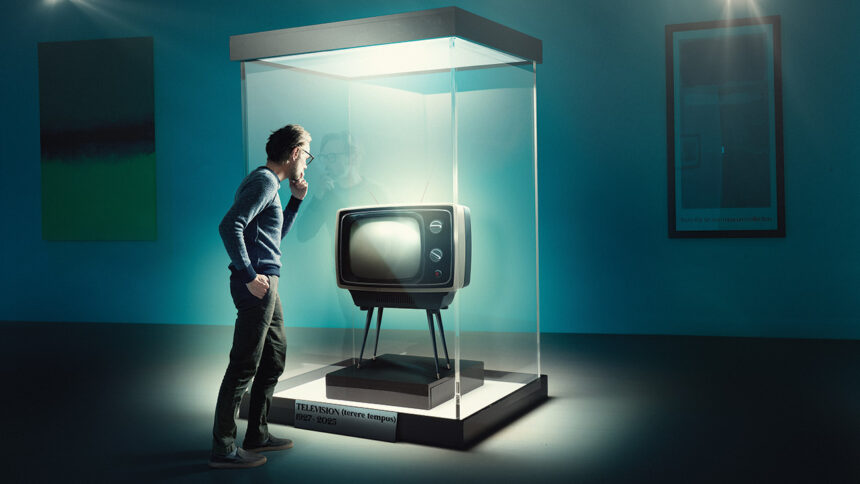
Video has been the dominant form of media for decades, but until now it has been defined by a form factor: television screens. But 2026 is not 2015: all videos can now be viewed on TV. The floodgates are open, and it would be a dereliction of duty for legacy media brands to ignore them.
Let’s go back a decade or so: Starting in 2015, many prominent digital publishers (e.g. Vice and BuzzFeed) and legacy media brands (e.g. The Washington Post and Vanity gallery) Reduce staff and resources on their core text offerings and shift spending to video content. It wasn’t as strategic as it seemed.
In fact, publishers have come to rely on digital platforms, primarily Facebook and Google, to attract audiences to their websites. Facebook’s decision to prioritize video content in its newsfeed has accelerated the shift, leading to what has become something of a mad scramble for video content, any content.
The result was an initial influx of intellectual videos (which seems prescient given today’s live-streaming culture!) and bizarre experiments, like cooking videos on platforms not known for food, and bizarre experiments (like BuzzFeed’s infamous watermelon).
Ultimately, of course, the promised audience never arrived, Facebook’s algorithms changed somewhat, and publishers were left holding the bag, with many journalists turning the “video focus” into a sentence of words.
But 2026 is not 2016. Nielsen reports from that era consistently showed that the preferred form of media in 2016 was… video. But in 2016, video consumption largely occurred on televisions, where cable and streaming TV, as well as Netflix, reigned supreme.
YouTube, Facebook and all the rest (at the time it was Meerkat and Vine lol) were relegated to laptops, tablets and smartphones, where video was competing for time with word processors, spreadsheets and the rest of the internet.
The biggest shift in video history seems to have occurred just as the focus on video ended: in the fall of 2017, when YouTube launched its first dedicated TV app. The move will eventually turn YouTube into the dominant source of video on TVs, which is why Instagram’s current TV push should scare legacy entertainment companies.
But for publishers, this change in landscape is a golden opportunity: For the first time, TV’s understanding of video is up for grabs, and the zero-sum nature of TV (people may leave their phones out while watching, but the big screen only has one video app open at a time) means that content creators, digital innovators and legacy outlets can steal viewers away from traditional TV.
When a viewer streams Megyn Kelly on their TV, it may be on Fox News; When someone chooses to watch Good appetite YouTube channel may be coming to Food Network; When a parent turns on Ms. Rachel for the sake of their children, it may be to Nickelodeon’s detriment; MrBeast’s high-stakes games may come at the expense of ABC’s game shows; And yes report from New York Times It can replace the journalism of CNN.
TV still has a lot of cards to play, of course: traditional TV news organizations and entertainment studios are very good at producing video content, and live news is an area where publishers may not have the budget or runway to compete, but the platform lock that TV once had on video is gone.
It’s also why TV channels like MS NOW are closing deals for YouTube shows from the likes of Crooked Media, why Netflix is opting for short-form shows from the likes of People Inc., and yes, Hollywood Reporter.
There are meaningful signs that the general public is choosing to consume more video, at the expense of audio and text.
In a provocative cover story for Atlantic This week’s ‘The End of Reading is Here’, Rose Horwich points out that in an AI-powered world where ‘entertainment knows no bounds’, ‘the age of reading and writing will prove to be a brief interlude between the oral and digital ages’.
This is the context behind Khan’s strong endorsement of times“Push video, which includes vertical in-app video and longer-form fare. The outlet understands exactly what paying subscribers want, and what it takes to attract new subscribers. Video won’t change that economic strategy, but times He sees where things are going, not because the platform has tweaked an algorithm, but because of the way consumers themselves are changing where they focus, and with TV’s understanding of that attention being more tenuous than it has ever been.
“It has the potential to allow us to deliver good quality original reporting to a much larger audience than we currently have,” Kahn told Kafka. TV audiences are up for grabs, and times He knows that. Will other publishers get their share in time?