When Hollywood historian David Fantle and his friend and writing partner Tom Johnson walked into Vincente Minnelli’s house in 1980, it looked to them like “the decaying pile of silent-screen star Norma Desmond from Billy Wilder’s house.” Sunset StreetFantle recalls.
The Oscar-winning director told them that Judy Garland, who was not yet his wife, did not want to star with him. Meet me in St. Louis (1944); She was seeking “more sophisticated parts” and feared it would “set her career back 20 years.” The film would of course become a classic musical and one of Garland’s most beloved films.
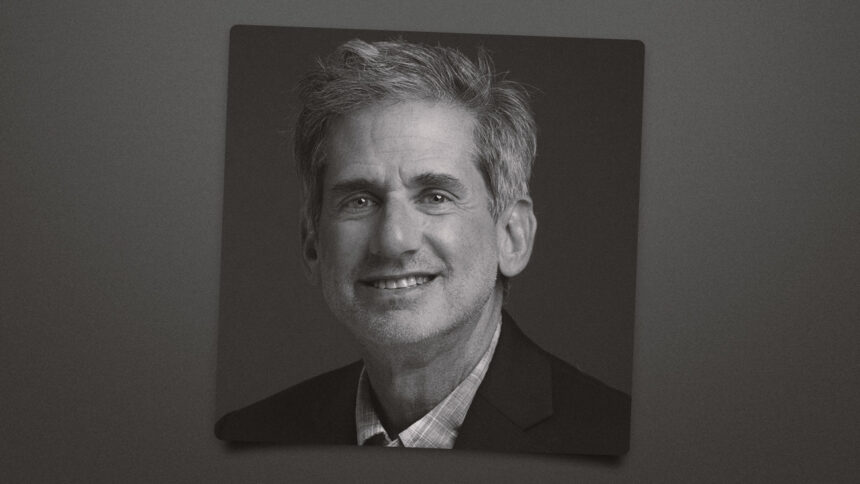
Fantle, who spent his life interviewing Golden Age celebrities to preserve their stories for posterity, died unexpectedly Tuesday at his home in Milwaukee after a cardiovascular emergency. He was 66 years old.
In addition to his role as a Hollywood historian, Paul, a Minnesota native, has had a 40-year career in public relations, serving in senior positions at Visit Milwaukee, the Wisconsin Department of Tourism, and the United Performing Arts Fund. He also served on the board of directors of the Holocaust Education Resource Center and taught film and public relations classes at Marquette University.
What makes Fantle’s story worth highlighting is his determination and ability to reach out to the stars of yesteryear – starting with him just graduating high school.
“What perseverance,” Robert Wagner wrote in the introduction to Fantle and Johnson’s 2018 book, Hollywood Peak: 75 Candid Interviews with Legends of the Golden Age. “These are interviews with stars who rarely open up about themselves.”
Earlier, Fantel and Johnson collaborated in 2009 Reel to Real: 25 years of celebrity interviews from vaudeville to movies to television.
Starting when he was 18, Fantle used the skills that would build a public relations career spanning four decades by getting these stars to talk about what people wanted to know.
When he and Johnson were in high school in Minneapolis in the 1970s, they would send 60 or so letters to the stars and get 30 in return. They would also call agents or caretakers, whoever was running the show. They traveled to Los Angeles for three weeks at a time, wearing three-piece suits and $50 dimes for pay phones, and conducted their interviews all over Beverly Hills.
Johnson described Fantle as “a very loyal friend. He was like a brother, and he was like a bull when it came to finding stars to interview. They were trying to get rid of these kids, and Dave was giving them a reason to see us.”

Lucille Ball nearly fired them (but didn’t), James Cagney took them to dinner after his caretaker measured them, Fred Astaire danced for them, and Mel Brooks kept them laughing.
They sat down with wife and husband Janet Leigh and Tony Curtis, who said of his success in Hollywood: “I feel like I snuck in.” Casablanca Co-screenwriter Julius Epstein expressed inaccuracies in film history books. The often eccentric Jerry Lewis opened up to them several times. They spoke with Charlton Heston at his tennis court and met Gregory Peck at his home in Bel Air. Bob Hope refused to be called a “myth,” saying, “If you start believing this mythical stuff, you’re in trouble.”
Gene Kelly told them about working with Garland on Summer stock (1950). “She wasn’t a trained dancer, but I’ve never worked with a trained dancer who was so quick to learn the steps as Judy was,” he said.
on Singing in the rain (1952), Kelly talked about the number “Moses Assume” with Donald O’Connor. “Donald and I rehearsed that dance for days, but most critics dismiss it as a Marx Brothers riff.”
The Kelly family sent Christmas cards to Fantle and Johnson every year, and even invited them back for another visit.
“Film editors have become the choreographers of today,” said Kelly, who bemoaned the lack of finesse in contemporary musicals, all shot in medium and close-up. “An entire musical can fail or succeed based on the editing.”
Debbie Reynolds discussed her dedication to preserving MGM’s history after Kirk Kerkorian began stripping the studio for parts, selling back space and props. “The MGM auction absolutely broke my heart, and that’s why I went to the bank, borrowed money and attended the auction every day,” Reynolds told them in 1994. “I think it’s our fault that we don’t protect our culture.”
“We’ve always shown that,” Johnson said [the legends] Respect, you will quickly shine when we arrive.
While working at Visit Milwaukee, Fantle had the idea to immortalize Henry Winkler, who of course played “The Fonz” on ABC. Happy daysWhich took place in the city of Karim. Other cities had their own unique connection to Hollywood, so why couldn’t Milwaukee celebrate one of its own?
Fantel led a campaign to fund the bronze statue, known as Bronze Fonz, and the small memorial on the riverwalk has become a hotspot for tourists to take selfies. (After Fantle’s death, Winkler called his family to express his condolences and make the playful comment that without the Bronze Fonz, he would have nothing to talk about.)
David Zucker, who co-directs and writes airplane! (1980) with his brother Jerry Zucker and Jim Abrahams, he met Fantle through his role at Wisconsin Tourism, and “he got the whole ZAZ gang together for these tourism ads,” he recalls. Fantle was often on set to offer suggestions.
Zucker was a big fan of Steve Allen and was happy to hear about Fantle’s involvement, which Allen loved airplane!
“David Fantle was the guy who thought outside the box. He had an imagination,” Zucker said. “[He thought]Why do we make these dull vacation ads? Why not shake things up with humor from ZAZ! “That’s what we did, and they were very successful.”
Regarding Fantel’s work with Bronze Fonz, Zucker joked: “I think they should pick the bridge [in Milwaukee] And make a ZAZ statue!
On a personal note, I first met Fantle when I was beginning research for my 2023 book, Warner Brothers. He told me he met Warner house manager Mervyn Leroy[[Little Caesar, I’m on the run From the chain ring]shortly before his death in 1987 and that he “looked like a mob boss.”
With decades of experience and a lifetime of wisdom, Fantle encouraged my work, shared my sources, taught me to watch out for (but never fear) family members who protected legacies, began reaching out to me as soon as it seemed like my tenure was about to fall apart at UW-Milwaukee, connected me with Marquette, spoke to the school’s entertainment journalism class and kept a coffee date for years, always making sure things were going well.
You always left a conversation with him feeling like anything was possible. He was a true friend and a true gentleman, and he will be greatly missed.
Funeral services were held Thursday at Sinai Congregation in Fox Point, Wisconsin. Survivors include his wife, Cathy; His children, Grace, Madeline and Max. His older brother, Philip. His mother is Betty. his grandchildren, Rena, Romy, Lange and Hannah; And his best friend, Johnson.
Donations in his memory may be made to the Nathan and Esther Belz Holocaust Education Resource Center or Diedrich College of Communication in Marquette.