

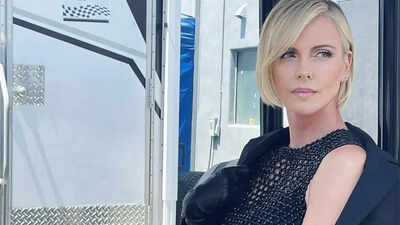
Charlize Theron spoke about a deeply personal chapter of her life, sharing how her mother killed her father in self-defense and how that moment affected her emotionally. In an interview published by The New York Times, the Oscar-winning actress spoke in detail about growing up in a volatile home in South Africa, the trauma of that night, and how it affected her independence, resilience and career choices.
Charlize Theron’s family trauma and its lasting emotional impact
Theron recalled that her father struggled with alcoholism and created an unstable environment filled with “a lot of verbal abuse” and fear. “My home wasn’t always stable. So I felt a lot of responsibility to make sure I was taken care of,” she said. The situation escalated when she was fifteen years old. Her father came home drunk, broke into the house and started shooting. “He shot at the steel doors to get in, explaining that he was going to kill us,” she said.Her mother acted to protect them. “I shot him,” Theron said, adding that she later realized she “saved my life.” Although the incident was traumatic, it did not haunt her in the long term. “Those things don’t haunt me anymore,” she said, though she admitted there was “a lot of shame surrounding it” during her teenage years.
Charlize Theron’s Life After Tragedy and Career Leadership
After the accident, Theron left South Africa at the age of sixteen to pursue opportunities abroad. She described that period as an escape.
“I was very equipped. I knew how to take care of myself,” she said, crediting her independence to her upbringing.Her career later included acclaimed performances in films like Monster, which earned her an Academy Award, as well as action roles in Mad Max: Fury Road and The Old Guard. She linked her desire to live fully to her early experiences. “I didn’t want to live a sheltered life,” she said, adding that she wanted to do everything she really wanted in life.Theron also reflected on her relationship with her mother, saying that the experience strengthened their relationship and reshaped her outlook on survival, independence, and the value of life.