Spring TV has been awash in artificial intelligence.
No, not the use of AI, but the inclusion of AI as a plot device, as fear of burgeoning technology made its way from the subconscious of paranoid writers to the screens of differently paranoid viewers.
Not surprisingly for shows written in the wake of the industry’s twin strikes in which concern about AI encroaching on the creative process was a major point of contention, AI needs to get its own publicist on the phone because those aren’t the headlines it needs.
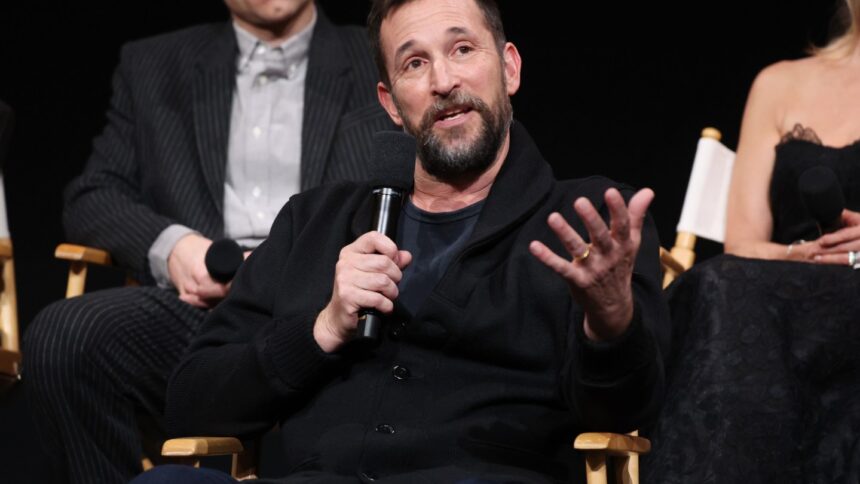
on the houseHBO Max’s Emmy Award-winning drama about good doctors who do good work under the most difficult circumstances, Sepideh Mowafi’s Dr. Al Hashemi is presented in contrast to Noah Wyle’s Dr. Rubinavitch. Ultimately, she’s not presented as an antagonist, but Dr. Al Hashemi’s dedication to innovating AI in medicine constantly clashes with the show’s deeply human spirit. Although Dr. Al Hashemi bragged that AI is a major time-saver — especially when it comes to planning and copywriting — the characters quickly discover that generative AI isn’t 98 percent accurate, at least not in this intense, single-shift sample size.
On HBO ReturnMeanwhile, Lisa Kudrow’s Valerie gets her last chance to return to television, but it comes with a problem: the show she’s been recruited to star will be written largely by artificial intelligence, with a disgruntled husband-and-wife team (Abbi Jacobson and John Early) trying and failing to foster a technology capable of spouting 50 alternative sentences, all of them hackneyed and derived from decades of accumulated (stolen) sarcasm.
On Amazon Scarpettathe main character’s niece, Lucy (Ariana DeBose), is grieving the loss of her wife (Janet Montgomery), and seems to have become isolated. However, the truth is that Lucy spends most of her time in front of her computer because she has a sentient AI version of Janet that is able to act as a confidant, therapist, and virtual partner. The other characters don’t trust Janet 2.0, but as the season progresses, they learn that Janet’s value may be greater than anyone other than Lucy realized.
Each of these shows – not to mention an AI subplot scrubs, Dysfunction of artificial intelligence creators Daring and the regular onslaught of AI overlords who appear to be periodically murdered in broadcast proceedings – they realize that AI is not something that can be trusted, but each deals with or even defines AI in different ways.
the houseas a well-researched show that prides itself on its layers of rigor, offers a reasonably nuanced account of how generative AI can be used in various forms to modernize the medical field, with a predictable assortment of evangelists and skeptics. Return He uses “Artificial Intelligence” only as an abbreviation for “ChatGPT,” and finds lines in the myriad ways in which he finds the software to be glitchy and eccentric, even if the fear sounds straight out of an industry strike negotiation manual. As for Scarpettaits version of AI is very much sci-fi, a more recent take on the “protagonist talks to dead wife/son/goldfish” family trope, which isn’t completely divorced from reality but is basically a less accurate version of dozens of different Black mirror Episodes.
on Returnthe network’s CEO, played by Andrew Scott, scoffs at the idea that there’s anything wrong with presenting a TV show written entirely by AI: “In our business, AI, well, it has a bad brand, doesn’t it?”
naturally, Return He gets something right about artificial intelligence and Hollywood. The industry is currently going through a “catch me if you can” phase, a phase in which people at various stages of the creative process try to sneak in technology applications, either hoping or assuming no one will notice, and then issue lame explanations or justifications when obsessed fans notice. Which is starting to happen.
marvel Secret invasiona limited series that manages to squander the collective talents of Samuel L. Jackson, Don Cheadle, Olivia Colman, Ben Mendelsohn, and more, didn’t get particularly much buzz around its 2023 release even before fans accused its image-altering, green-tinted credit sequence of being A.I. It was actually created by artificial intelligence, and the producers backed up the candor by saying that the decision to use off-putting imagery was to capture the isolated, identity-hopping nature of the show’s Skrull-infiltrated world. certainly. Humans have never been able to produce works of art that capture the anxiety of sifting through forms.
Ultimately, the offer was so minimal that the controversy went nowhere. And you may not even remember the mini-storms that arose when Netflix’s Ted Sarandos admitted that the Argentinian sci-fi epic Eternal Use generative AI to deliver special effects faster and at a lower cost than a traditional approach would require.
Confirmation bias only led to a minor altercation as fans watched Final Adventure: Making Stranger Things 5 They discovered – or thought they discovered – that a snapshot of the writer’s computer contained a ChatGPT-enabled web browser in several tabs. No one has been able to explain if this is necessarily a bad thing or why it’s bad, but it’s consistent with the countless scenes of the writers seeming unable to solve many of the story problems in the final season of the series.
Personally, I’m more bothered by AI’s encroachment on the non-fiction space. In 2024 on Netflix What did Jennifer do? It was criticized for allegedly using artificial intelligence-generated or manipulated images, a charge denied by the producers of the true crime documentary. The history of blurring fact and fiction in documentary storytelling goes back to Nanook NorthSo this isn’t a terrible thing, but add to the trend of using AI-generated voices – sometimes of famous celebrities – in documentaries, and it’s becoming increasingly difficult to believe what we see and hear.
Until now, we are in the elusive stage of our awareness with the use of artificial intelligence on television. While Chinese television watched the premiere of the film, which was produced entirely by artificial intelligence Qianqiu Shisonga series of 26 seven-minute episodes, and back in 2024, nothing similar had been released on a local network or streaming service.
Presumably that’s why there was a brief buzz earlier this winter with the release On this day…1776Primordial Soup, Darren Aronofsky’s AI-focused short series, streaming on timeYouTube channel. The history-based series was the latest example of how unwilling we are to discuss what is AI and what isn’t, since it combined SAG-AFTRA actors with AI visuals but uses human animation and requires people who understand what Google’s DeepMind technology actually is or does.
In reality? I don’t know. All I know is that On this day…1776 It was and still is terrible, a mixture of faulty cinematic grammar and dead-eyed real-life celebrities that is neither entertaining nor educational. Episodes tend to be shorter than five minutes, yet they feel endless and violate one of the few rules some people want AI to be allowed to live by, namely if it allows us to tell stories that couldn’t be told using traditional storytelling devices or technology. Instead, I asked the question: “What if Ken Burns?” American Revolution Produced with masterful video game artistry, Robert Zemeckis’ Humanity. Fast polarity And the historical depth of the virtual pool?
No one is quite sure in what ways Aronofsky did or did not collaborate with AI On this daybut for those wary of AI, the feeling of betrayal is real when someone we consider an analog innovator comes forward saying they’re jumping on the AI bandwagon — see also under Natasha Lyonne’s dalliances with AI and the AI startup that Ben Affleck bought from Netflix.
No wonder that in ReturnPresumably, no one will know that Valerie’s presentation is written by artificial intelligence. It becomes a vicious cycle where no one in traditional entertainment is proud to say they use AI because anyone who attaches their name to a project is ridiculed, which makes audiences more sensitive and willing to find things that suggest AI, and presumably realize that for every two or three things that make social media briefly worry, there are probably thousands of little things that slip away.
When it comes to artificial intelligence and television, here’s what I know, or at least what I think I know: AI could make Tilly Norwood, but it will never give a performance as good as Ethan Hawke’s Inside informationthe accumulation of four decades of a flesh-and-blood actor acting and developing before our eyes. AI can make “unexpected” balances e.g Secret invasionbut it won’t make for 90 seconds of pure joy like the credits Pachinko. AI may allow you to make special effects that look like a scene cut from a video game or revolve around the pilot of a sitcom filled with cliches, but that digital assistant you saved a few bucks not to hire or the writer’s assistant you decided you don’t need could be the next Ray Harryhausen or Norman Lear. Or that’s what I think I know today.
This story appears in The Hollywood Reporter’s Artificial Intelligence issue. Click here to read more.