“They get a lot more views than I do on YouTube, and they call me for help,” reveals Craig Billings, known as Dr. NOS to his 1.7 million subscribers.
What is the core of their concern? It’s about what appears on Billings’ science-focused channel: his face. Those who connect with Billings create content without revealing their mug. And for these creators, the big checks they get from YouTube have dwindled.
“People who provide the same content as me without showing their faces in it, most of them are deprived of income,” he says.
As new video-making tools lead to a surge in artificial intelligence, YouTube has tightened its content policies. This has prompted some anonymous content creators – as channel operators are known – to show their faces. It may not be their own.
Noah Morris, who currently runs six anonymous YouTube channels, says some creators are now hiring cheap hosts to showcase their videos. “Since these platforms are taking strict measures, instead of doing everything anonymously, you can instead hire a host, similar to how Jimmy Fallon is also hired as a rented host,” Morris says. It’s something Billings himself thought about doing with the new canals.
Welcome to the era of the paid creator. Since YouTube’s algorithm was tweaked to reward videos that include human faces, anonymous creators are now mixing in live-camera narration, sometimes posing as gig workers on freelance platforms Fiverr and Upwork as David Attenborough, Morris said. It is unclear whether the maneuver will succeed in the end.
AI tools have led to the proliferation of anonymous video content that caters to a wide range of very specific interests. Alex Masherpov, former CEO of Snap, founded text-to-video model Higgsfield AI last year for exactly this purpose. It is now worth $1 billion. Mashrapov described anonymous AI-generated videos as “an emerging new category in which solopreneurs and storytellers can thrive.”
But in a sign of how quickly the online content landscape is evolving in the age of artificial intelligence, some of these entrepreneurs are suddenly finding it difficult to make money on YouTube. In early 2025, Morris lost $250,000 a month in revenue because YouTube shut down his Anonymous channels due to a copyright dispute.
Two years ago, Billings launched an anonymous channel dedicated to fictional storytelling. Although it quickly gained 40,000 subscribers, it stopped pouring resources into it when it saw competing, anonymous channels quickly gaining millions of subscribers, but then receiving very few views on their videos, suggesting that YouTube may have stopped pushing these channels once they were considered mostly AI.
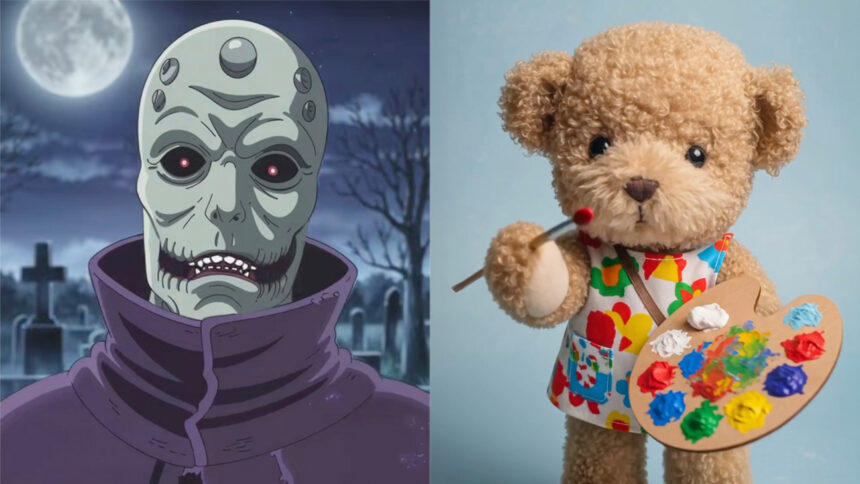
Many anonymous creators have continued to find success on social media despite YouTube’s crackdown. Masherpov pointed to Teddy Pooh, an AI-generated teddy bear-meets-toy poodle character who has more than 100,000 followers on Instagram, as well as Terrorrking, an up-and-coming social media brand that showcases AI-powered animated horror videos in Spanish.
Some of the most successful anonymous channels revolve around narrow educational topics. “There are a lot of different subfields,” Morris says. “You can create a channel that focuses solely on World War II.”
One creator who combines these two phenomena — catering to an endless number of niche interests while also showing his face to stay on YouTube’s good side — is Simon Whistler. The ubiquitous British YouTuber runs an innovative version of the cable channel lineup, running channels about true crime, space, war, and human achievement, among other things. It’s “the prime example of where space is going,” Morris says.
This is mainly due to its production strategy. “He has a team that prepares scripts for him,” says Morris. “He sits down every day and records about 20 videos at once.” “You can see him actively reading scripts when he records videos.”
Although it has become more difficult for some anonymous creators to monetize audiences, the space remains a huge opportunity for brands. Part of the faceless creator economy includes AI influencers and avatars, which have emerged as important tools for marketers. Instead of shipping products to blue checkmarks across the country and relying on them to create videos, companies can insert their goods into AI influencers’ videos.
At the same time, many creators insist that these channels need human input — and sometimes faces — to thrive. “Do I think it will be around five years from now? Yes,” predicts Stella Sorebi, who helps African companies produce anonymous videos. “But by then, we’ll see a less generic, more authentic type of content.”
That day could come sooner. As artificial intelligence overwhelms social media, viewers may tire of seeing LLM material — no matter how realistic it may seem. Perhaps this will lead to a boom in the most authentic type of content: full-face content.
This story appeared in the June 10 issue of The Hollywood Reporter. Click here to subscribe.