Amazon is embarking on a major push to integrate generative AI into all corners of its business, and entertainment is no exception, as the tech company launched a new fund on Wednesday to incentivize creatives to use the technology throughout the production pipeline.
The company’s Amazon MGM Studios and Amazon Web Services divisions announced the GenAI Creators Fund, which will provide filmmakers, digital creators and startups with funding and access to Amazon’s AI tools to create “high-quality cinematic entertainment.”
Albert Cheng, head of AI Studios at Amazon MGM Studios, says in an interview with… Hollywood Reporter: “AI opens up a lot of things that have always been too expensive for us when we do storytelling on an incredible scale.” “We are able to take world-building shows or films and shoot them on a soundstage much faster than in the past,” he adds.
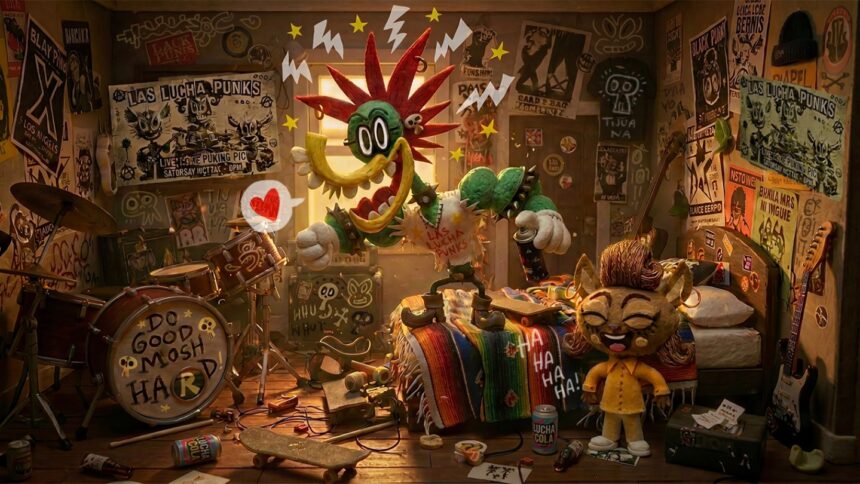
The announcement came during the technology company’s “AI on the Lot” event in Culver City, where the first few greenlit projects emerging from the fund were also unveiled. It includes three original animated series: Punky Duck from Maya and the three and Book of life Director Jorge Gutierrez and Love, Diana Music Huntersa series featuring Pocket.watch and YouTube star Diana, was created by former Nickelodeon executive Albie Hecht. The third string arrangement is Cupcake and friends From Buzzfeed Studios.
The fund’s projects will use Amazon’s Project Nara platform, a new production tool on Amazon Web Services that features third-party generative AI models like Kling as well as a proprietary AI tool trained on Amazon MGM Studios projects. The platform also features traditional crafting tools such as Blender, Maya, and Adobe Suite.
Cheng says Project Nara aims to serve creative teams. “What it tries to do is simplify and streamline the end-to-end workflow of what we do, but it also enhances existing applications that professionals already know,” he adds.
Amazon MGM Studios also has access to the platform, but Cheng points out that Amazon’s AI Studios are the most engaged users. “Is it used in other movies and TV shows? Yes,” he says. “But in what I would call point solutions, where most companies are using AI today, it’s often, ‘I’ve got this VFX shot. I wonder if it can be solved with artificial intelligence, can you help us with that?” And we’ve been doing that in a lot of our films and TV shows.
The fund finds its animation projects through referrals from Amazon’s animation team and from agents who know creatives who are curious about artificial intelligence. This may not have been easy in a field where many creators feel threatened, ethically torn, and/or suspicious of generative AI. “I kind of wanted to have people who were drawn to it or curious,” Cheng admitted, “but not a lot of people are.”
However, another Amazon executive believes the fund will help democratize access to professional tools and financing. Samira Banah Bakhtiar, general manager of media and entertainment at Amazon Web Services, says the initiative will “level the playing field when it comes to cinematic storytelling.”
Amazon is next set to announce which digital creators it is collaborating with through the fund. “The interesting part about the fund is that it brings together established filmmakers as well as digital creators and tech startups,” says Panah Bakhtiar. “So I think it gives, specifically on the technical side, the opportunity for some of these startups to build production solutions for studios and get the AWS expertise to validate some real cinematic workflows.” She says it will lead to “more storytelling at scale.”
Amazon’s new AI efforts come at a time when other entertainment companies, both legacy players and streaming tech giants, are trying to integrate the technology into their workflows to create content at a faster pace and at a lower cost.
Earlier this year, for example, Netflix acquired InterPositive, an AI filmmaking company founded by Ben Affleck, with plans to make its technology available to the creators of its films and TV shows. Earlier this month, YouTube unveiled a set of AI tools that will allow users to “remix” short films, and even insert themselves into other creators’ videos.
Animation is also seen as poised to disrupt AI, given the ability of models to animate scenes quickly, potentially requiring far fewer people to accomplish. For example, Dreamworks founder Jeffrey Katzenberg said he believes AI can cut the costs of animated feature films by 90 percent.
Cheng, who was vice president of Prime Video, moved into his new AI-focused role last summer. This week’s announcements are the first fruits of that work, although they are unlikely to be the last.