Logo text
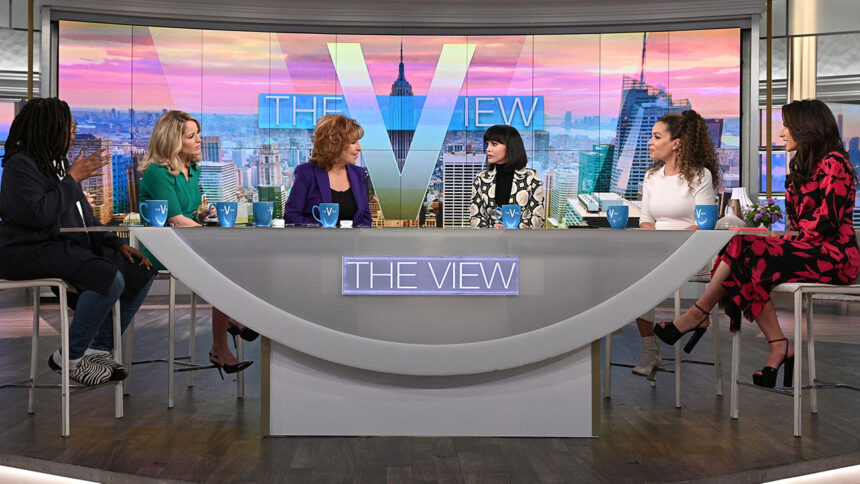
ABC will strike for The view.
With the FCC, under Chairman Brendan Carr, targeting the commission’s daytime program as not being a “bona fide” news program and therefore not exempt from the FCC’s rules on equal opportunity, the network responds, citing the program’s long history of newspaper interviews and FCC precedent to make its case in support of the program.
The Disney-owned broadcast network filed new comments on the matter, telling the FCC that “these response comments arise from an unusual situation.”
“ABC did not come to the FCC to ask for anything,” the network continued. “The Commission compelled the ABC to file a motion for declaratory judgment at issue here, and asked the network to explain why the government should not dictate which political candidates may appear on The view– Although the Commission itself resolved this question in favor of the ABC more than two decades ago, ruling in 2002 that The view It is a bona fide news program and is not subject to an equal opportunity requirement.
What followed was a sweeping defense of the show, centering around the show’s basic free speech rights to decide who to interview and when. ABC cites more than 76,000 comments submitted to the FCC since it opened the case, overwhelmingly in support of the offer.
“Commentators are right to be concerned,” ABC wrote in its filing. “The First Amendment does not allow government to sit in the editorial chair. Yet that is the seat the committee now proposes to fill — defining which radio programs qualify as legitimate news, and forcing radio programs it finds unsolicited to hand over airtime to guests they never chose to show.”
ABC, of course, launched an on-air campaign in June encouraging viewers of the show to report their thoughts to the FCC.
The FCC earlier this year proposed changes to the types of programming it believes are “bona fide” news programming, specifically daytime and late-night talk shows. Bona fide news programs are exempt from the FCC’s equal time rules, but when The view The Federal Communications Commission hosted potential Texas Senate candidate James Tallarico earlier this year, said she violated the rule, and opened an investigation. The ABC points out that the rules should, logically, also apply to talk radio.
“What has changed is not the program, but the political climate surrounding it,” ABC wrote in its filing. “The committee has focused its attention on daytime and late-night television programming — programming seen as unfriendly to the incumbent administration — while leaving untouched the broad landscape of talk radio, where candidates routinely appear below their opponents. A rule that is imposed against one set of speakers and quietly suspended for another, along lines that track the administration’s policy preferences, is not fair regulation. The record here reflects widespread and well-founded concern that it is not.”
The FCC’s efforts already appear to be having a chilling effect: THR I reported in March that political bookings had slowed considerably since the committee announced its investigation.
In fact the fight is over The view It is one of two open investigations ABC is conducting at the Federal Communications Commission (FCC): The commission demanded that the network file for early renewal of its broadcast licenses, which it did “under protest.” Carr said the licensing review ostensibly related to Disney’s DEI practices, though ABC cited First Amendment concerns in its renewal.
in case The viewHowever, Disney is also taking time to poke holes in arguments made by outside groups supporting the FCC changes, with some arguing that a host’s political views, or the political views of guests, should be a factor, or that only credentialed “journalists” should qualify for an exemption.
ABC wrote: “A host’s political view — even if clearly partisan — says nothing about whether programming decisions are driven by their newsworthiness rather than by an intent to promote or harm the candidacy.” “The Commission has repeatedly granted bona fide news interview exemptions to programs hosted by individuals with overt political views, including elected officials. Talk radio (on both the left and the right) has long operated under the same principle, and rightly so. A rule that denies programs based on the perceived politics of their hosts does not constitute a neutral regulatory standard. Rather, it is viewpoint discrimination.”
“Any rule that forces expression to conform to a government’s preferred balance of viewpoints is highly suspect; a level playing field rule cannot survive First Amendment scrutiny without a strong exception for factual news,” the filing continues. “The Commission can and should acknowledge that here.”