Can self-awareness be studied objectively? What remains of us when our internal landscape disintegrates? These are just two of the questions addressed in the new feature film Consciousabout the secrets of the brain by writer and director Suki Chan, an artist and filmmaker based in London. Her feature film will have its world premiere on March 14 at the 23rd edition of CPH:DOX, Copenhagen’s international documentary film festival.
Produced by Aconite Productions and Conscious Productions Studio, the film examines what it means to be conscious through the lens of dementia. As such, in Consciousbrain mysteries meet the lived reality of the minds of three women navigating dementia. Neuroscientist Anil Seth, who has devoted his career to studying consciousness, finds that his professional and personal lives intersect when scientific questions become personal.
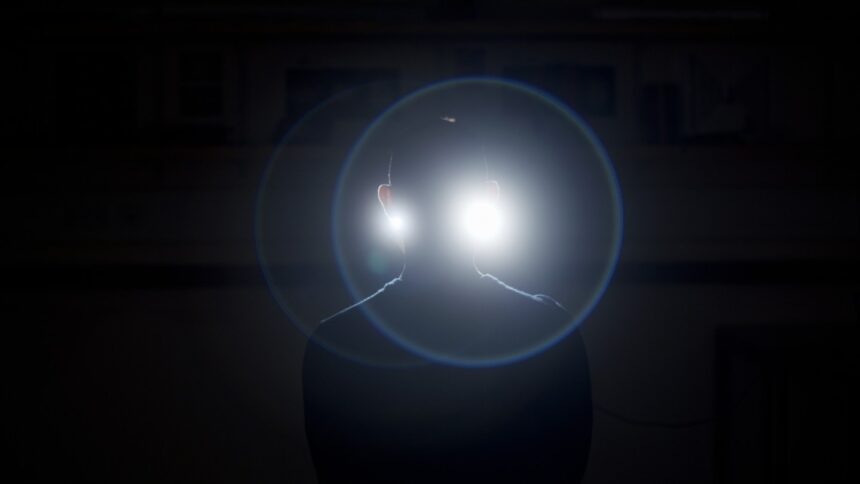
Taking audiences beyond what we see are extraordinary visuals and rich, textured soundtracks Conscious It invites viewers inside shifting landscapes of consciousness. The creative team promises “an optimistic cinematic experience that brings us closer to understanding the power and fragility of the human mind.”
Produced by Aymara Rex, Theresa Grimes and Chan. Conscious Featuring cinematography by David Leigh and Katherine Deary and music by Dominique Scherer. Chan edited the film with Michael Ellis, an editor known for the likes of Hollywood blockbusters SupermanStarring Christopher Reeve and Boy in striped pajamas. Chris Parks (Tree of life, The fountain) Contributed images of the microscopic cloud reservoir. The film was funded by Screen Scotland, BFI/Doc Society and Sundance/Sandbox Films. Aconite Productions is handling sales.
THR I talked to Chan and Ellis about it Conscious It takes viewers inside the mysterious world of the human brain.
Suki, why did you want to make a film about dementia and how people deal with it, and how did your personal background and experiences play a role in that?
Chan I set out to make a film about the nature of consciousness, with dementia as one act. I am inspired by Shakespeare’s works Seven ages of manTo view the human lifespan as a series of changing stages of consciousness – with dementia as a later stage of that journey.
My fascination with the brain stems from years of work on cognition, but it became more personal during my first pregnancy. I found myself wondering what my son’s senses were inside the womb – what was his experience, what was he aware of?
I grew up as the youngest of five, and was always surrounded by older people. In Chinese culture, we have a proverb: “A family with an old person has a living treasure of gold.” I grew up caring for my grandmother and watched her gradual physical and mental decline. More recently, I have been going through a similar journey with my mother, who was diagnosed with dementia last year.
For me, I see human consciousness as a bell-shaped curve, rising in our early years and falling in our later years. As an artist, I am drawn to these neglected, taboo, or transitional spaces of human experience. Rather than choosing a topic with a more direct connection to consciousness, such as locked-in syndrome, I was drawn to the complexities of dementia and its profound effects on how we understand the self.

I was also surprised to hear the ladies in the doc mention the things they like about them in their new ?! Did you learn things you didn’t expect that surprised you?
I met Pejean O’Sullivan during my artist residency at Bylong Nursing Homes. I wanted to learn about the experiences of people with dementia, and how their families and friends are affected. It was a transformative experience, and Beijing’s story really shocked me – when she told me she was no longer afraid. I realized another telling of the dementia story – that in addition to stealing our memories and dismantling the self, dementia can also rid us of our fear and childhood trauma.
Before I began my research, I shared the common assumption that dementia is related to memory loss. It was inspiring to hear Wendy Mitchell speak about “The Gifts of Dementia.” Seeing someone find silver linings with such a cruel disease was very encouraging to me.
Wendy, who was once a very reserved and private person, spoke of this “social alien” she had become. Instead of decline, I experienced a new and expansive way of being. Her world actually became larger through the people she met and the new experiences she had: from her writing Sunday Times best-selling books, receiving two honorary doctorates and participating in a wingspan ride (strapping it to the top of the plane) to raise money for a charity, Minds and voices. She did all this after being diagnosed with dementia.
Seeing her turn adversity into a form of personal growth – especially when the public perception of the disease is so bleak – completely changed my perspective.
I loved the way you mixed science, mystery, and very personal and human stories. Did you always know you wanted to mix these things, or did you start with a different style?
As an artist, I have always appreciated the freedom to weave together seemingly separate disciplines. I do not see science and philosophy as two different fields, but rather as two different lenses through which we contemplate the same puzzles. Having been in dialogue with scientists for many years, I have come to realize that while we share a fundamental curiosity about the same topics, we explore them toward different endpoints.
In this film, I wanted to highlight the similarities between micro and macro, between biology and nature. Looking at the complex structures of the brain or the microstructure of the eye, I felt like I was looking into another world, and the landscapes looked extraterrestrial. It made me realize that our brain is as vast and mysterious as deep space; We don’t need to look beyond the atmosphere to find new worlds, they are already within us.

I don’t know the best way to describe it, but some of the images and the audio clip made me feel like you were taking me inside the mysterious world of the brain or to another dimension.
The visuals are intended to transport viewers into the inner worlds of the protagonists. With Wendy, we explored visual metaphors that could depict her changing experiences with dementia – from the fog descending on the brain, what it was like to have a bad day with dementia, as well as the electrical storms raging in her brain.
I would create storyboards to show Wendy how I intended to emotionally portray her experiences. I remember her telling me on one of her visits how she had recently had a very bad time with dementia, and I felt like it was one of the images she created for our film. I knew immediately what she meant – an aerial shot of the UK at night, with networks of roads shimmering and fading, superimposed in visual effects to suggest the loss of neural connections.
How important is it to play with storytelling formats and make them different from traditional medical documentaries?
I’ve never made a traditional medical documentary. As an artist, I have always played around with forms of storytelling. Conscious It allowed me to bridge the gap between experimental art and narrative cinema. I’ve found that by relying on a stronger narrative structure, it will help me tell the stories my heroes have entrusted me to tell.
Through this film I discovered that I really love narrative structure and working with actors. It’s something I’d love to do more of in the future.
How did you collaborate with Michael Ellis on this matter?
I first spoke to Michael because I was trying to get a DCP (Digital Cinema Package). My gallery owner at the time (and one of the producers of… Conscious), Teresa Grimes recommended that I talk to her friend Michael. I had no idea he was the editor of the 1978 magazine Superman With Christopher Reeve, a film that captivated me as a child.
Later, I remember emailing him for some advice on how to shorten my film; Fog in my headfrom 45 minutes to 35 minutes for festivals. I think he said he would think about it. Two weeks later, he surprised me by sending me an edited version he had worked on independently. I did not expect this level of initiative, but I was very grateful for his vision and cooperation.

We had a natural rhythm in those days For a process where we continued the same style in the film – I put together the initial edit from my script and how I planned to shoot, and then Michael helped refine the cuts and later helped shape the narrative structure.
Up until this point, I had always edited my own films, so it was great to share that process with Michael, and I learned a lot from working with him.
Michael, Why do you want to work on Consciousand what can you share about how you and Suki collaborated in a form of storytelling, structure and imagery that is unlike any traditional medical documentary?
Ellis I looked at Suki’s work and admired her strong visual sense, both as a camera operator and as a director. This film was a greatly expanded version of her short film Fog in my heada beautifully composed compendium of interviews, landscape photography, and impressionistic microscopic cinematography, which serves to illustrate the protagonists’ states of mind. The combination of these elements, along with some of Dominic Scherer’s atmospheric music, made for a thrilling experience.
I began my involvement by offering advice and commenting on the work as it progressed, responding to the Suki meeting and trying to be constructive.
At one point, we both had the material on hard drives and could exchange cut lists to keep in sync, but there were some glitches in our system, and in the end it was clear that it was better to work from saved copies of the film.
Then, at a certain point near the end, after some audience screenings, it was decided to try a new approach, so I radically modified the scenes to try to inject some dramatic tension and dynamism as much as possible. This narrative concept seemed to work well and gained general approval, and this is the version we will see now.

Did you have any role models or sources of inspiration for your approach, Michael? How do you see the difference? Conscious Is it from your previous work?
Ellis No, I’ve only made one documentary, so I used my intuition and experience in other areas of the film.
My history exists exclusively in feature films, other than the one documentary, so it was a very different experience in most ways.
Suki, do you have any new film projects in the works?
Chan I am currently at a fascinating crossroads. Part of me wants to continue my exploration of consciousness, expanding into artificial intelligence or animal consciousness. However, I also feel a strong pull towards a completely different and more personal narrative project. This will be a project rooted in my own history – drawing on my memories of growing up and working in a Chinese take-out restaurant since I was 10 years old.
Both paths seem correct, one is continuation Conscious conThe other is to return to my roots and identity.