After 3 weeks Not for the faint of heart. The new film In Time from Miroslav Terzic (Redemption Street, Stitches) takes us inside the nightmares that high school can be made of. The Serbian director’s third feature film, which will have its world premiere on July 7 in the Crystal Globe competition of the 60th Karlovy Vary International Film Festival (KVIFF), does so in a haunting and tension-filled way.
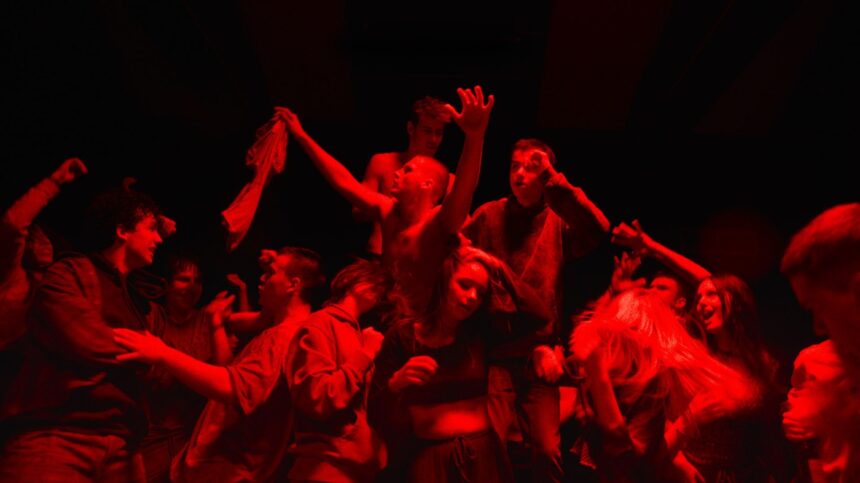
The film begins with a group of high school students and their teachers setting off from Serbia on a class trip to Bulgaria. But their bus broke down, and they found themselves stuck in an old hotel. This is where the quiet and withdrawn Zuza decides to talk about his best friend’s recent suicide. The result is a deep, disturbing cinematic dive into teen bullying, peer violence, and the blurring lines between victim, witness, and perpetrator.
The director participated in the writing After 3 weekswhich features cinematography by Damjan Radovanovic, with Vladimir Arseniević and Bojan Vuletic. The editor is Marko Verkovic. The young cast includes Jovan Djinić, Klara Hrvanović, Angela Alavirević, Tihana Lazović Trifunović and Branislav Trifunović.
The film is produced by This and That Productions in co-production with Hit and Run Productions, Nightswim, Paul Thiltges Productions, Invictus and Kinorama. Bendita Film Sales is handling sales.
In conversation with THRTerzic discussed how, as a father, he felt a real urgency to engage with difficult and universal topics After 3 weeksAnd why he wasn’t afraid to do it in his direct style.
The director was well aware of bullying and peer violence. “I am a father of two children, so it is an important issue for me,” he said. “My kids are grown now, but as a parent, I could never look at something like this from a distance.”
After 3 weeks It is based on several true stories, and from here his journey began. “When I read an interview with the mother of a deceased boy, she mentioned that the whole class went on a field trip, and for me, that was one of the starting points,” Terzic said. “I thought about what that trip would look like with these kids, who are 15, 16 years old.” THR. “I soon began to realize that this was not just a film about peer violence, but about violence itself, and how to learn it, tolerate it, and allow it to grow.”

While writing the script, the creative team could not ignore everything that was happening in the world. “We are surrounded by violence,” the director emphasized. “You turn on the news, you open your phone – and there it is. This is the language of today, and children learn it very quickly. They start speaking it fluently before they fully understand its implications.”
In general, creation After 3 weeks It was a trip for him too. “During this process I realized that as parents we also have a responsibility, because it is easy to turn away when we see or hear something upsetting.”
After 3 weeks It offers no easy answers. For example, main characters are not just good or bad, nice or evil. “In life, that’s not how things work: people are rarely only good or only bad,” Terzic noted. “It depends on the circumstances and how we respond to it. Young people are still trying to find their place in this society and in this world. I did not want to create a guilty person and a crowd of innocents. I wanted to try to be honest. In the film, some children actively participate in the violence, others try to resist it, but the majority remain neutral and neutral. By remaining aside, they give power to those who act violently.” It’s not much different with adults.
Director’s takeaway: “What matters is whether a society recognizes violence when it begins and sets boundaries around it. When it looks away, violence does not remain neutral; it gains space, legitimacy, and power.”
What role does Terzic see for traditional media and social media? He hopes that the number of voices standing up and speaking out against bullying will increase. “These children learn from the Internet and television,” he said. THR. “They are exposed to a culture in which humiliation and aggression are constantly transformed into content. I do not believe that films or media can offer a simple solution, but they can refuse to be silent. They can make us see what we would otherwise choose not to see.”

Fire plays a major role in After 3 weeks. For example, early on, the protagonist watches a fire burn in an apartment, with no one intervening or intervening. For Terzic, the fire is a metaphor for how humans often begin to care and speak out only when we are personally affected. He explained: “We are already in the fire, but we do not feel this flame around us.” “It doesn’t touch us.”
How did the director think about a possible happy or tragic ending? “Happy endings are often a kind of fairy tale,” Terzic said, without spoiling it. “There are moments of happiness and light in the film, of course, but there is also a great deal of darkness. I wanted to provoke the audience, and leave them with something unsettling. The film is direct, and at times deliberately uncomfortable, because I didn’t want to forget it after five minutes of screening.”
In the casting process for After 3 weeksthe creative team saw about 500-600 kids of different ages, then chose 24. “We talked a lot about everything. But at first, we just tried to have fun,” Terzic recalls. The conversations eventually turned to bullying. “We did not start out by asking the children to reveal their personal experiences. But as trust developed, many of them talked openly about school, peer pressure, cruelty, silence, and the different roles people can find themselves in within a group. Those conversations were very revealing.”
The creative team allows the young cast members to improvise a lot, except for key scenes, such as the scene in which talk of a child’s suicide first appears.
sometimes, After 3 weeks It’s as if we’re watching someone document this field trip from afar, and it’s an approach that gradually becomes central to the film’s perspective, underscoring how children and adults often put distance between themselves and any terrible interactions they witness. “I realized that it looked like we were watching real violence in the street from afar and standing aside,” Terzic said. THR. “We are watching from above, on television, on our mobile phones, and this form of film has something of that feeling that we know from our media world. I hope we can spark some discussion and dialogue about this topic.”

After 3 weeks “Dedicated to Alexa and Maher,” two young men whose deaths following peer violence had a profound impact on public consciousness in the region. “There were several real cases among the film’s starting points, including Alexa’s story, but the film is not a reconstruction of any of them,” Terzic explained. “My responsibility as a storyteller was to make a film that could go beyond a single case and reach people who might consider themselves neutral observers.”
“It was a very intense and emotional journey for me,” Terzic says. THR. “I tried to bring everything I learned as a director, and all the urgency I felt as a parent, into this film.”
What’s next for Terzic? “This time, I hope it will be a black comedy, because when you see my films so far, they all deal with very, very heavy themes,” he said. THR. “The first dealt with war crimes, the second with a stolen child, and the third with peer violence. I knew I wanted to make something that would put a smile on people’s faces.”