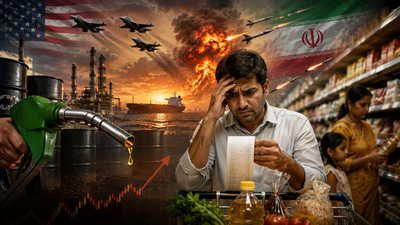
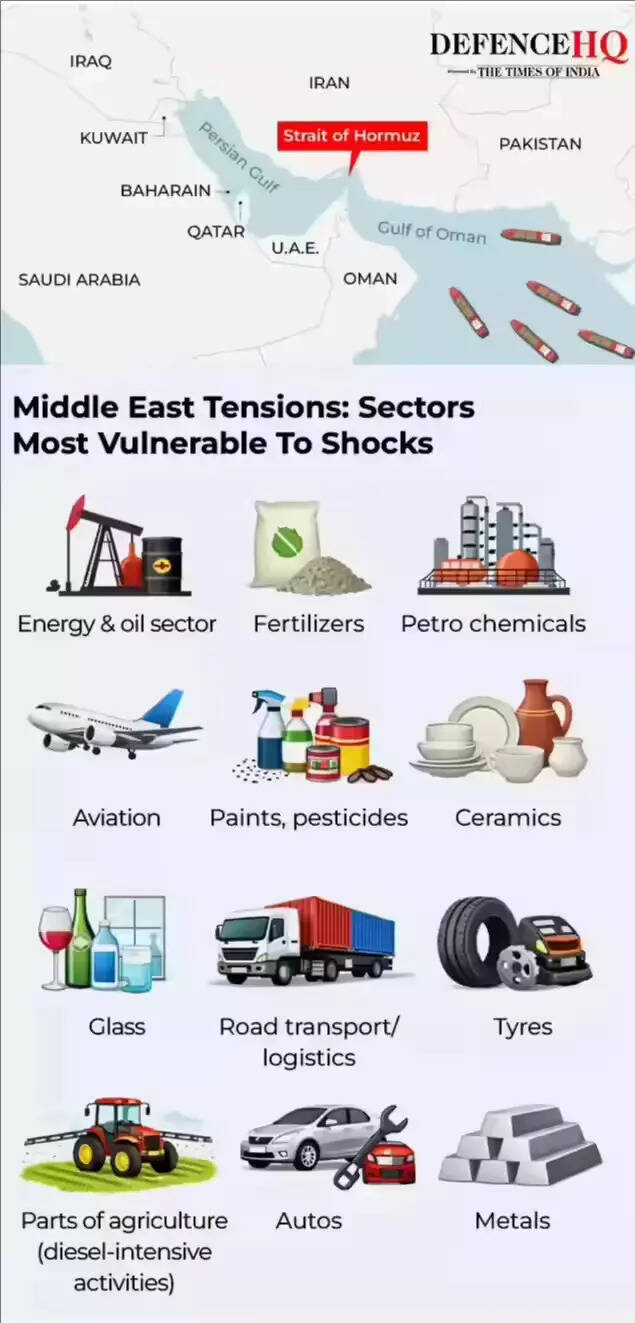
 The Middle East war that began as a geopolitical conflict more than two months ago has slowly turned into a cost-of-living problem for families, as disruptions to oil supply routes, rising shipping rates, and rising petrochemical prices take their toll on the economy.The biggest catalyst remains the strategically important Strait of Hormuz, the narrow shipping route through which nearly 20% of the world’s oil and energy supplies passes. Since tensions escalated after the United States and Israel launched joint strikes on Iran, the country has put pressure on the corridor, resulting in higher shipping costs and insurance premiums and higher crude oil prices.As a result, everything from LPG cylinders to sofas has become more expensive.
Kitchen shock
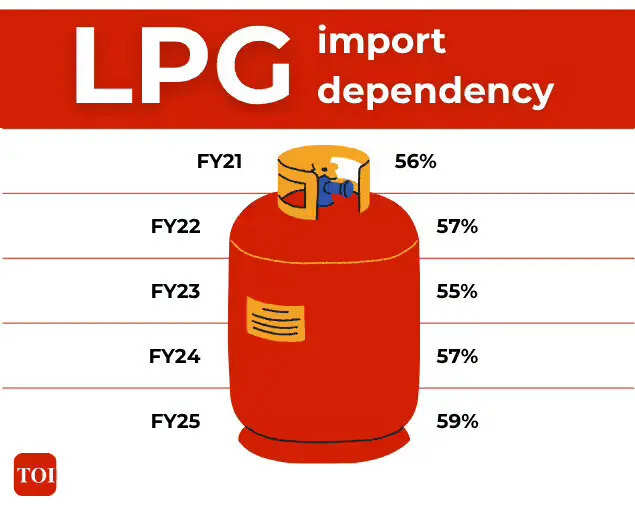
The first influence is felt in Indian kitchens.India is a major importer of liquefied petroleum gas. As a result, domestic LPG cylinder prices jumped from Rs 853 to Rs 913, while commercial cylinders rose from Rs 1,768 to Rs 3,071.50. Cooking oil has also become more expensive, with prices of sunflower oil rising by about Rs 15 per liter and mustard oil by about Rs 10 per liter in many markets.
Everyday staples may feel the pressure, too. India imports approximately 5-6 million tonnes of pulses annually, and rerouting of shipments around Africa due to unrest in the Middle East is increasing shipping and insurance costs.
Industry officials have warned that dal prices may rise further if tensions persist.Dry fruits have already seen sharp increases due to interruptions in supplies from Iran and Afghanistan. Traders told TOI that the price of Mamra almonds rose from around Rs 1,800 to Rs 2,800 per kg, while prices of Iranian pistachios jumped from Rs 1,650 to Rs 2,400 per kg. The price of premium pista bichori used by confectionery makers has risen from Rs 2,600 to Rs 3,400 per kg.The impact is now evident in Mithai stores as well, where vendors say it has become much more expensive to maintain quality.
Your sofa, wardrobe and modular kitchen are now more expensive
War also makes Indian homes more expensive to furnish.Furniture makers say modular furniture and premium interiors may become 10-15% more expensive because modern sofas, wardrobes and modular kitchens rely heavily on petrochemical products linked to crude oil.According to an ET report, furniture brand Orange Tree said foam prices have risen by over 45%, while packaging costs have jumped by nearly 70%.
The plywood industry is also under pressure due to the import of chemicals such as methanol and resins, which are necessary for adhesives, from the Middle East.This means that even if a modular sofa or kitchen is manufactured in India, the raw materials, chemicals and packaging used in it have become more expensive due to the conflict.Even painting your home may now cost more. Decorative paint prices are expected to rise by 9-10%, while companies like Berger Paints have already announced increases in several product categories.
Electronics, apparel and fast-moving consumer goods products are under pressure
Electronics and appliances may soon become more expensive, too.Industry executives say televisions, refrigerators and air conditioners could see price increases of about 5 to 6 percent because plastic components and petrochemical-based materials become more expensive. Godrej companies have already indicated that prices may rise as suppliers increase prices frequently.The fashion and textile industry is also under pressure.Textile hubs in Ahmedabad and southern India have reported sharp jumps in fuel and chemical costs after industrial gas supplies were curtailed amid the conflict. Prices of polyester fiber alone have risen by Rs 12 per kg in a week, according to industry bodies.Ankit Patel, former president of the Vatva Industry Association, said the decline in gas supplies had severely affected the production of chemicals. “We have seen a significant rise in the prices of various products such as coal, sulfuric acid and phthalic anhydride.
This has led to higher overall production costs. We are able to pass some impact on to our dye buyers, but margins have diminished significantly,” He said.Processing units say prices of imported coal have risen by about 30%, while prices of chemicals related to dyes and fabrics have risen by 25-40%. Experts warn that this could ultimately lead to higher clothing prices as manufacturers pass on the costs.The pressure extends to everyday consumer goods as well.Fast-moving consumer goods companies say costs for plastics, resins, polymers and packaging materials have risen by up to 25% in recent weeks. This affects products that consumers buy almost every day, such as soap, shampoo, detergents, toothpaste, creams, hair oils and packaged foods.Many companies are already considering higher prices or smaller package sizes to protect profit margins.
Flights, fuel and cars are becoming more expensive
Air travel has already become more expensive.Airlines began adding fuel surcharges after aviation turbine fuel prices rose.
After the conflict began, IndiGo imposed an additional fee ranging from Rs 425 to Rs 2,300 on flights, while Air India and Air India Express announced an additional fee of Rs 399 on domestic tickets.
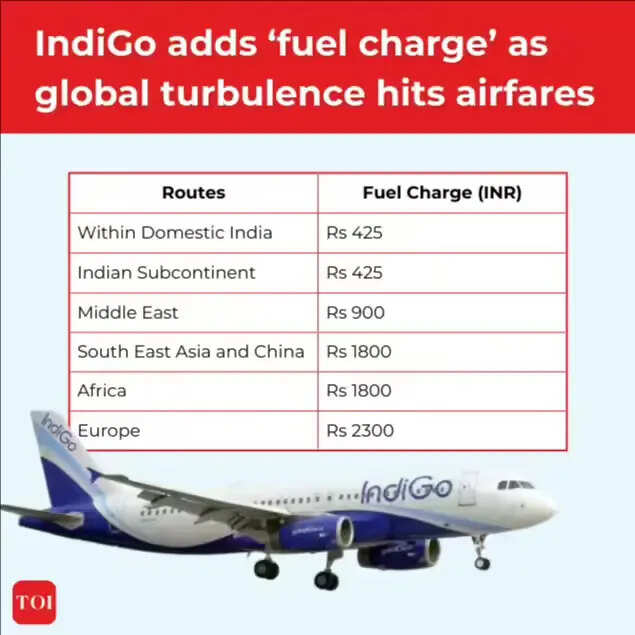
Akasa Air has also added additional charges ranging from Rs 199 to Rs 1,300.Industry executives say further price increases may become inevitable if fuel prices remain high.The automobile sector is facing similar pressures. Luxury carmakers Mercedes-Benz and Audi announced price increases of about 2%, while mass-market companies are preparing for smaller increases amid rising supply chain and input costs.Meanwhile, crude oil prices remain volatile. Brent crude oil has surpassed the $100 per barrel mark, and analysts warn that prices may rise further if tensions escalate around the Strait of Hormuz.There is another pressure point quietly forming in the background. The fuel companies themselves are now under severe financial pressure. According to a PTI report, the state-run oil marketing companies – Indian Oil, BPCL and HPCL – together incurred losses of Rs. It has raked in Rs 1 lakh crore over the last 10 weeks as it continued to sell petrol, diesel and LPG below actual market-linked costs despite rising global crude oil prices.Sources quoted by the news agency claimed that the three companies are currently experiencing a daily recovery shortfall of around Rs 1,600-1,700 crore.Although Brent crude oil crossed $100 per barrel, petrol and diesel prices in India remained largely frozen at around Rs 94.77 and Rs 87.67 per litre, respectively. Domestic LPG prices rose by Rs 60 in March, but officials say cylinders are still being sold below cost.It became difficult to bear the financial burden. Government sources said that if crude prices remain high for a longer period, oil companies may need larger loans to maintain fuel supplies and operations.
Industry insiders also warned that higher petrol and diesel prices may eventually become inevitable, with the decision now dependent more on political timing than economics.This means that households may not have fully felt the fuel shock yet.
If global oil prices remain volatile and the Hormuz crisis persists, experts warn that another round of fuel price hikes could ultimately lead to increased transportation costs, grocery and logistics prices, and general inflation throughout the economy.
Medicines and health care may soon become more expensive
Healthcare is another area that is starting to feel stressed.Medical plastics used in syringes, gloves and surgical products have become 50-60% more expensive since the conflict intensified.
Traders told TOI that prices of surgical products like nebulizers, blood pressure monitors and glucometers may rise by 10-20%.“Sea freight rates have risen sharply, causing delays in the import of raw materials. At the same time, the operational capacity of major airports in the Gulf region has decreased by up to 80%, delaying the movement of vital components by several weeks,” Nikhil Malang, organizing secretary of Prayag Chemists and Pharmaceuticals Association (Retail), told TOI.The pharmaceutical industry has also asked the government for temporary price relief, warning that the cost of key chemicals and solvents used in drug manufacturing has risen by 30% to 100% in a matter of weeks.According to ET, the Center may consider a temporary 10-15% hike in prices of some essential medicines if the unrest continues.
Invisible impact: rupee weakness and stock market losses
The war is also weakening the rupee, which has fallen from around 90 rupees to the US dollar to above 95, making overseas education and foreign travel more expensive for Indian families.The rupee recently fell near record lows of 95.40 against the US dollar, increasing the cost of tuition fees, rent and living expenses abroad.
Meanwhile, stock market turmoil caused by the conflict has wiped out nearly Rs 34 lakh crore of investors’ wealth as of mid-March, affecting mutual funds, retirement savings and household investments.For many middle-class families, this means that investment portfolios are suddenly worth less, forcing people to delay purchases or cut back on discretionary spending.
Why does a war thousands of kilometers away affect India?
India imports a large share of crude oil and many petrochemical-related materials. When global shipping routes become risky or oil prices rise sharply, these costs eventually trickle down through the economy.The result is that the conflict in the Middle East is slowly appearing everywhere, in gas bills, grocery baskets, airline tickets, shopping expenses, and household budgets.Currently, many companies are still absorbing part of the increase rather than passing it entirely on to consumers. But if oil prices remain high and shipping disruptions continue, economists warn that inflationary pressures could deepen further in the coming months.The war in the Middle East is no longer just a geopolitical story for Indian families. It has increasingly become a monthly budget story.