

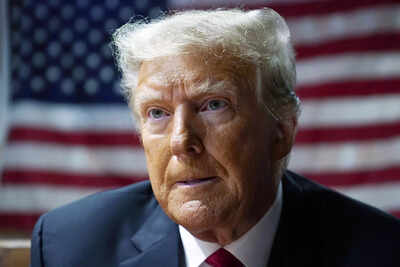
Washington’s new 10% import tariffs went into effect on Tuesday, after the US Supreme Court dismantled President Donald Trump’s illegal tariff framework last week. Introduced under Section 122 of the Trade Act of 1974, Trump threatened to raise tariffs to 15%.
The administration described this step as a measure to address what it describes as a large deficit in the US balance of payments.However, economists have disagreed.“We can all agree that the United States is not facing a balance of payments crisis, which occurs when countries face a massive increase in international borrowing costs and lose access to financial markets,” Gita Gopinath, former first deputy managing director of the International Monetary Fund, told Reuters.
She rejected White House claims that the negative primary income balance, seen for the first time since 1960, constituted evidence of a major payments problem, attributing it instead to increased foreign investment in US stocks and other risky assets over the past decade.
“Prepare for the worst…”: Trump’s big announcement hints at “much higher tariffs”
Mark Sobel, a former US Treasury and International Monetary Fund official, said balance of payments crises usually occur in countries with fixed exchange rates.
He pointed out that the floating dollar exchange rate remained stable, 10-year Treasury bond yields were stable, and stock markets performed well. Josh Lipsky, head of international economics at the Atlantic Council, added that a trade deficit is fundamentally different from a balance of payments crisis: “A balance of payments crisis occurs when a country is unable to pay for what it imports or when it is unable to service its external debt.
“Meanwhile, some experts also see merit in the administration’s argument.
Brad Setser, a currency and trade expert at the Council on Foreign Relations, wrote that the current account deficit is larger than it was when President Nixon implemented the tariffs in 1971 and that the U.S. net international investment position is weaker. He added: “This gives the administration a real argument.”Legal questions surround the use of Section 122. The Justice Department has previously stated that the law was inadequate to address the trade deficit, and noted in court filings that it “has no clear application here, as the concerns identified by the President in declaring a state of emergency arise from the trade deficit, which is conceptually different from the balance of payments deficit.”“I’m not sure he would necessarily need to get to the Supreme Court, but if the president sticks to this plan of using the statute that his Justice Department has said he can’t use, yes, I think it’s very easy to file a lawsuit,” Neil Katyal, who represented plaintiffs challenging previous IEEPA definitions in the Supreme Court, told CNBC.It remains unclear who might lead any legal challenge to the new tariffs.
Sarah Albrecht, president of the Liberty Justice Center, which represents small businesses against IEEPA duties, said her group will be monitoring developments closely. “Our immediate focus is simple, which is making sure the refund process begins and checks start flowing to the American companies that paid these unconstitutional fees,” she said, as quoted by Reuters.Trump’s latest 10% tariff went into effect after midnight Tuesday, according to customs authorities. The executive order issued by the US President so far only formalizes the initial rate. Article 122 allows the president to impose tariffs of up to 15% for 150 days on imports from any country to address “significant and serious” balance of payments problems.