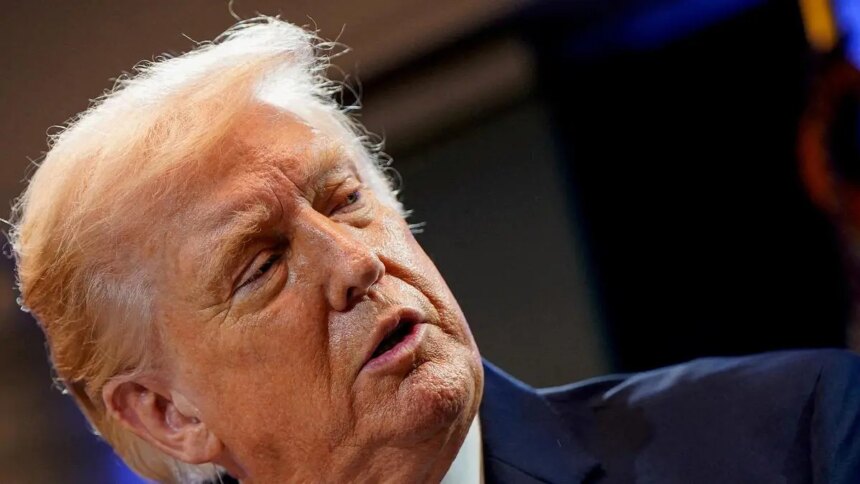

US President Donald Trump | Photo credit: Elizabeth Frantz
The Supreme Court on Friday struck down the largest and boldest tariffs imposed by President Donald Trump. But the justices left unanswered a $133 billion question: What will happen to the money the government has already collected from import taxes it has now declared illegal? Businesses were lining up to get refunds. But the road ahead may be messy.
When the smoke clears, trade lawyers say, importers will likely get their money back — eventually. “It’s going to be a bumpy ride for some time,” said business lawyer Joyce Adetoto, a partner at law firm Vinson & Elkins.
The recovery will likely be handled by a combination of US Customs and Border Protection, New York’s specialized International Trade Court and other lower courts, according to a note to clients by lawyers at law firm Clark Hill.
“The amount of money is huge,” Adetoto said. “The courts will have a hard time. Importers will have a hard time,” she added. However, “it would be really difficult to not have some sort of refund option,” given how decisively the Supreme Court was in rejecting Trump’s tariffs.
The court ruled in its 6-3 opinion on Friday that Trump’s attempt to use the emergency powers law to enforce the tariffs was invalid. Two of the three Trump-appointed justices joined the majority in striking down the first major part of his second-term agenda to come before them.
The case concerns the double-digit tariffs that Trump imposed on nearly every country in the world last year by invoking the International Emergency Economic Powers Act (IEEPA) of 1977. The Supreme Court ruled that the law does not give the president the authority to tax imports, a power subordinate to Congress.
The US Customs agency has already collected $133 billion in IEEPA tariffs as of mid-December. But consumers hoping to get their money back are unlikely to be compensated for the higher prices they paid when companies passed on the cost of the tariffs; This will likely go to the companies themselves.
In a dissenting opinion, Justice Brett Kavanaugh criticized his colleagues for dodging the clawback issue: “The Court says nothing today about whether the government should proceed to return the billions of dollars it has collected from importers, and if so how.” Borrowing a word used by Justice Amy Coney Barrett — who sided with the majority — during the court’s November hearing on the case, Kavanaugh warned that “the recovery process is likely to be messy.” “I think there should be a lawsuit filed within the next two years,” Trump told reporters at a news conference on Friday, in which he denounced the court’s decision and said he was “absolutely ashamed” of some of the judges who ruled against his tariffs. “We will end up being in court for the next five years.” Ending tariffs under IEEPA could help the economy by easing inflationary pressures. A tariff refund, like a refund on other taxes, could stimulate spending and growth. But the effects are likely to be modest.
Most countries still face heavy tariffs from the United States on specific sectors, and Trump intends to replace the international emergency law tariffs using other options. It will take some time for refunds to be issued — 12 to 18 months, according to TD Securities estimates.
The US Customs Agency has a process to recover duties when importers can prove there was some type of error. Trade lawyer Dave Townsend, a partner at the law firm Dorsey & Whitney, said the agency may try to build on the existing system to claw back Trump’s tariffs.
There has been a precedent where courts have made arrangements to return corporate funds in commercial cases. In the 1990s, courts struck down port maintenance fees on exports as unconstitutional and created a system for exporters to apply for refunds.
But U.S. courts and customs have never had to deal with anything like this — thousands of importers and tens of billions of dollars at once.
“Just because the process is difficult to manage does not mean the government has the right to keep fees that were illegally collected,” said business lawyer Alexis Early, a partner at law firm Brian Cave Leighton Beisner.
Ryan Majerus, a partner at King & Spalding and a former US trade official, said it was difficult to know how the government would handle the massive demand for refunds. It may try to simplify the process, perhaps creating a special website where importers can claim their money back.
But Adetoto warns, “The government is well positioned to make this as difficult as possible for importers. I can see a world where they impose as much liability on the importer as possible – and perhaps force them to go to court to get refunds.”
Several companies, including Costco, Revlon and canned seafood and chicken producer Bumble Bee Foods, filed lawsuits seeking refunds even before the Supreme Court ruling, essentially seeking to be at the front of the line if the tariffs are eliminated.
There will likely be more legal battles in the future. For example, manufacturers may sue to obtain a share of any refunds given to suppliers who raised raw material prices to cover tariffs.
“We may see years of ongoing litigation in multiple jurisdictions,” Early said.

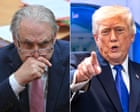
Illinois Governor JB Pritzker
However, consumers are unlikely to enjoy a cashback windfall. The high prices they have to pay will likely be difficult to attribute to a specific tariff. Do they have to pursue refunds anyway? Early did not advise wasting money on legal fees, but said, “In America, we have the ability to sue for anything we want.” Illinois Governor JB Pritzker, a Democrat and Trump opponent, is demanding the refund on behalf of 5.11 million families in his state. In a letter addressed to Trump and released by the Illinois governor’s campaign, the governor said the tariffs cost every family in Illinois. $1,700 — or $8.7 billion — Pritzker said failure to pay would result in “further action.” Nevada Treasurer Zach Conine has submitted a $2.1 billion payment request to the federal government to recover tariff costs, his office announced Friday.
“As Nevada’s chief investment officer, I have a responsibility to try to recover every dollar the Trump administration takes from Nevada families,” Conine said in a statement.
Posted on February 21, 2026