Sebi allows easier transfer of shares of deceased investors
MUMBAI: The Sebi board on Friday decided to facilitate the transfer of securities in the name of deceased investors to legal heirs and claimants by simplifying and standardizing the process.
It also created a new class of claimants where the value of securities is not more than Rs 10,000 per security for those in physical form and not more than Rs 30,000 held in demat.The regulator also doubled the small value claim amount to Rs 10,000 per share for physical shares and Rs 30,000 for demat shares. Moreover, the Sebi Board has allowed the reintroduction of open market share buyback process that uses stock exchange mechanism.
A few years ago, this process was withdrawn due to tax issues, Sebi officials said.
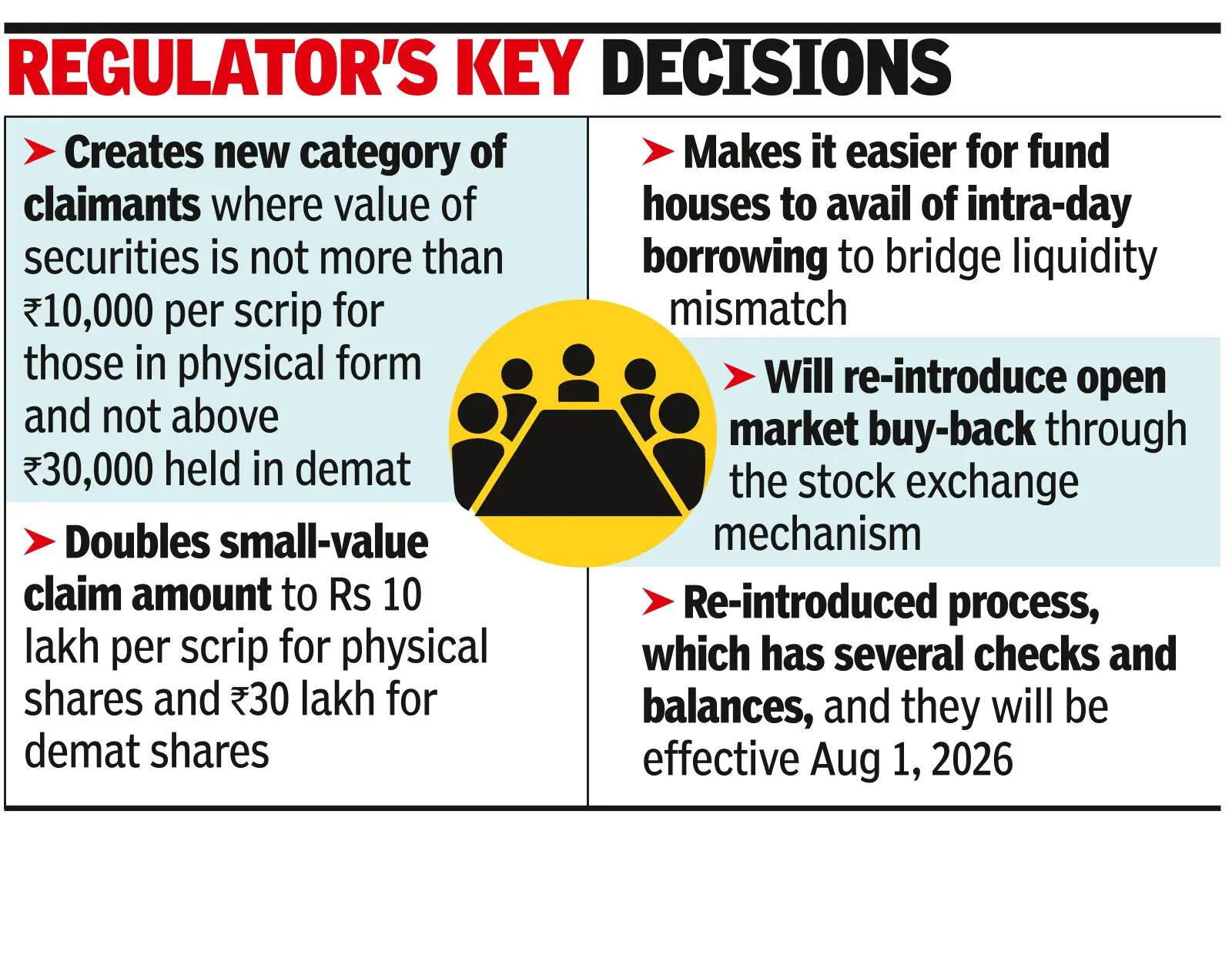
Sebi has also made it easier for fund houses to avail intraday borrowing to bridge liquidity mismatches. In order to bring more transparency among Sebi employees, the board also approved a new code of conduct for Sebi members and amendments to the Sebi (Employee Service) Regulations, 2001, Chairman Tuhin Kanta Pandey said.
The regulator’s highest decision-making body also approved a set of measures that will reduce procedural requirements and simplify the transfer process. Since the transmission will be in a demat account, which in any case needs a PAN number to open, the condition of submitting a PAN is not required, he said. She said that the mandatory requirement to obtain a will has been abolished, in line with recent amendments to inheritance laws.
The regulator also said that henceforth a combined No Objection Certificate (NOC) will be required, instead of separate affidavits and NOCs.
It also allowed the issuance of death certificates (DC) bearing the QR code for this process, in addition to original or certified copies of death certificates.Sebi also decided to reintroduce buybacks in the open market through the stock exchange mechanism. The statement said it also reviewed buybacks, after “reviewing the tax framework and suggestions received from stakeholders with the aim of providing greater flexibility in conducting buybacks, reducing procedural complexity and enhancing investor protection.”“No self-list”Pandey said the regulator is not considering any proposal to allow self-listing, which means allowing a stock exchange or its group of companies to list on its own exchange. In India, BSE is listed and traded only on the NSE.