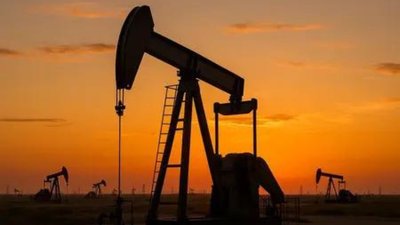
Protracted tensions in the Middle East are expected to keep crude oil prices high in the coming years, according to Albert Park, chief economist at the Asian Development Bank, who warned that the fallout could impact India’s growth and lead to higher inflation.“With oil prices forecast to rise, we actually have US$96 per barrel as an average for 2026 under the new reference scenario. It should remain high at US$80 per barrel in 2027. So, our idea is that oil prices are likely to remain high for longer,” Park said.
He watches
Fuel prices may rise soon as oil companies face losses amid rising global crude oil prices
He further explained how futures markets are now pointing to continued price pressures in the coming year. “We’ve always seen some kind of premium in spot market prices and the near futures market because there’s such a shortage right now,” he said.Park said the ongoing crisis in West Asia could reduce India’s GDP growth by 0.6 percent in FY27, bringing it down to 6.3 percent, with inflationary pressures increasing sharply.Earlier in April, the Asian Development Bank forecast that India’s economy would grow by 6.9 percent this fiscal year and 7.3 percent in the next, supported by strong domestic demand. The inflation rate was estimated at 4.5 percent.Explaining the revised forecast, Park said: “We find that growth will be 0.6 percent lower (FY27).
This is based on our typical scenario. But it will not negatively affect growth next year. India will kind of bounce back after that.”He added that inflation in India could rise by 2.4 percent this year to 6.9 percent, largely due to the country’s dependence on imported oil and gas.“So this is a little higher than the inflation impacts for the region (Asia-Pacific), because India is more dependent on imported oil and gas.
“Growth impact, if we exclude China, this negative growth of 0.6 percent this year is very similar to the whole region as well.”In a special update issued on April 29, the ADB lowered its 2026 growth forecast for the Asia-Pacific region to 4.7 percent from 5.1 percent, citing the impact of prolonged unrest in West Asia.Park also cited concerns about the potential effects of El Niño and rising fertilizer costs on food production and prices.“Of course, it is very uncertain. Obviously, when there is a bad harvest in India, we have a problem. With high prices. India represents a large part of the global rice trade. So what happens in India often also has a big impact on other countries,” he said.He added that higher fertilizer prices may force farmers to reduce use, reducing crop productivity and reducing food supplies later in the year.