

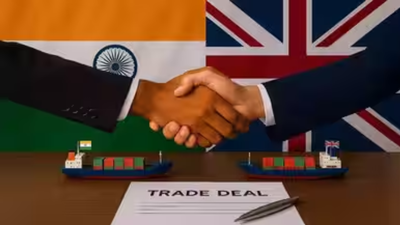
GTRI stressed that reducing tariffs alone will not lead to increased exports unless certification and logistics processes are facilitated.
The India-UK FTA may improve market access for exporters, but tariff reductions alone will not be enough to unlock their full export potential, according to the Global Trade Research Initiative (GTRI).
The think tank stressed that India must strengthen quality standards, certification systems, logistics and buyer networks to make the most of the agreement.The India-UK Comprehensive Economic and Trade Agreement (CETA), which comes into force on July 15, is expected to reduce customs duties on a range of products. However, GTRI said the benefits will only be realized if Indian companies are equipped to meet UK regulatory and quality requirements.“Without parallel work on standards, certification, logistics, regulatory approvals and buyer networks, many opportunities will remain on paper. The agreement opens the door; India must now transform access to exports,” said Ajay Srivastava, founder of GTRI.She also said that the competitiveness of exports will vary across sectors. For example, food exporters will have to adhere to the UK’s stringent food safety, test and trace standards, while engineering and electronics manufacturers will need globally accepted certifications and stronger business partnerships.
Car exporters will need to adhere to rules of origin and technical standards, and apparel, leather and footwear manufacturers will have to move quickly to take advantage of the tariff advantage before competitors adapt.According to GTRI, the biggest opportunities lie in sectors where India already has a strong manufacturing base, the UK has significant import demand, and CETA removes a major tariff disadvantage.“The biggest gains are likely to come when three conditions come together: India has strong export capacity, the UK has significant demand, and CETA removes a major tariff disadvantage.
Srivastava makes clear reference to clothing, textiles, leather, footwear, processed foods, seafood and selected agricultural products.The report indicated that Britain’s imports amounted to $928.9 billion in 2025, but the value of goods imported from India amounted to only $15.2 billion, giving India a market share of only 1.6%. The UK also accounts for only 3.4% of India’s global merchandise exports.However, Srivastava cautioned against assuming that lower market share automatically translates into export potential.“Export potential depends on four factors – UK demand, India’s export capacity, its existing presence in the UK market, and the tariff advantage created by the Central European Free Trade Agreement. Standards, food safety rules, safeguards, certification and supply chain restrictions can be as important as tariffs,” he said.GTRI has identified labour-intensive sectors such as apparel, textiles, leather products, footwear, processed foods and seafood as among the biggest beneficiaries of the agreement.
It also sees opportunities in automobiles, motorcycles, automotive components and selected engineering products.The research center highlighted processed foods as an area with great untapped potential. While the UK imported $33.4 billion worth of processed food last year, India supplied just $354 million, leaving its market share at just 1.1%.“Significant demand in the UK, lower India penetration and tariff reductions create strong potential in ready-to-eat foods, bakery products, confectioneries, sauces and ethnic foods.
Food safety, labeling and traceability will remain critical, the report said.While CETA could also improve the prospects for cars and auto components, GTRI said compliance with rules of origin and technical regulations would determine the extent of the gains.At the same time, he warned that customs concessions alone may not significantly benefit sectors such as chemicals and pharmaceuticals, where regulatory approvals, quality standards and procurement systems play a greater role in market access.The think tank also pointed to challenges facing steel exports, noting that the UK’s safeguard measures, lower import quotas and higher above-quota tariffs could offset the benefits of the trade agreement. He added that India’s alcohol exports are unlikely to see significant gains due to limited export volumes, weak global brands and intense international competition.