

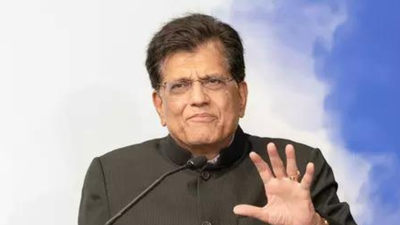
India on Saturday said it strongly opposes the inclusion of the China-led Investment Facilitation for Development (IFD) pact under the World Trade Organization (WTO), citing concerns about its systemic implications, news agency PTI reported.The issue was raised at the 14th Ministerial Conference of the World Trade Organization (MC14) held in Yaoundé, Cameroon, where Trade and Industry Minister Piyush Goyal said such a move could weaken the foundational structure of the institution.“The inclusion of the IFD threatens to erode the functional boundaries of the WTO and undermine its fundamental principles,” Goyal said in a social media post.“At #WTOMC14, drawing inspiration from Mahatma Gandhi’s philosophy of truth over compliance, India showed the courage to stand alone on the controversial issue of the IFD Agreement and did not agree to its incorporation into the WTO framework as an Annex 4 agreement,” he said.
Annex 4 of the WTO Agreement contains multilateral trade agreements that are binding only on members who have accepted them, unlike multilateral agreements that apply to all members.As part of WTO reform discussions, members are deliberating on the legal barriers and safeguards of multilateral agreements before incorporating any such outcomes into the framework, Goyal said.“In light of the systemic issue at hand, India has shown openness to good faith, comprehensive discussions and constructive engagement within the framework of the WTO reform agenda,” he added.
India also opposed the agreement during the 13th Ministerial Conference of the World Trade Organization (MC13) in Abu Dhabi.The proposal to facilitate investment for development was first put forward in 2017 by China and a group of countries that rely heavily on Chinese investments, including those with sovereign wealth funds. If the agreement is approved, it will be binding only on the members who signed it.