

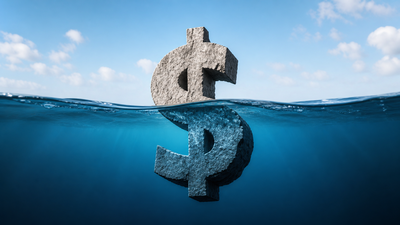
For many Americans concerned about rising prices, one of the biggest pressures on household budgets may not be immediately obvious. Beyond grocery aisles and vacation bookings, the declining value of the US dollar is quietly making everyday life more expensive.
Since Donald Trump returned to the White House as president, the dollar has fallen about 10% against other major global currencies, shrinking its purchasing power and adding new pressures on already exhausted consumers.“It’s a kind of hidden tax,” says economist Thomas Savage of the conservative-leaning American Institute for Economic Research. “What your dollar can buy will shrink.”The magnitude of the decline was historic. In the first half of 2025, the US Dollar Index, which tracks the US currency against major currencies, recorded its biggest six-month decline in more than five decades. Although the decline has stabilized since then, the dollar remains about 10% below the level it was at the beginning of Trump’s term.A weak dollar can make American exports more competitive abroad, but for consumers at home, it often means that imported goods cost more.
From foreign holidays to products sourced abroad, the same dollar now buys less.Trump has publicly claimed that a weaker currency benefits US industry, saying last year: “You make a lot of money with a weaker dollar,” reflecting his firm belief that a stronger dollar could put the United States at a disadvantage.
Big companies have ‘little leverage’
Large multinational corporations were among the companies benefiting from the currency shift. Companies including Philip Morris and Coca-Cola have cited a “favorable currency effect” in earnings calls, where foreign sales become more profitable when foreign earnings are converted back into dollars.“In many cases, we have a weaker dollar, which is not unhelpful,” Elie Maalouf, CEO of InterContinental Hotels, said in a phone call last February, when the company announced higher profits and revenues.But for small businesses and companies that focus mainly on local customers, the impact can be much less positive.Travis Madera, a fourth-generation lobster merchant and co-founder of LobsterBoys, says the weak dollar is driving up his costs because he imports bait and buys Canadian lobster, while most of his customers are American.“Exporters will have the advantage when it comes to a weaker dollar,” says Madeira. “These guys will have little leverage over us.”For companies like Gentell, a Pennsylvania-based medical supply company that operates internationally, the lower dollar also leads to increased expenses across overseas operations.“A year ago, none of this would have been a concern,” says CEO David Navazio. “That always hurts the consumer.”For travelers, the effect is immediate. Americans visiting Mexico now find their dollars about 16% weaker against the peso than they were earlier in 2025. Similar declines have been seen against the euro and many other currencies, making foreign trips significantly more expensive.
High prices hit the family budget
At home, imported products are also facing upward pressure on prices. Coffee is one example. Brazil, the largest coffee supplier to the United States, saw its currency appreciate against the dollar, adding to cost pressures.
U.S. coffee prices have risen nearly 19% over the past year, according to government figures.While economists estimate that only a portion of the currency decline directly reaches consumers in advanced economies like the United States, even modest increases could exacerbate broader inflationary pressures.Kenneth Rogoff, an economist at Harvard University, believes that the dollar may be on its way to a correction regardless of who occupies the White House, after a long period of strength.“The dollar has been on the rise for 15 years,” he told the AP. “I think the dollar is still overvalued, and over the next five or six years, it could fall by 15%.”For consumers, this could mean continued pressure on fundamentals, especially commodities and fuel.“Interest rates will rise, regardless of the dollar,” he says.