

NEW DELHI: State-run oil companies are losing nearly Rs 30,000 crore a month by selling domestic petrol, diesel and LPG at below market prices, the government said on Friday, indicating mounting financial pressures and the possibility of an increase in fuel prices in the coming days.Official sources said that although the government and oil marketing companies have absorbed the high costs for more than two months, there is a growing recognition within the government that this arrangement cannot continue “indefinitely.”
He watches
Fuel prices may rise soon as oil companies face losses amid rising global crude oil prices
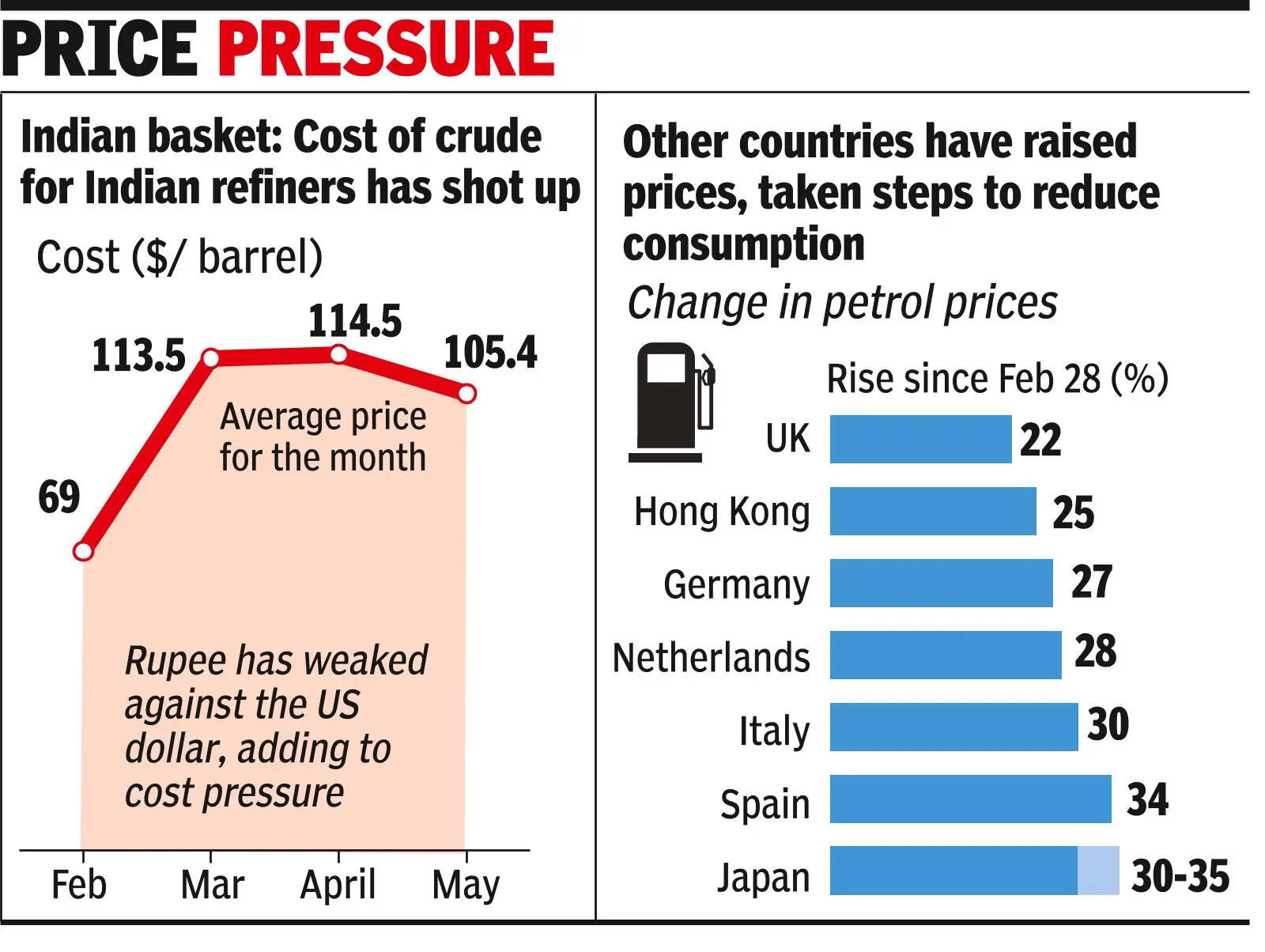
Asked whether the government was considering increasing fuel prices, Sujata Sharma, Joint Secretary in the Petroleum Ministry, did not respond directly. “The effort so far is to ensure that there is no increase in prices,” she said in a press conference.Countries like Japan, Spain and France have raised pump prices by 30-35% since the start of the West Asia war, but India has not done so, officials said. The cost of crude oil for Indian refiners rose from $69 per barrel in February (on average) to $114.4 last month.
Can’t hold up Fuel losses Indefinite: Officials; The price of crude has averaged $105 per barrel in May so far
The cost of crude oil has averaged $105.4 per barrel so far in May. The price of Brent crude ranged at about $100 per barrel on Friday, while the price of the Indian oil basket reached $99.69 per barrel.
The cost of the rupee has risen further due to the weakness of the currency against the dollar. “Oil companies buy more expensive oil and gas from the global market, but sell the fuel at lower prices. It affects their finances. This is why the government has reduced excise duty on petrol and diesel, which costs it Rs 14,000 crore per month.” Sharma said.Officials said the losses could not be sustained indefinitely, especially amid expectations that prices would remain high for at least four months even if a permanent ceasefire was announced now.
While the government has reduced excise duty on petrol (Rs 13 per litre) and diesel (Rs 10), its margin is limited.
The government will have to bear the subsidy on home cooking gas cylinders.However, the government and oil companies will have to decide on the extent of the increase. Furthermore, a sharp rise in gasoline prices will stoke headline inflation, with retail inflation currently standing at 3.4%.G Krishnakumar, former CEO of Bharat Petroleum, said: “India will remain a fossil fuel economy until a very strong renewable energy base is created.
To manage this transformation, oil companies need to invest. They cannot do this with weak balance sheets. While the government has done an excellent job in managing the situation, it can only wait a while and there is a need to raise prices. After all, most countries have increased prices since the war began.
We can look at innovative approaches, such as daily increases in small amounts, the impact of which consumers will not feel.”Former HPCL Chairman SK Surana said, “Companies are suffering from a lack of recovery, and the earlier it is settled, the better. But the government must take into account the impact on the macroeconomy and consumers.”
reconnaissance
In your opinion, what is the main reason for the rise in fuel prices around the world?